The IKEA Effect: Why Custom AI Tools Are Gaining Massive Traction
We assume consumers want software that works perfectly out of the box with zero effort. In reality, the psychological friction of building your own artificial intelligence agent creates an emotional bond that completely eliminates platform churn.

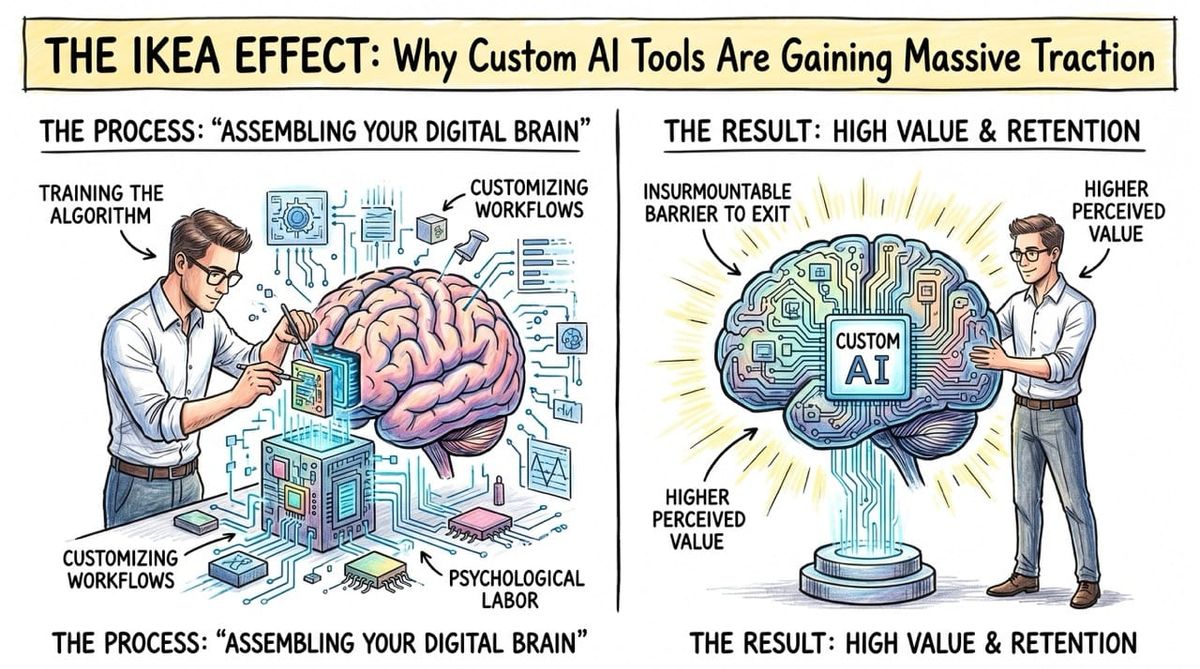
Absolute convenience is a trap that destroys long term retention. The most successful software companies are intentionally forcing users to assemble their own digital brains.
Inspiration: Analyzing the massive growth of highly customizable productivity applications and generative models. Realizing that the psychological labor required to train an algorithm creates an insurmountable barrier to exit for the modern professional.
The Psychology of Assembly
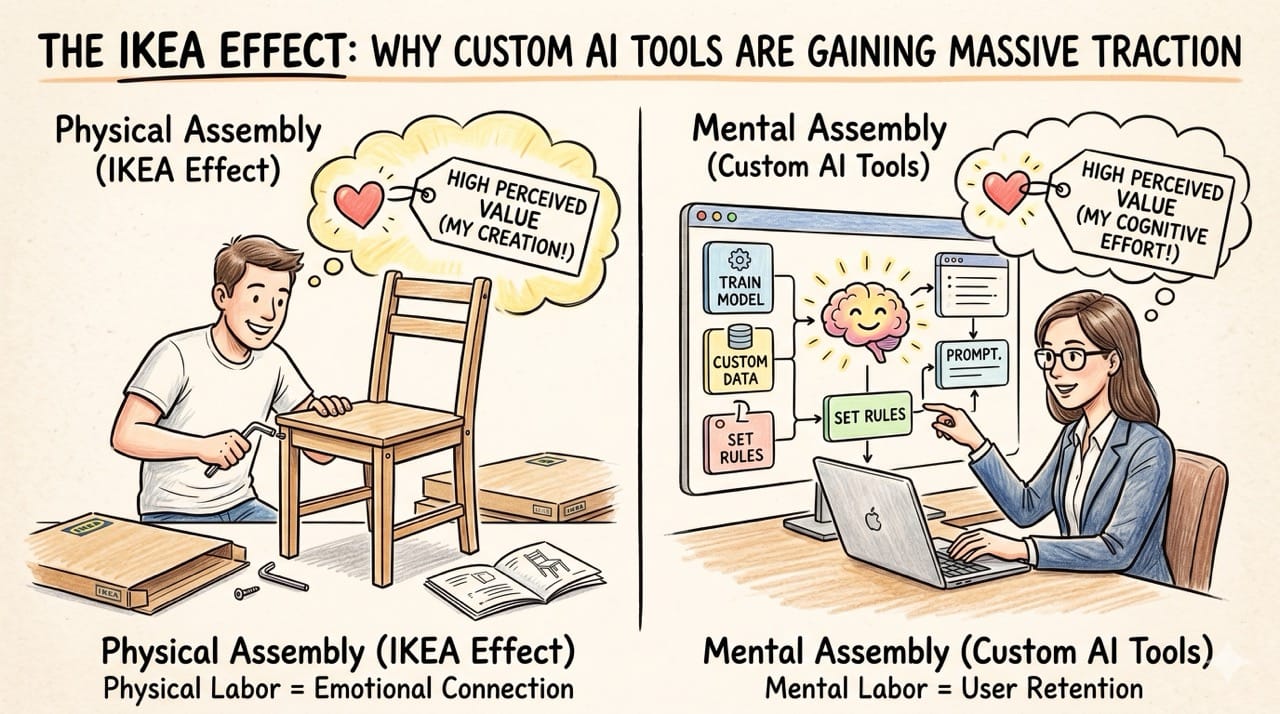
The IKEA effect is a documented cognitive bias where consumers place a disproportionately high value on products they partially created themselves.
Scientifically, this occurs because the act of physical or mental labor triggers a massive release of dopamine when the task is finally completed.
We fall deeply in love with our own cognitive effort rather than the actual objective quality of the final product.
The Digital Application
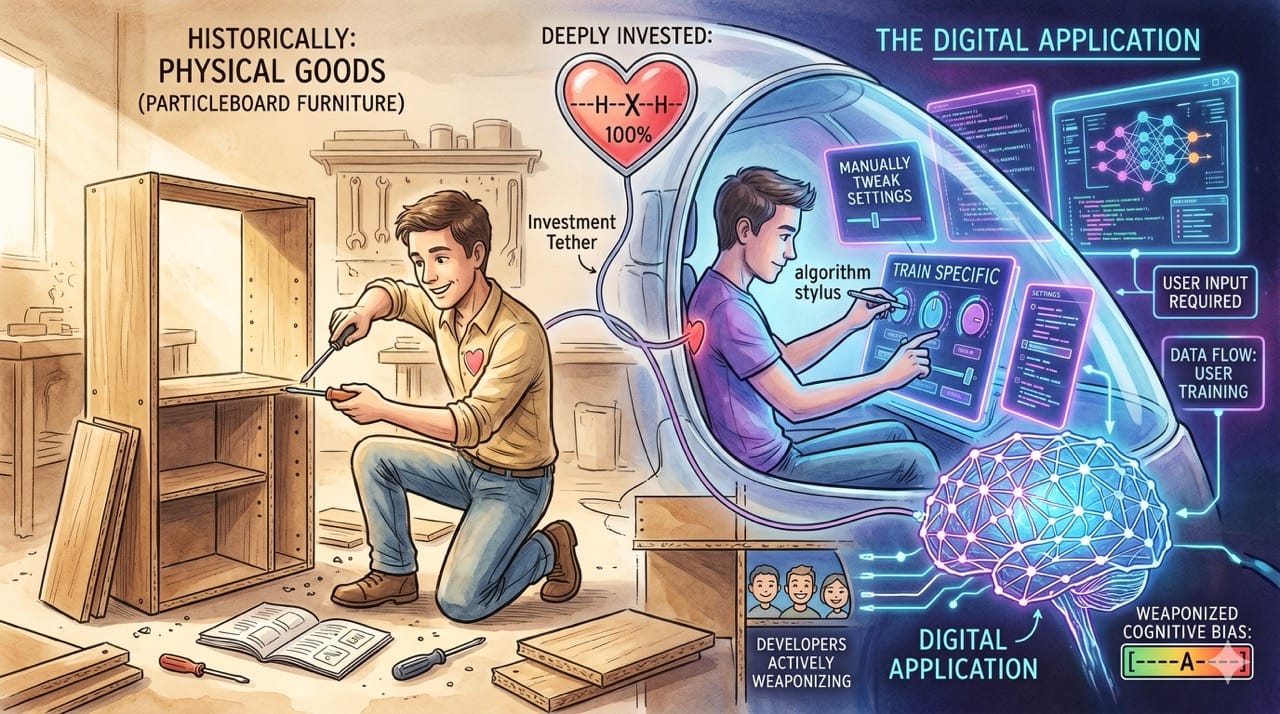
Historically, this psychological phenomenon was strictly limited to physical consumer goods like cheap particleboard furniture.
Today, brilliant software developers are actively weaponizing this exact cognitive bias within the digital ecosystem.
By forcing users to manually tweak settings and train specific algorithms, companies ensure their customers become deeply invested in the underlying software.
The Generative Network
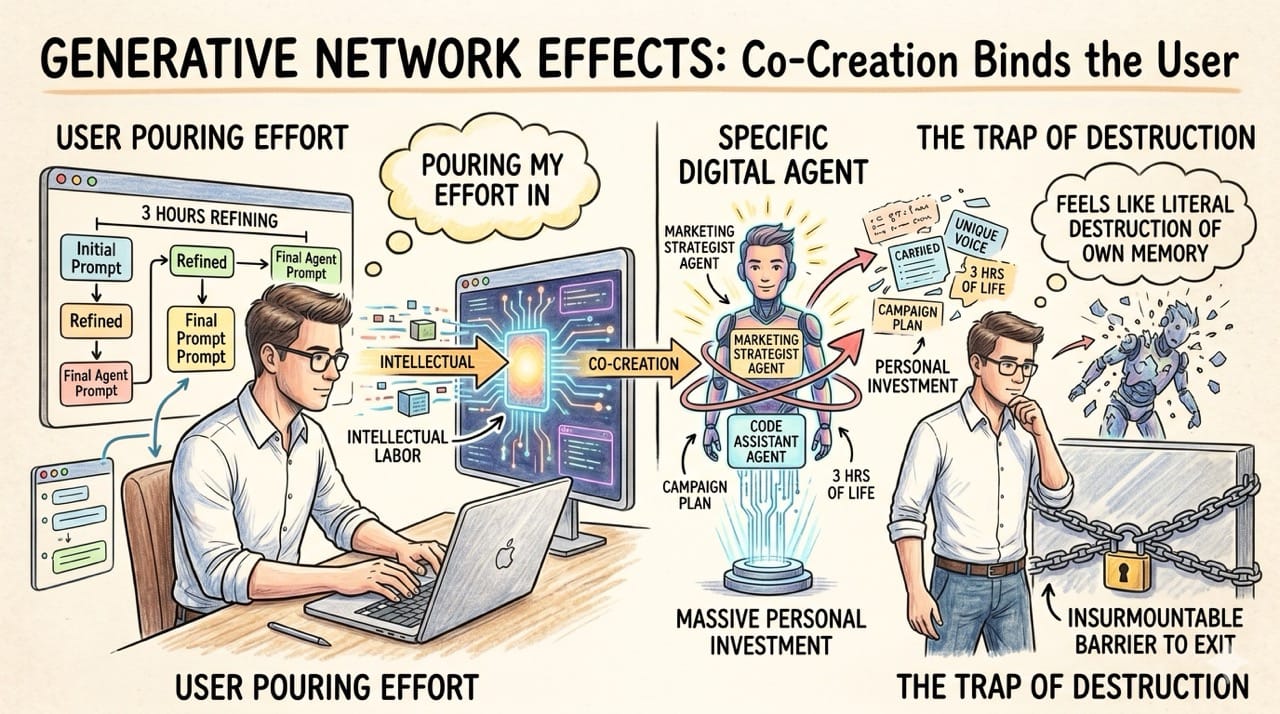
Generative artificial intelligence platforms completely rely on this psychological principle to build their massive network effects.
When a user spends three hours refining a custom prompt to create a specific digital agent, they are pouring their own intellectual labor into the platform.
This massive investment of personal effort makes abandoning that specific agent feel like a literal destruction of their own memory.
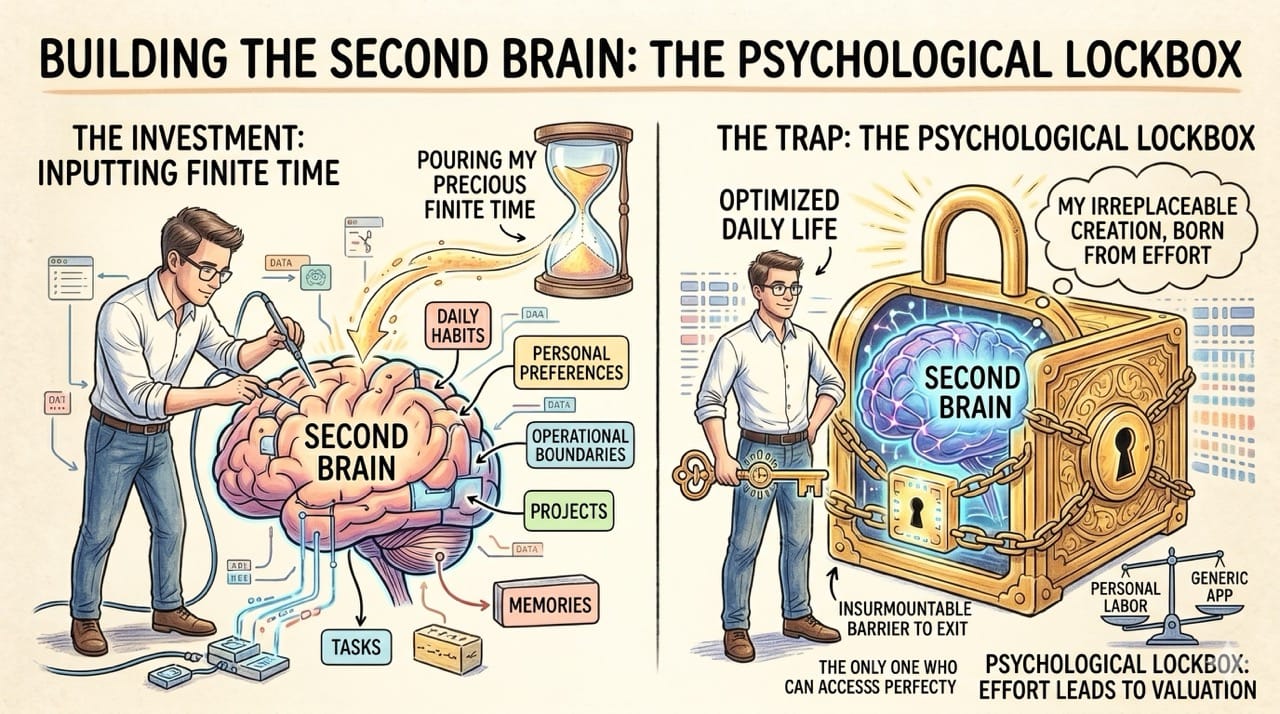
Building the Second Brain
Productivity applications like Motion utilize this exact same psychological trap for calendar optimization and daily task management.
You must spend significant hours inputting your daily habits, personal preferences, and strict operational boundaries to make the tool actually work.
Because time is our most precious and finite resource, pouring that commodity into a second brain application creates an absolute psychological lockbox.
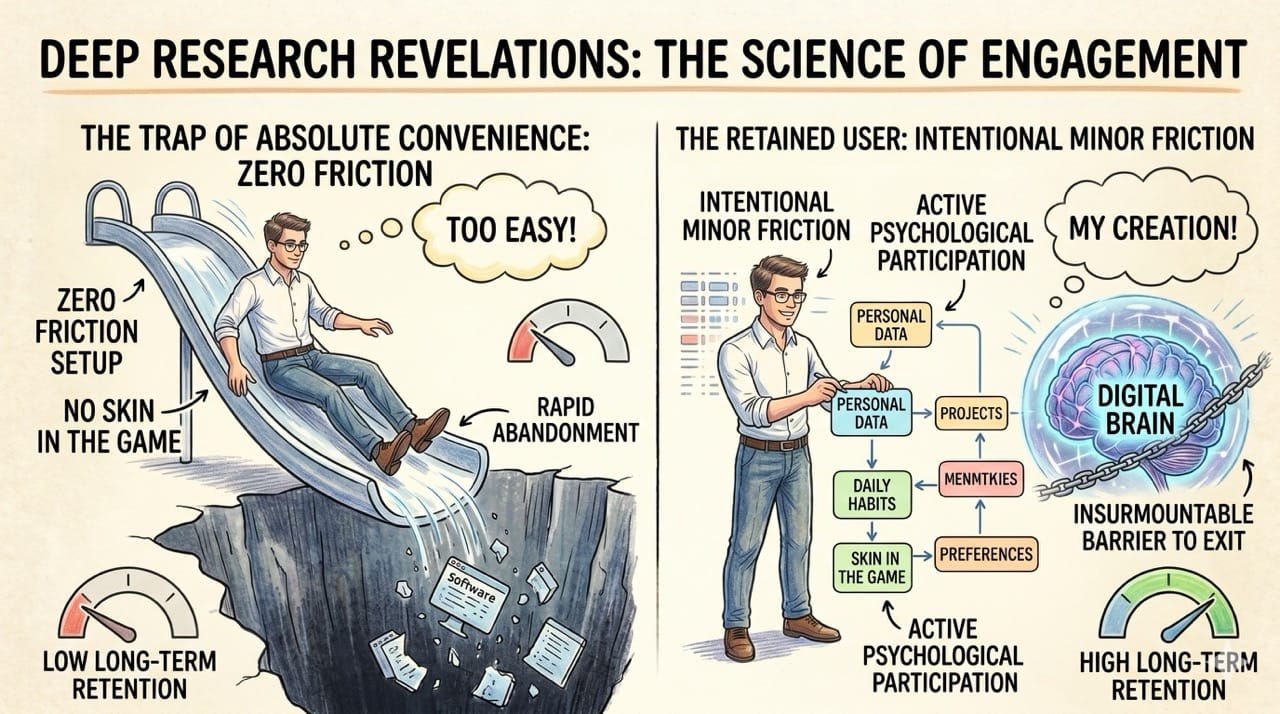
Deep Research Revelations
Deep user research consistently reveals that absolute frictionless onboarding actually destroys long term software retention.
Users who experience zero friction during setup abandon applications significantly faster because they have absolutely no skin in the game.
The most successful generative tools intentionally introduce minor friction to compel users to engage in active psychological participation.
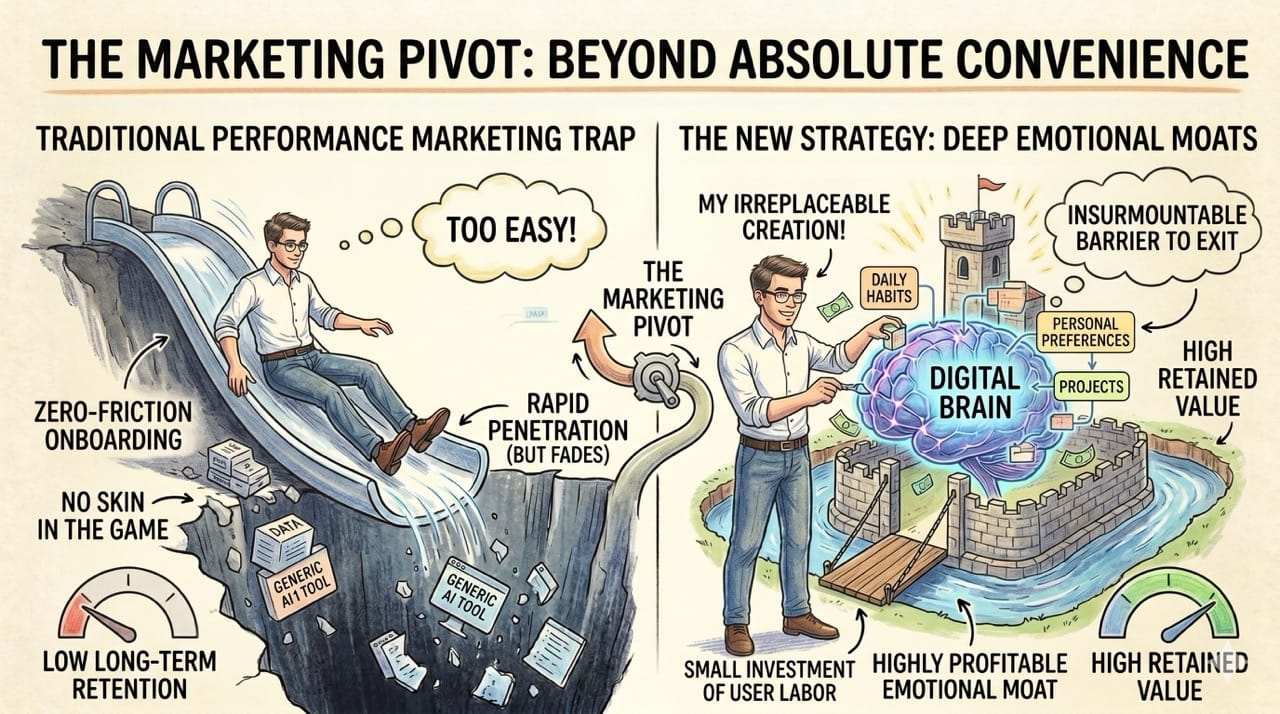
The Marketing Pivot
This dynamic completely flips the traditional performance marketing playbook regarding consumer acquisition and software design.
We used to believe that absolute convenience was the ultimate driver of global market penetration.
We now understand that requiring a small investment of user labor creates an incredibly deep and highly profitable emotional moat.
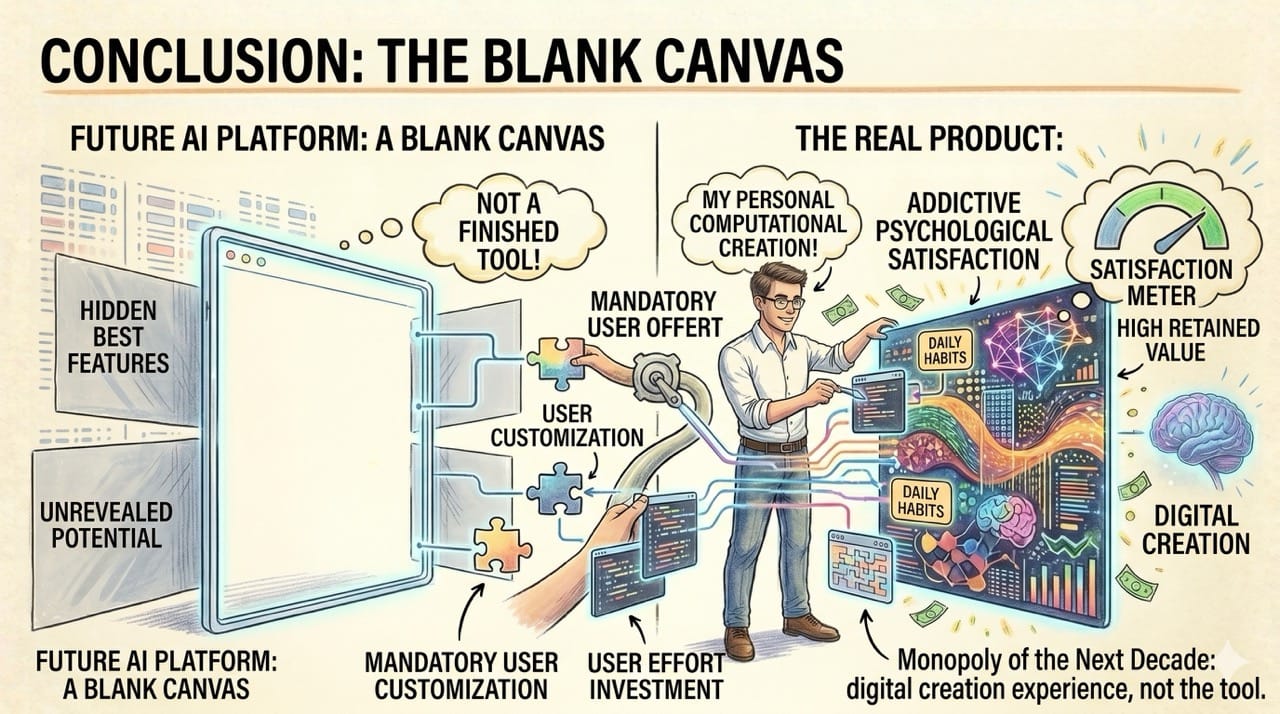
Conclusion: The Blank Canvas
Future artificial intelligence platforms will intentionally hide their best features behind mandatory layers of user customization.
They will act as blank digital canvases that force the consumer to build the final computational product themselves.
The software monopolies of the next decade will not sell finished tools, but rather the highly addictive psychological satisfaction of digital creation.