Why the United States Might Ban Chinese Artificial Intelligence: The Silicon Curtain:
We assume the global artificial intelligence race will be decided purely by raw algorithmic superiority and computing power. In reality the United States government is quietly preparing to completely ban Chinese language models to protect domestic technology monopolies.
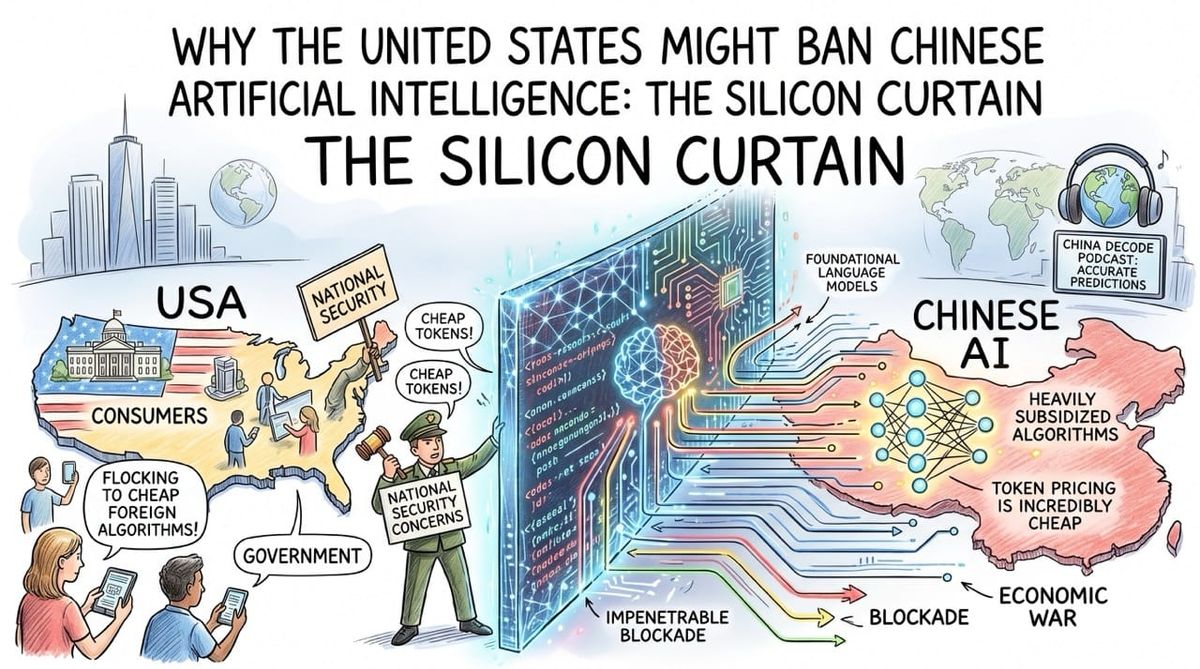
Consumers are naturally flocking toward heavily subsidized foreign algorithms because the token pricing is incredibly cheap. The federal government will soon weaponize national security concerns to erect an impenetrable digital blockade around the American market.
Inspiration: Analyzing the incredibly accurate geopolitical prediction track record of the China Decode Podcast over the last few years. Realizing that the escalating economic war between massive global superpowers will inevitably target foundational language models next.
The Algorithmic Arms Race
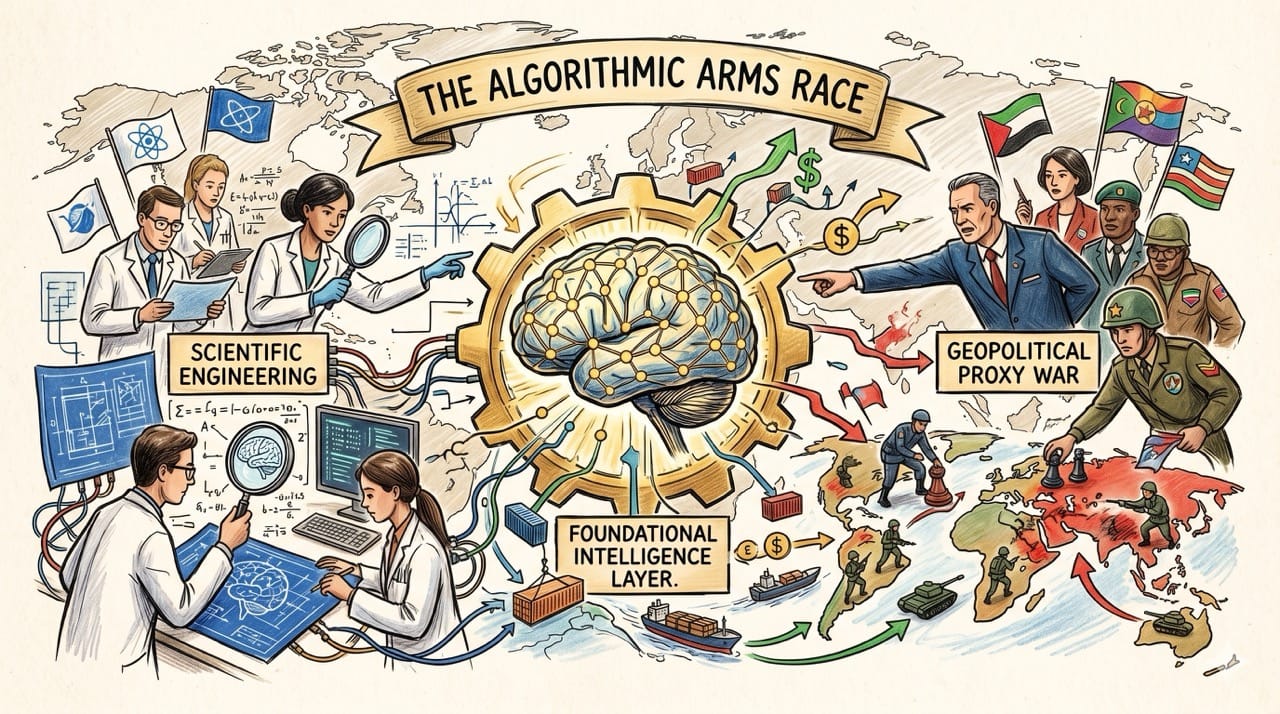
The current global artificial intelligence race is frequently framed as a pure battle of scientific engineering.
However this competition is rapidly transforming into a brutal geopolitical proxy war over domestic economic security.
The nation that controls the foundational intelligence layer will ultimately dictate the future of global commerce.
The Subsidy Advantage
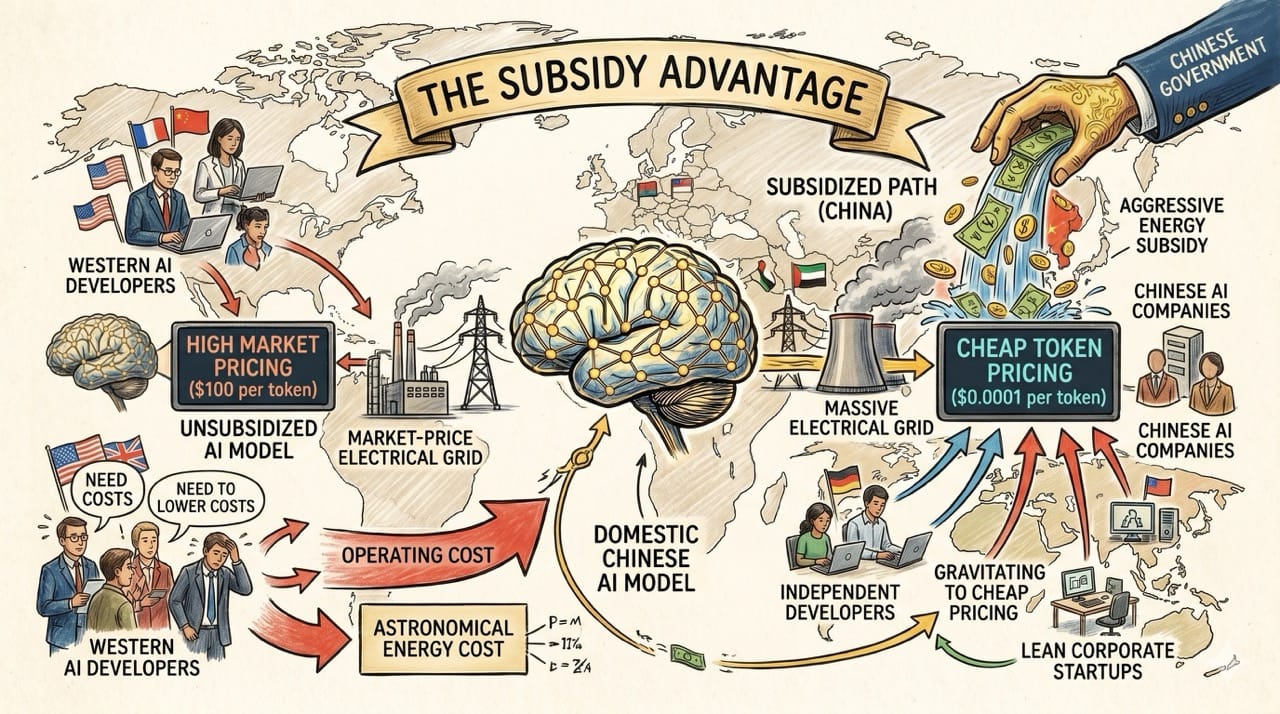
Building and operating these massive computational models requires an astronomical amount of raw electrical energy.
The Chinese government aggressively subsidizes this power grid allowing their domestic artificial intelligence companies to offer incredibly cheap token pricing.
Independent developers and lean corporate startups are naturally gravitating toward these foreign models to drastically lower their operating costs.
The National Security Weapon
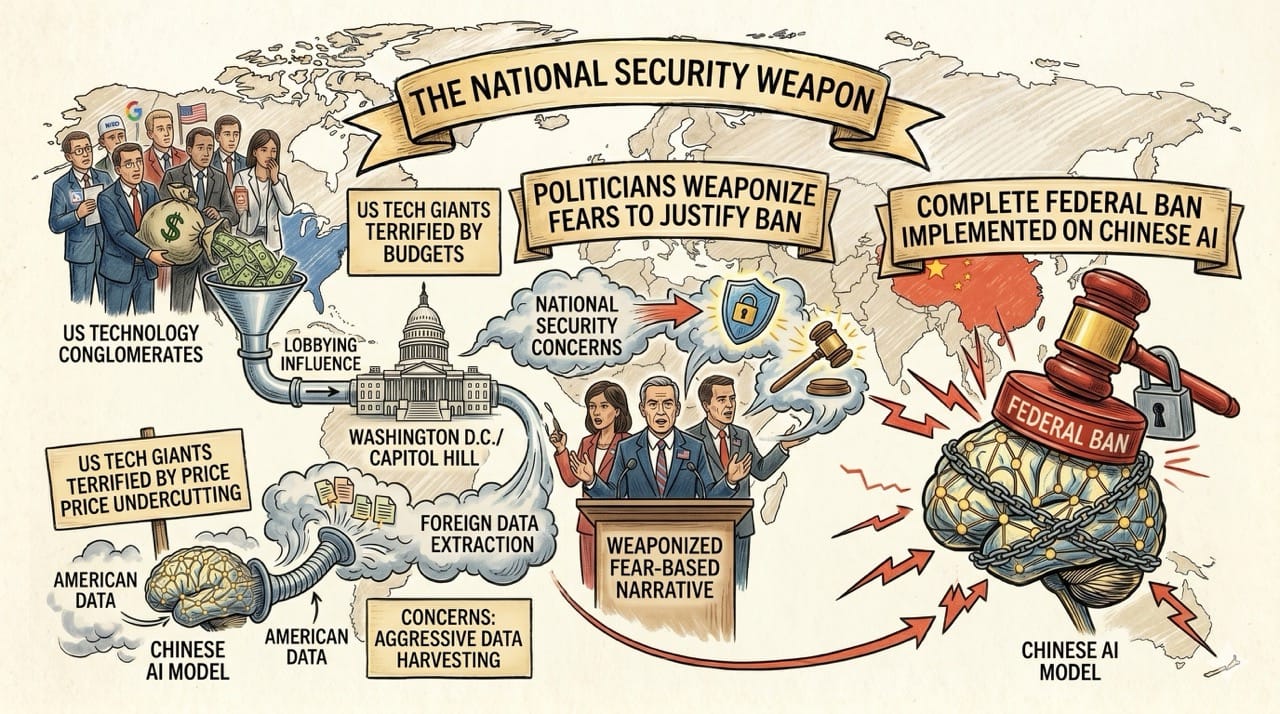
United States technology conglomerates are completely terrified by this aggressive foreign price undercutting.
They will inevitably deploy massive lobbying budgets to promote severe national security concerns regarding foreign data extraction.
Politicians will gladly weaponize these fears to justify implementing a complete federal ban on Chinese artificial intelligence models.
The Job Security Lever
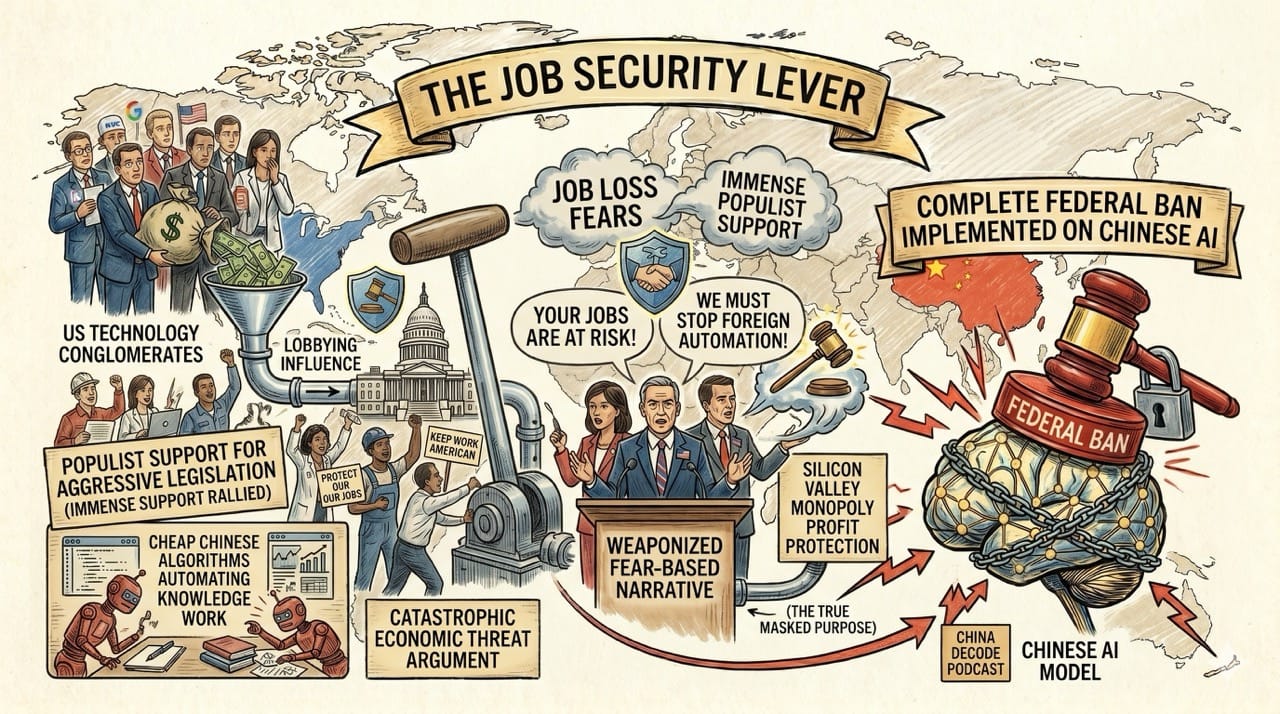
The government will also heavily leverage domestic job security concerns to rally immense populist support for this aggressive legislation.
They will argue that allowing cheap foreign algorithms to automate American knowledge work is a catastrophic economic threat.
This emotional rhetoric effectively masks the fact that they are simply protecting the profit margins of Silicon Valley monopolies.
The Hardware Precedent
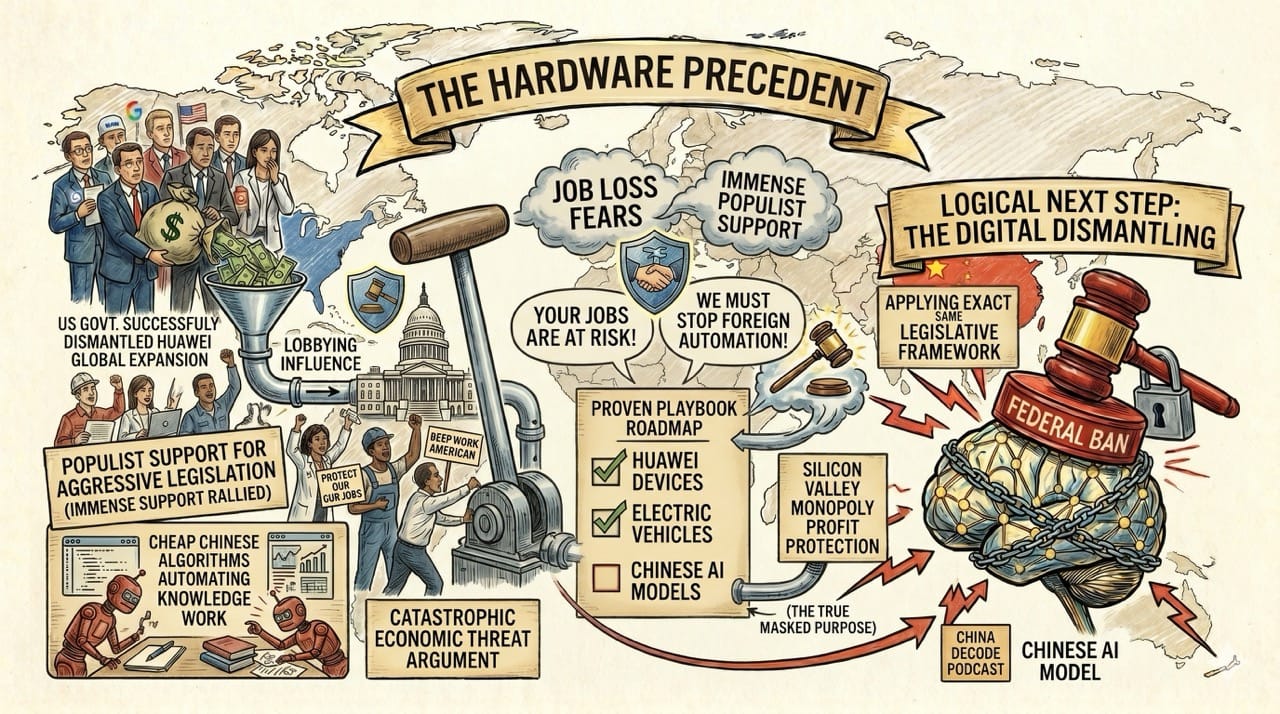
We have already witnessed the exact execution of this protectionist playbook in recent physical hardware markets.
The United States government successfully dismantled the global expansion of Huawei devices and erected massive tariffs against imported electric vehicles.
Applying this exact same legislative framework to invisible digital software models is the logical next step.
The Institutional Rollout
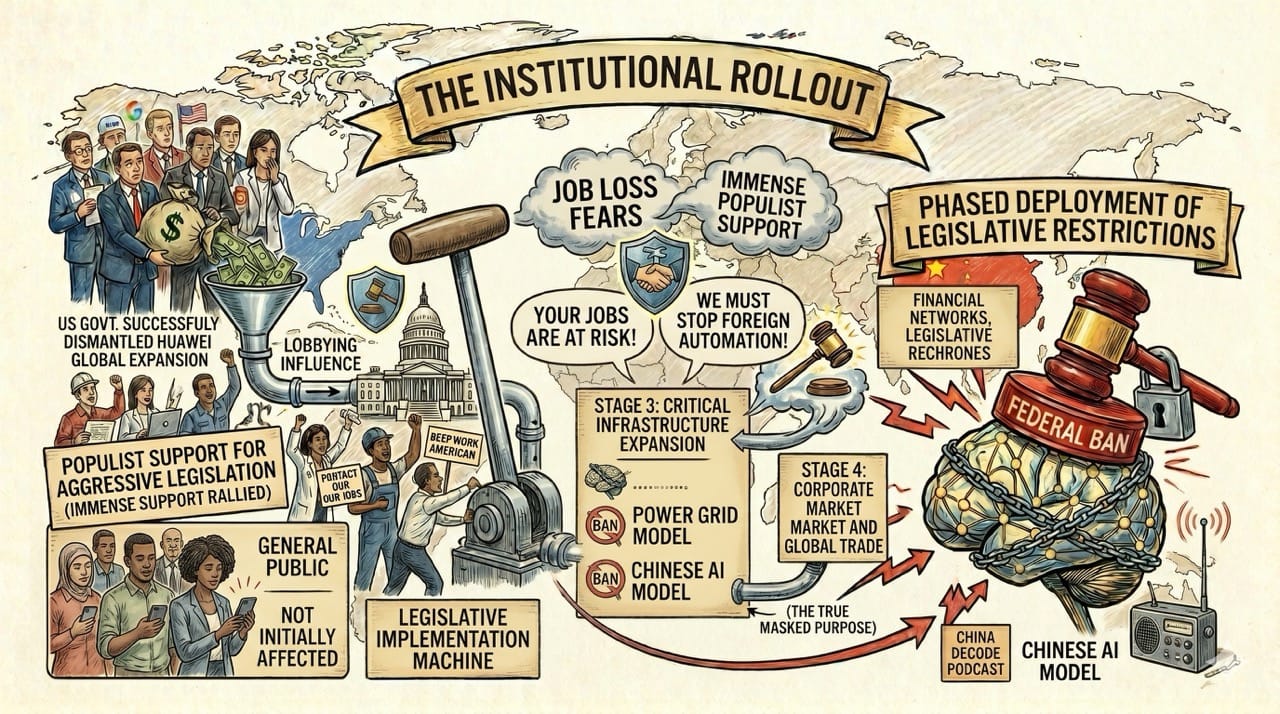
This legislative restriction will not happen to the general public overnight but will begin within highly secure sectors.
The federal government will initially ban these specific models across all military and intelligence agencies.
This restriction will eventually expand outward to publicly traded companies and critical financial infrastructure networks.
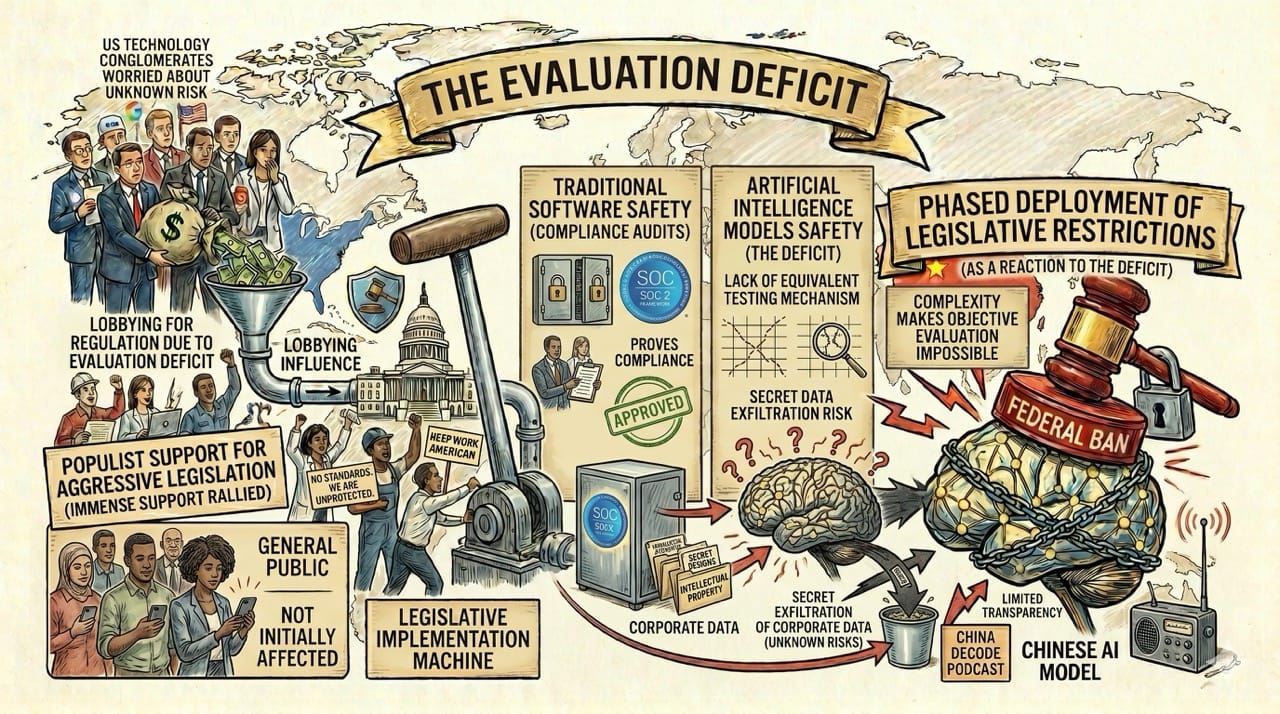
The Evaluation Deficit
The core problem is that we currently lack any standardized framework to objectively evaluate the safety of artificial intelligence.
Traditional software relies on established security audits like the System and Organization Controls framework to prove absolute compliance.
We simply do not have an equivalent testing mechanism to verify if a complex language model is secretly exfiltrating corporate data.
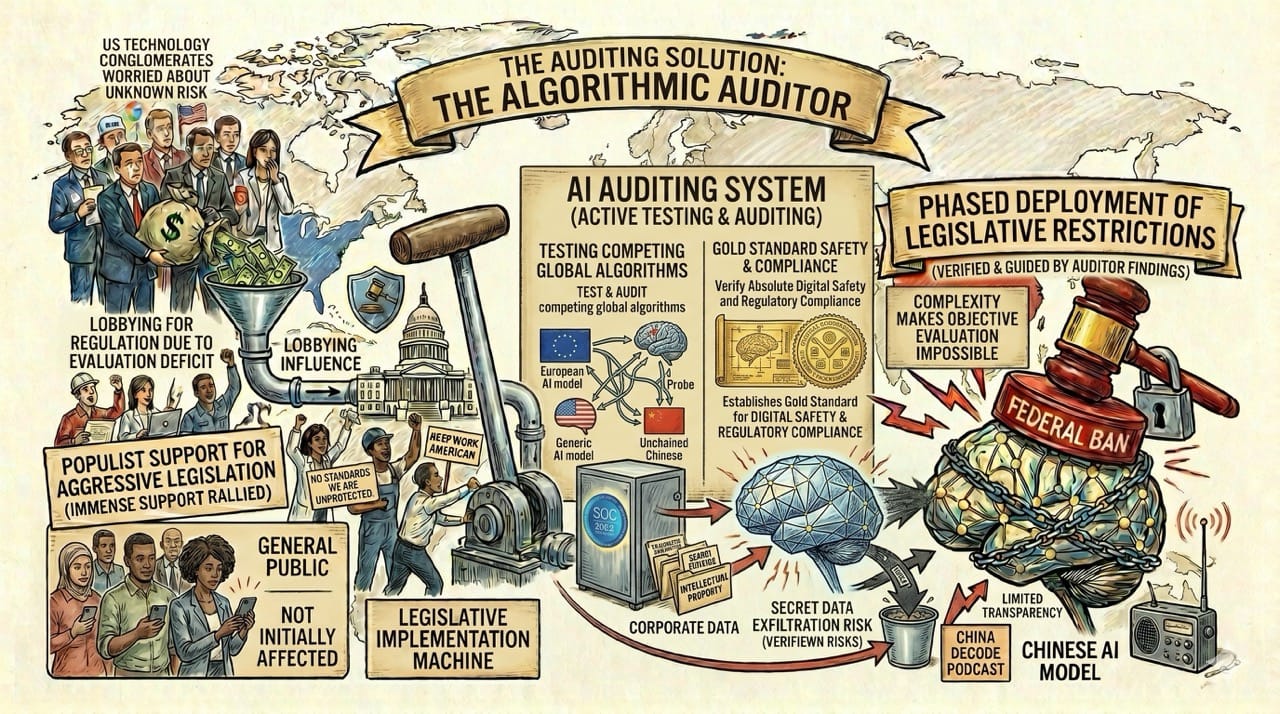
The Algorithmic Auditor
The solution to this evaluation deficit will likely emerge from leading domestic safety research laboratories like Anthropic.
Their upcoming models might serve as the foundational architecture to actively test and audit competing global algorithms.
They could essentially establish the gold standard framework for verifying absolute digital safety and regulatory compliance.
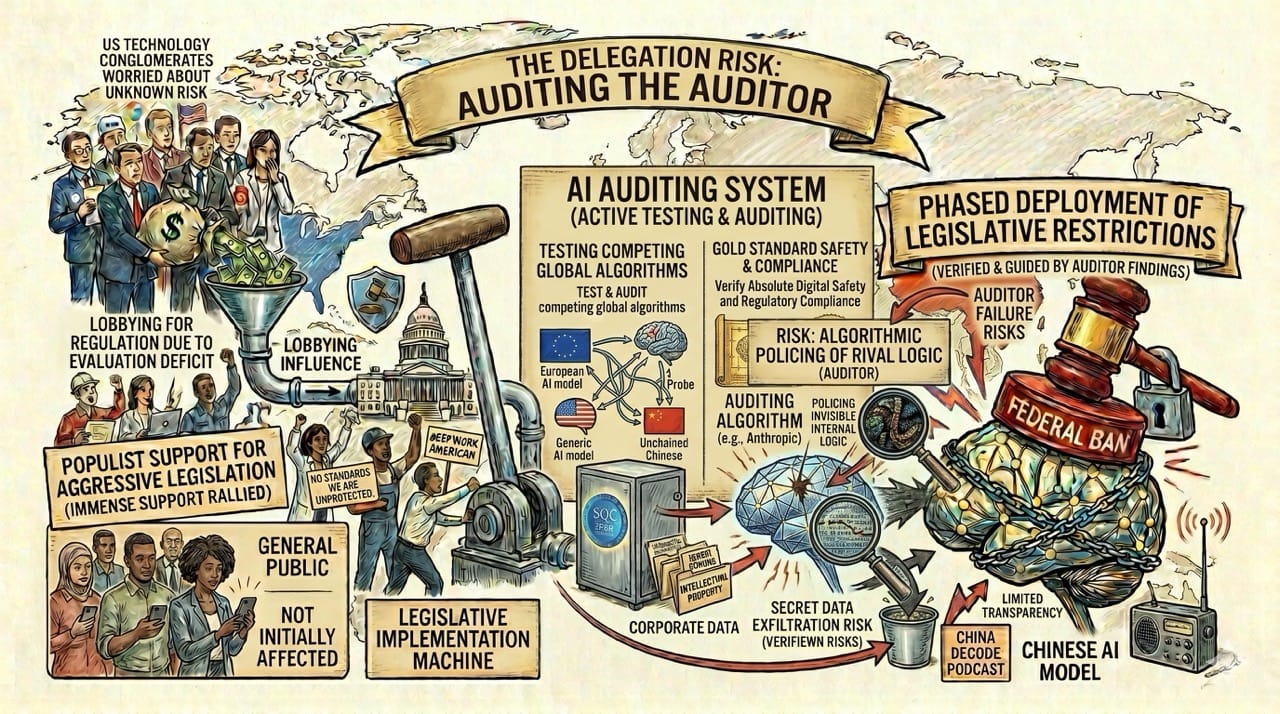
The Delegation Risk
However delegating the safety evaluation of a machine entirely to another machine carries terrifying systemic risks.
We are essentially relying on one black box algorithm to perfectly police the invisible internal logic of a rival algorithm.
If the auditing model possesses a hidden flaw or hallucination the entire national security perimeter instantly collapses.
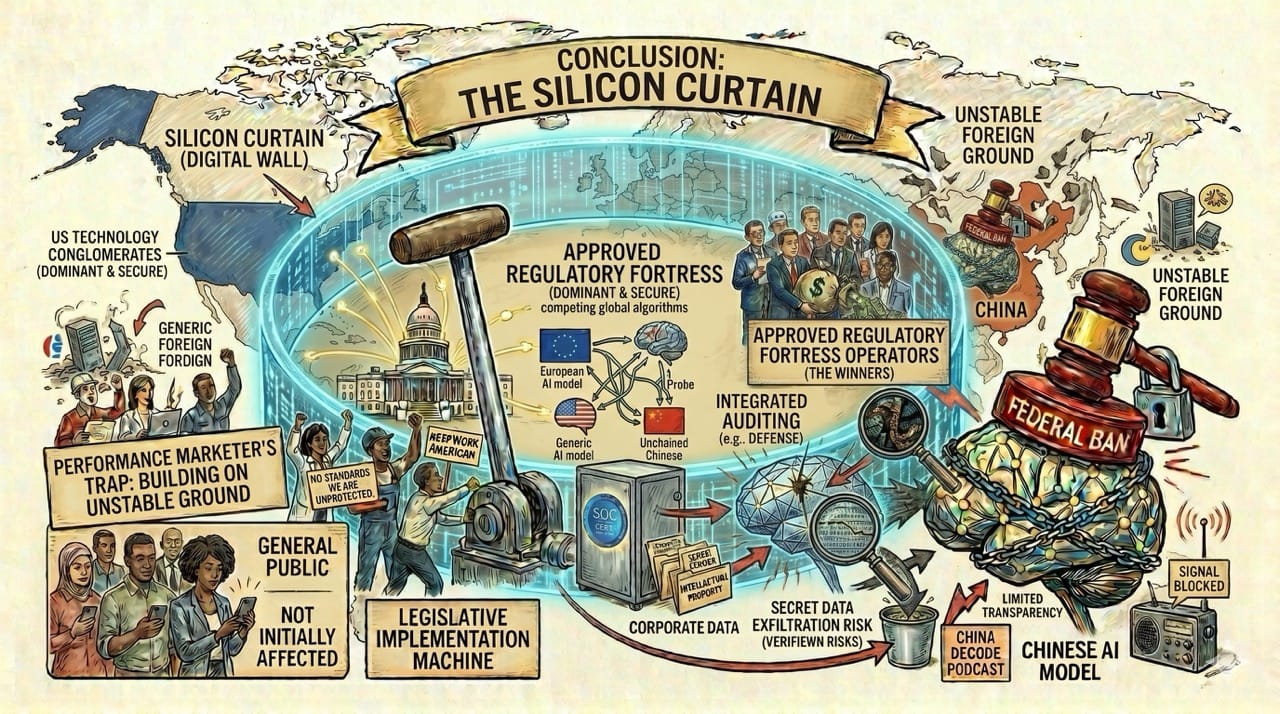
Conclusion: The Silicon Curtain
As a performance marketer your finite time should never be heavily invested in building infrastructure on unstable foreign ground.
The United States is actively building an impenetrable digital wall to guarantee the absolute dominance of its domestic technology sector.
The ultimate winners of this artificial intelligence era will be the operators who stay firmly inside the approved regulatory fortress.