Why Google Should Allow the Proton Ecosystem to Thrive: The Privacy Equilibrium
We assume massive technology monopolies must aggressively crush any emerging competitors in the software space. In reality, Google absolutely needs the Proton ecosystem to thrive to prevent a massive consumer exodus toward Apple hardware.
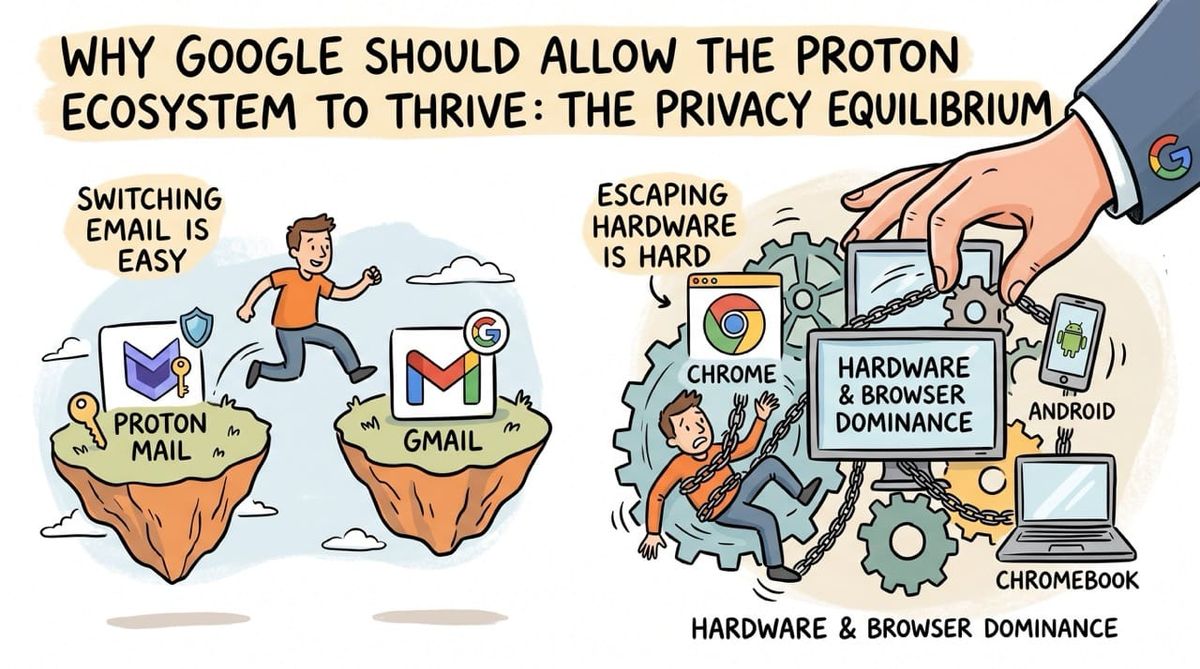
Suppressing a niche email provider is a massive strategic error when the true battleground is physical hardware and browser dominance. The ultimate digital monopoly relies entirely on controlling the glass screen rather than the application running behind it.
Inspiration: Analyzing the rapid rise of privacy focused software alternatives and the strategic positioning of global technology monopolies. Realizing that switching email providers is incredibly easy, but escaping a hardware ecosystem requires massive psychological effort.
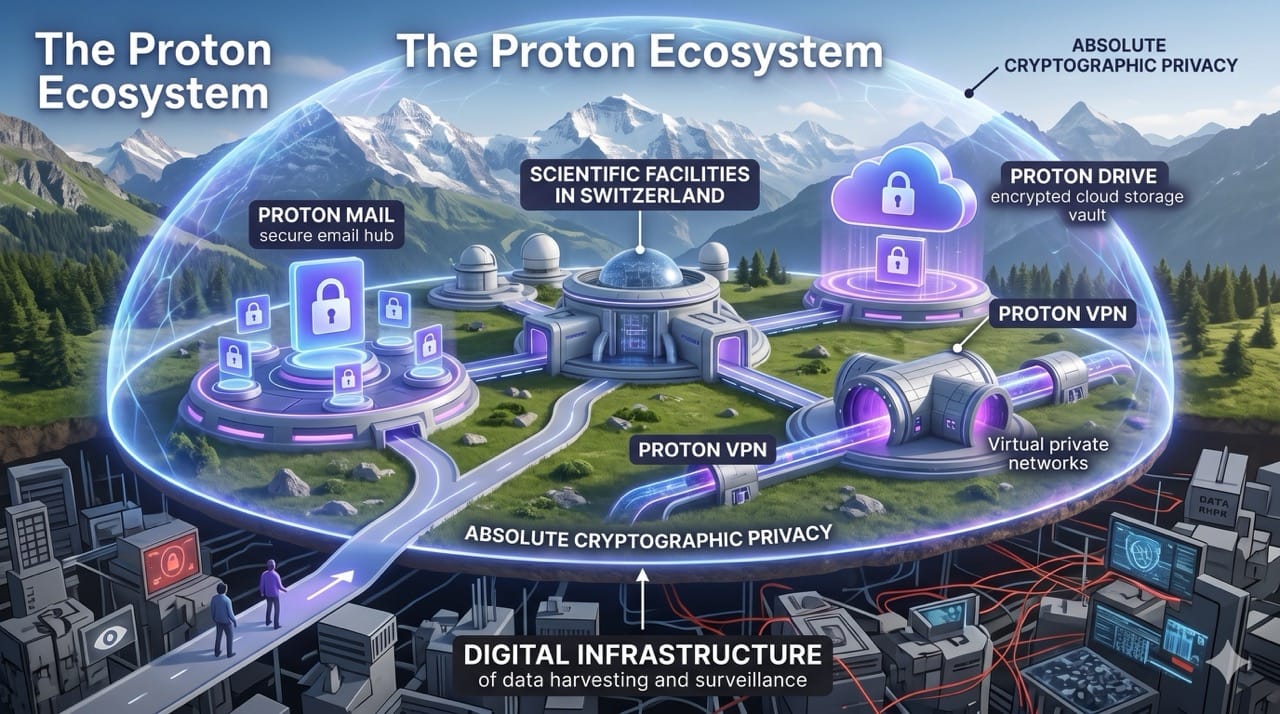
The Proton Ecosystem
Proton is a rapidly expanding suite of privacy focused digital products originating from scientific facilities in Switzerland.
The company offers highly secure email clients, encrypted cloud storage, and virtual private networks built entirely on absolute cryptographic privacy.
They essentially provide a parallel digital infrastructure for consumers who are deeply terrified of algorithmic data harvesting.
The Marketing Surge
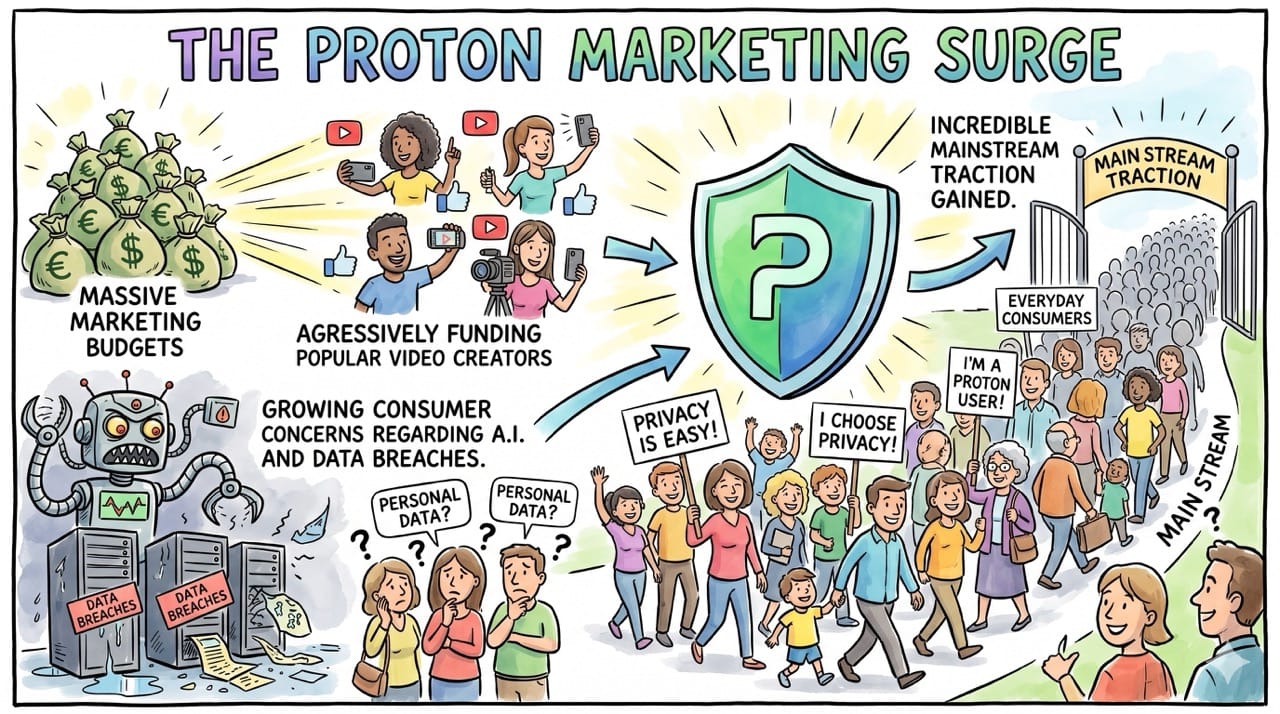
This privacy narrative is currently gaining incredible mainstream traction across massive digital media channels.
Proton is aggressively funding popular YouTube creators and deploying massive marketing budgets to reach everyday consumers outside the cybersecurity niche.
Their advertising copy brilliantly leverages growing consumer anxiety regarding artificial intelligence and massive corporate data breaches.
The Perceived Threat
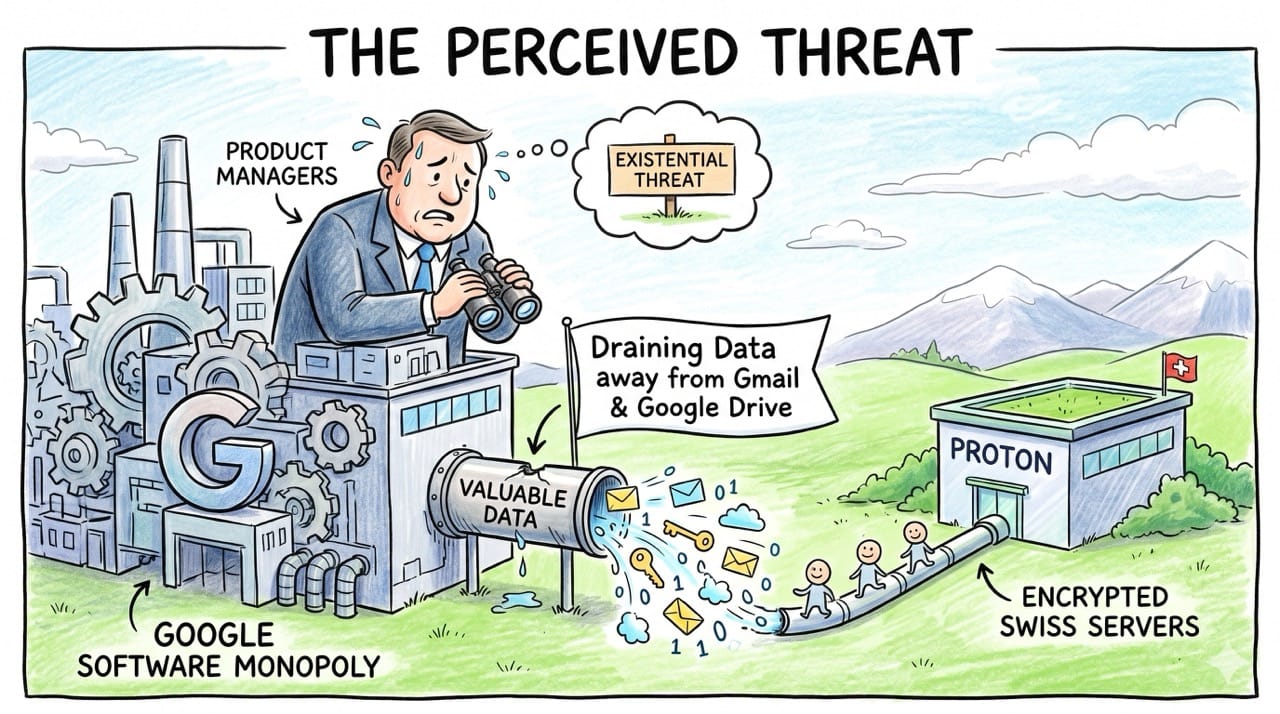
On a superficial level, this rapid expansion appears as a direct existential threat to the core Google software monopoly.
Every single consumer who transitions to encrypted Swiss servers is actively draining valuable data away from Gmail and Google Drive.
Corporate product managers naturally view this data leakage as a terrifying loss of their most lucrative digital commodity.
The Hardware Moat
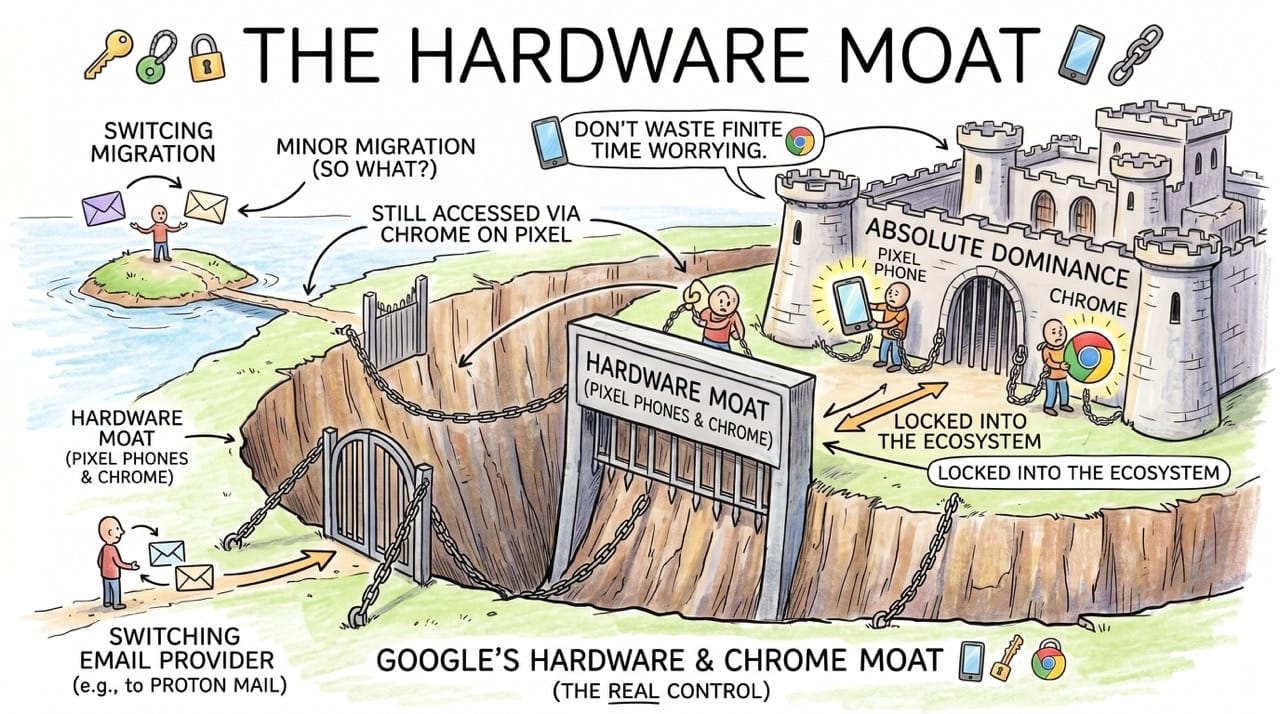
However, Google executives should not waste their finite time worrying about a minor migration in email providers.
Most consumers who proudly switch their email client will still effortlessly access that exact inbox using a Google Pixel phone or the Chrome browser.
Keeping the consumer locked entirely within the physical hardware and the primary web browser is all Google actually needs to maintain absolute dominance.
The Synchronization Trap
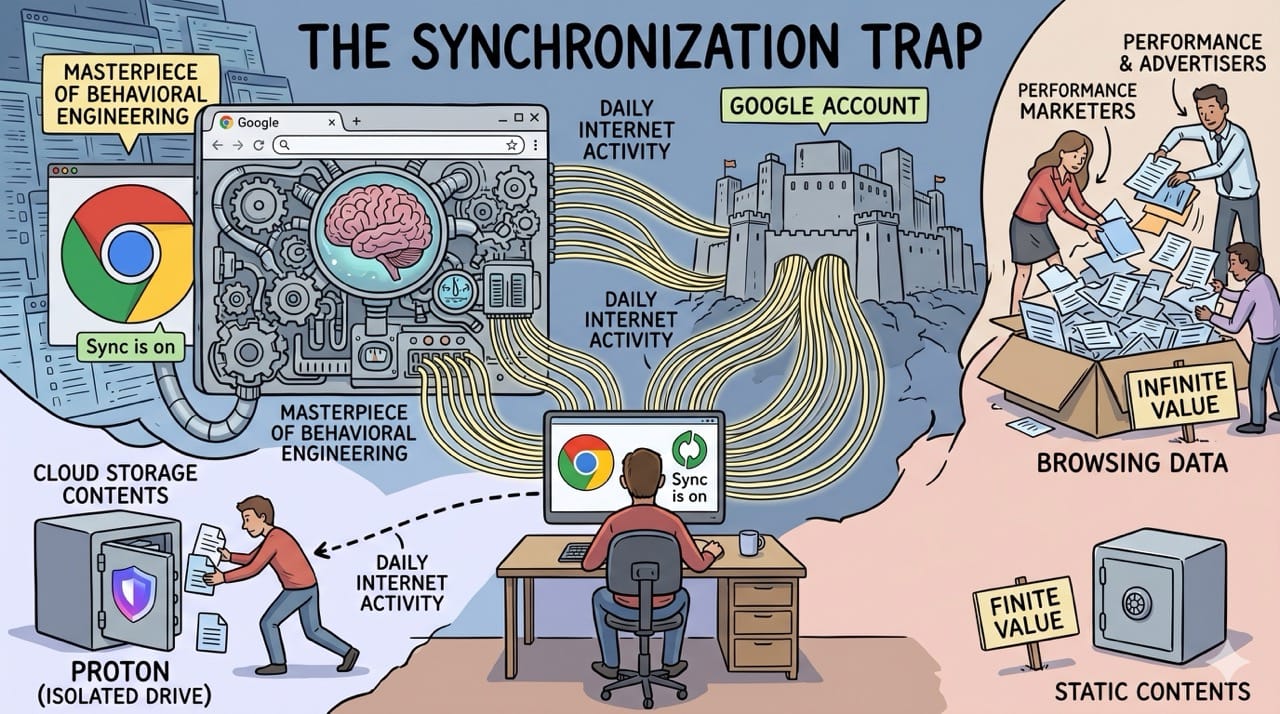
The Chrome browser is a masterpiece of behavioral engineering that seamlessly syncs every aspect of the consumer experience.
Even if a user transitions their cloud storage to Proton, their daily internet activity remains entirely tethered to their centralized Google account.
The underlying browsing data provides infinitely more value for performance marketers than the static contents of an isolated cloud storage drive.
The Apple Alternative
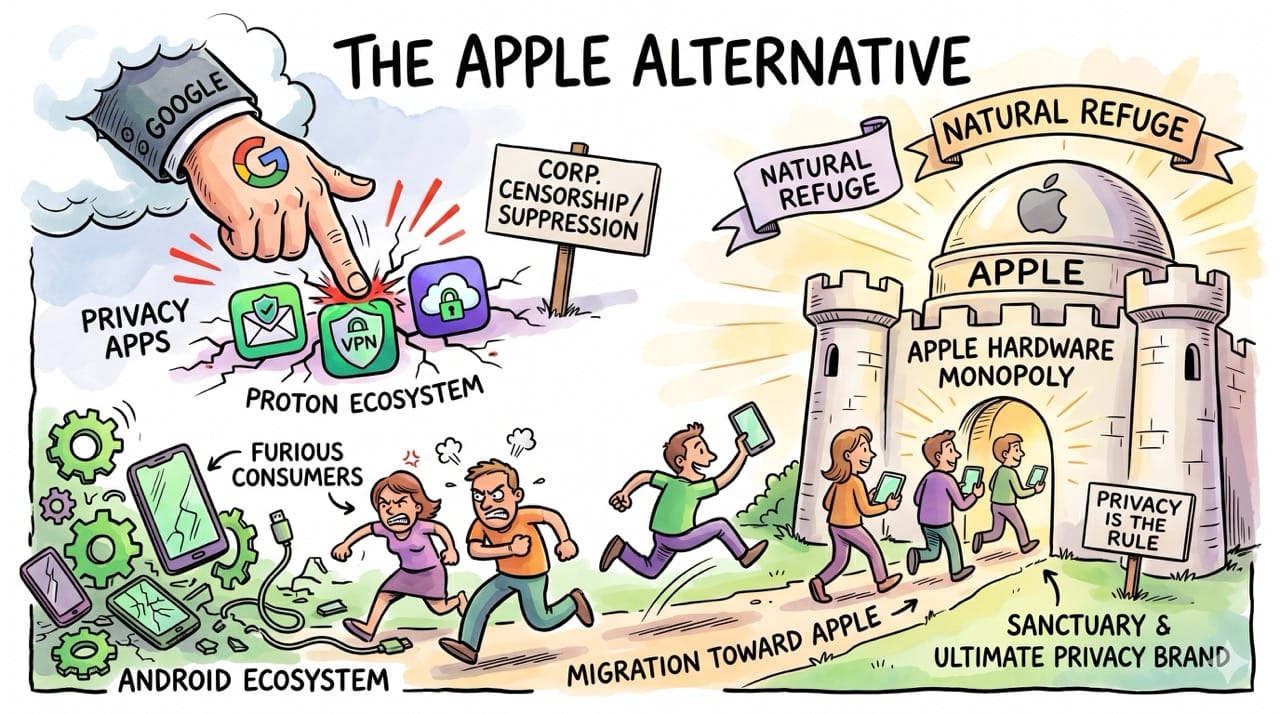
If Google aggressively decides to suppress or throttle these privacy applications, they will trigger a massive strategic disaster.
Furious consumers will completely abandon the entire Android ecosystem and migrate directly toward the Apple hardware monopoly.
Apple aggressively markets themselves as the ultimate privacy brand, making them the natural refuge for any consumer fleeing corporate censorship.
The Friction Threshold
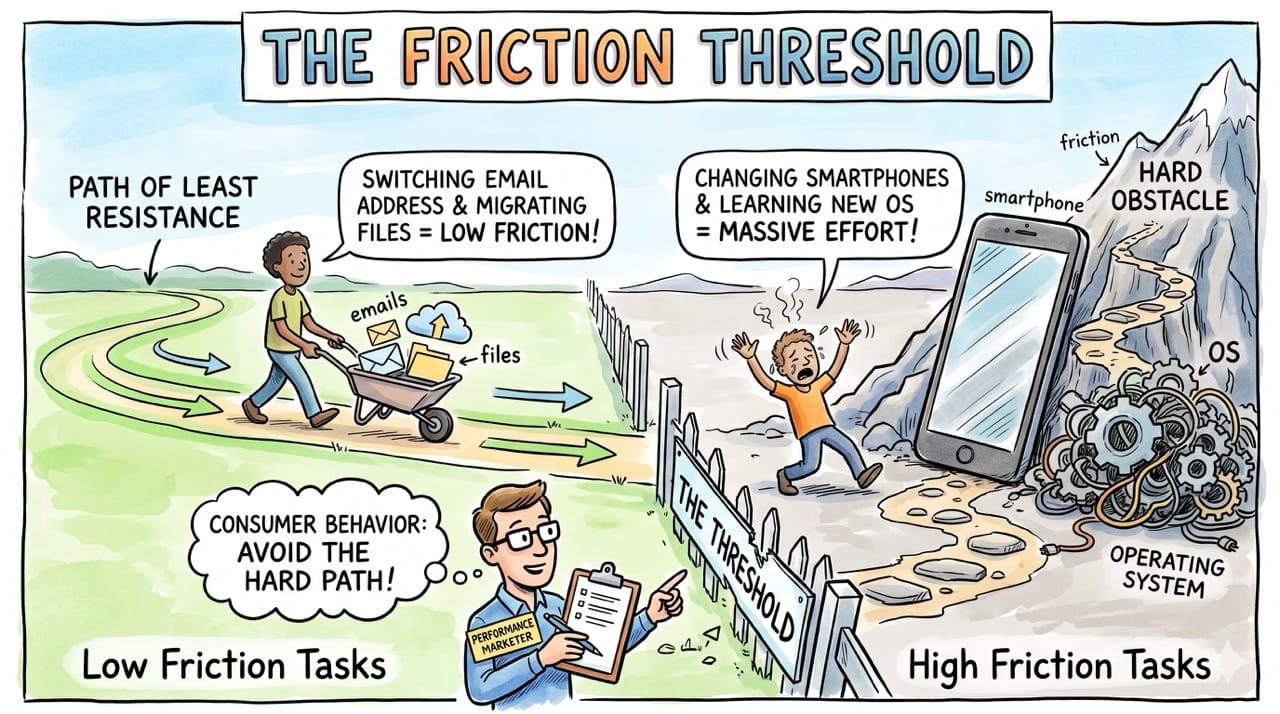
As a performance marketer, you understand that consumer behavior is entirely dictated by the path of least resistance.
Switching an email address or migrating a few digital files is an incredibly low friction task for the average internet user.
Completely changing physical smartphones or learning an entirely new operating system requires a massive psychological effort that most people will actively avoid.
The Quantum Evolution
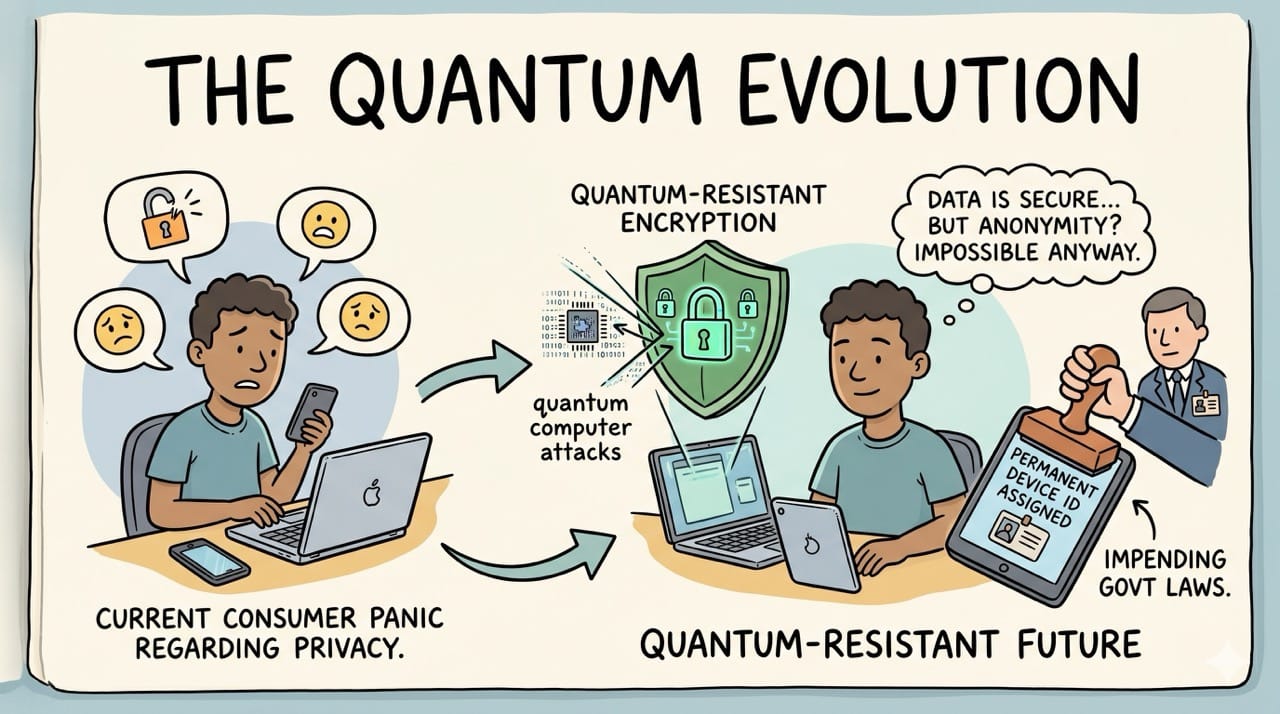
The current consumer panic regarding digital privacy will naturally diminish as global security protocols inevitably evolve.
Major tech monopolies are already developing advanced end to end encryption standards designed specifically to withstand future quantum computing attacks.
Furthermore, impending government age verification laws will soon assign permanent device IDs, effectively rendering absolute digital anonymity completely impossible anyway.
The Proton Boundary
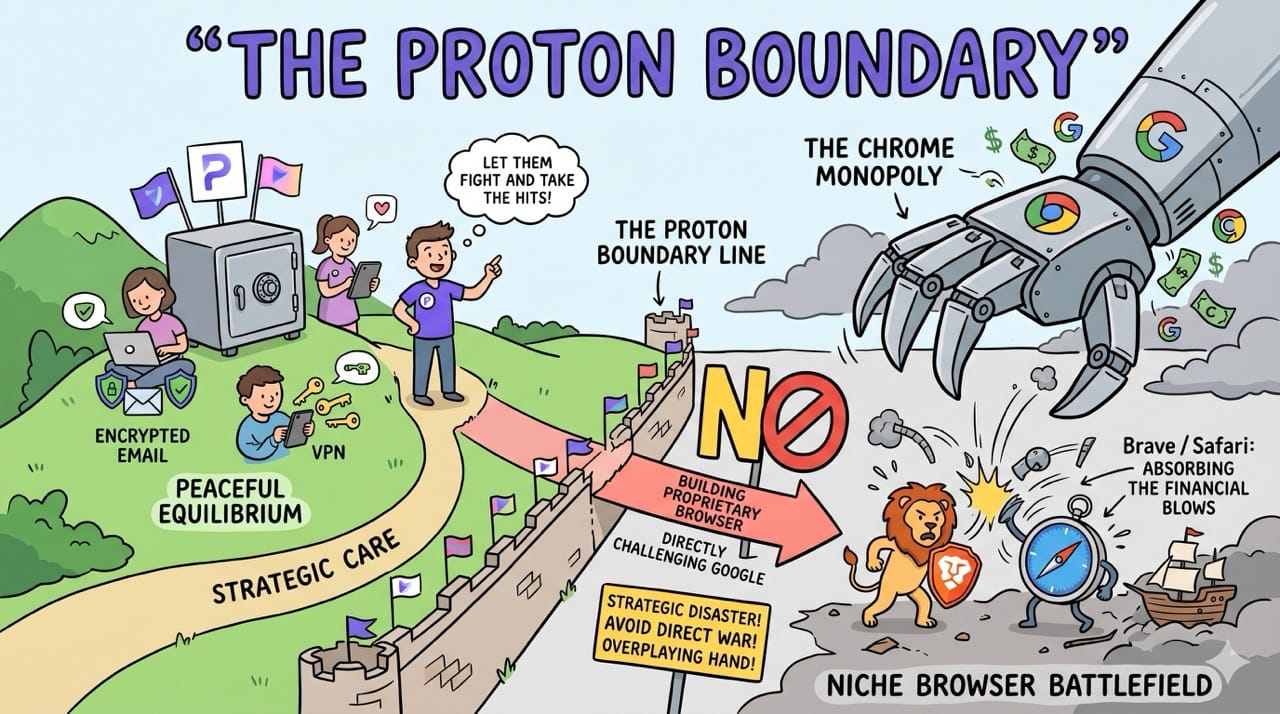
To maintain this peaceful equilibrium, Proton must be incredibly careful not to overplay their strategic hand.
They should absolutely avoid building their own proprietary web browser and directly challenging the core Chrome monopoly.
They must allow niche browsers like Brave or Safari to absorb the massive financial blows of fighting Google directly.
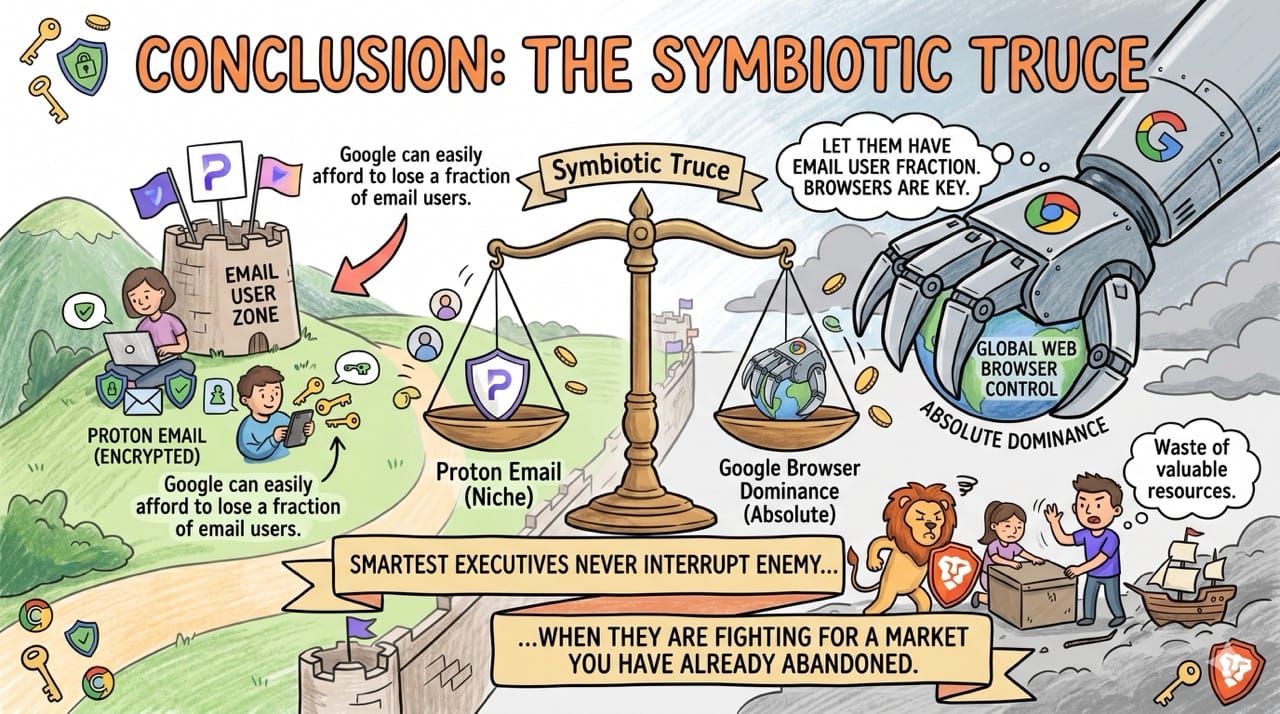
Conclusion: The Symbiotic Truce
Strategic brilliance often requires knowing exactly which battles are a complete waste of your valuable resources.
Google can easily afford to lose a small fraction of email users as long as they retain absolute control over the global web browser.
The smartest executives understand that you never interrupt your enemy when they are fighting for a market you have already abandoned.