Effective Executive: Jeff Bezos (The Architecture of Day One)
We assume corporate dominance requires aggressively reacting to every single move your competitors make. In reality, Jeff Bezos built the ultimate global monopoly by completely ignoring his rivals and obsessing entirely over the consumer.
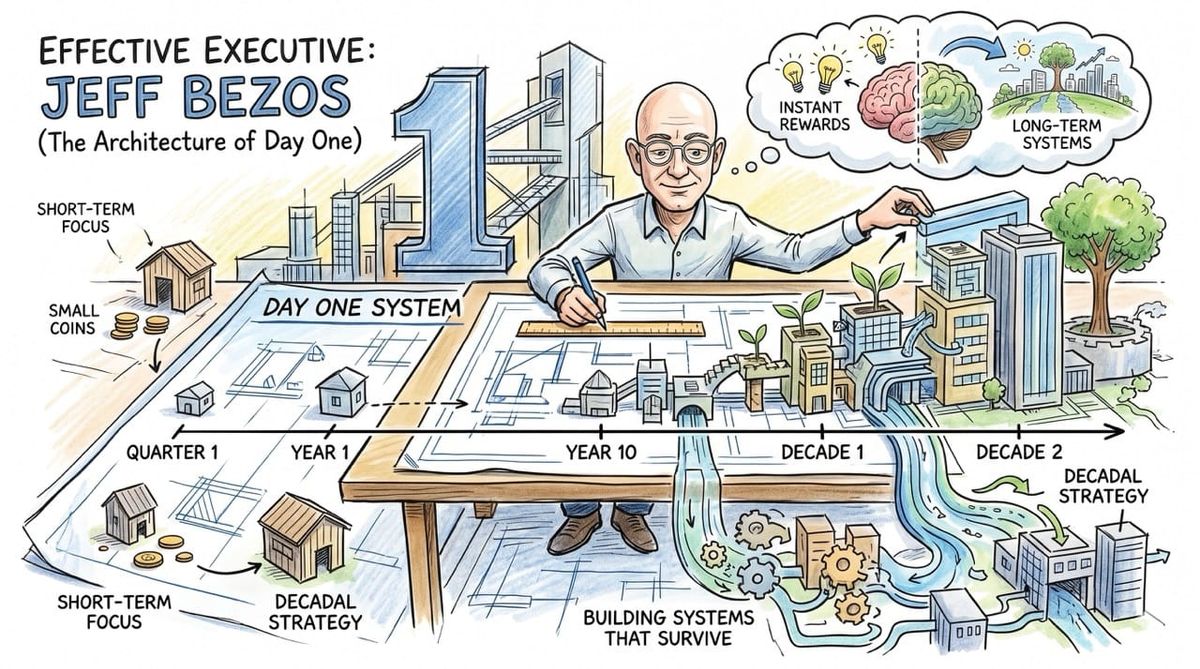
The human brain is biologically wired to seek immediate gratification and short term rewards. Overcoming this biological limitation to execute a decadal strategy is the true hallmark of executive brilliance.
Inspiration: Analyzing the foundational leadership principles of the Amazon founder for the Effective Executive series. Realizing that optimizing your finite time requires building systems designed to survive for decades rather than financial quarters.

The Power of the Memo
Traditional corporate culture relies heavily on bloated slide presentations that actively disguise lazy thinking.
Bezos famously banned these presentations entirely and forced his executives to write deeply structured six page narrative memos.
This brutal psychological friction forces the author to achieve absolute cognitive clarity before requesting the finite time of their peers.
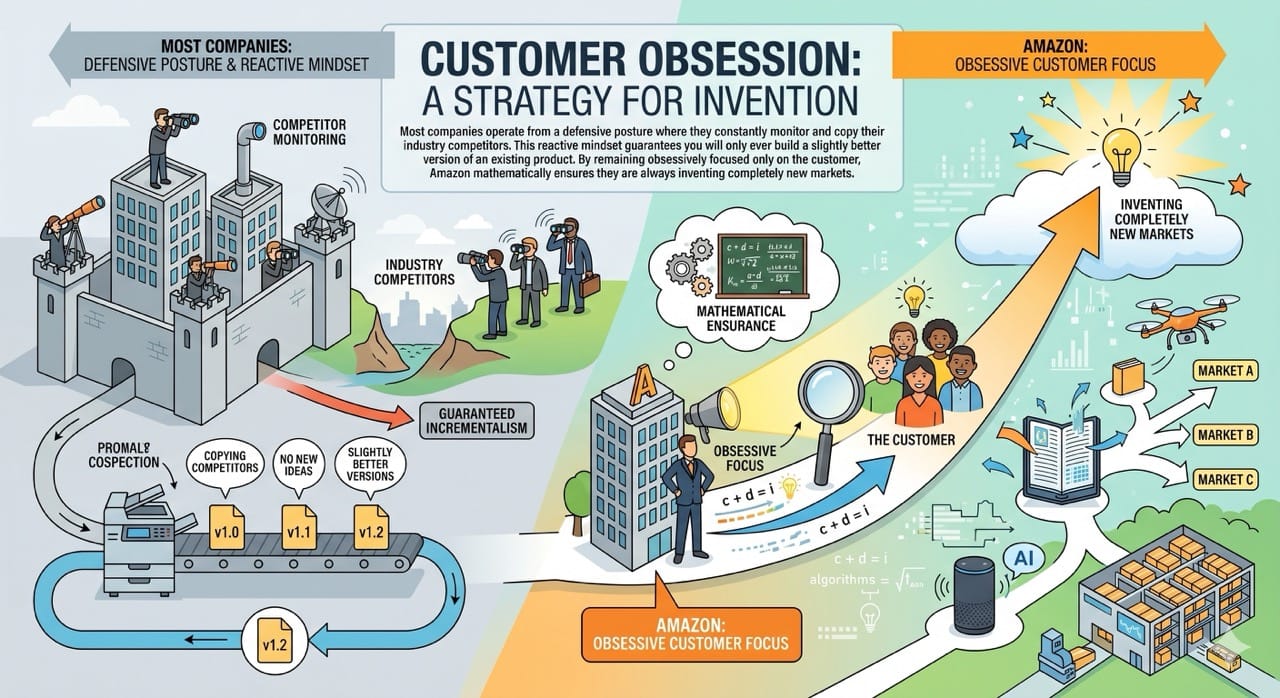
Customer Obsession
Most companies operate from a defensive posture where they constantly monitor and copy their industry competitors.
This reactive mindset guarantees you will only ever build a slightly better version of an existing product.
By remaining obsessively focused only on the customer, Amazon mathematically ensures they are always inventing completely new markets.
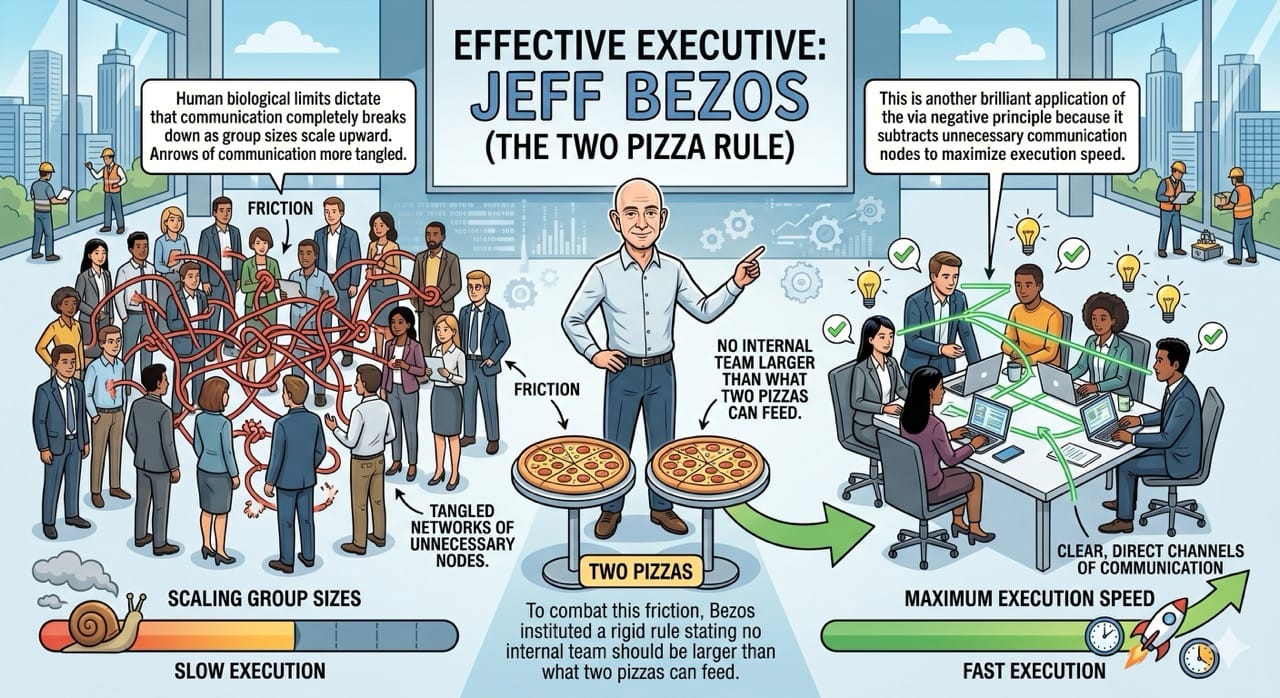
The Two Pizza Rule
Human biological limits dictate that communication completely breaks down as group sizes scale upward.
To combat this friction, Bezos instituted a rigid rule stating no internal team should be larger than what two pizzas can feed.
This is another brilliant application of the via negativa principle because it subtracts unnecessary communication nodes to maximize execution speed.
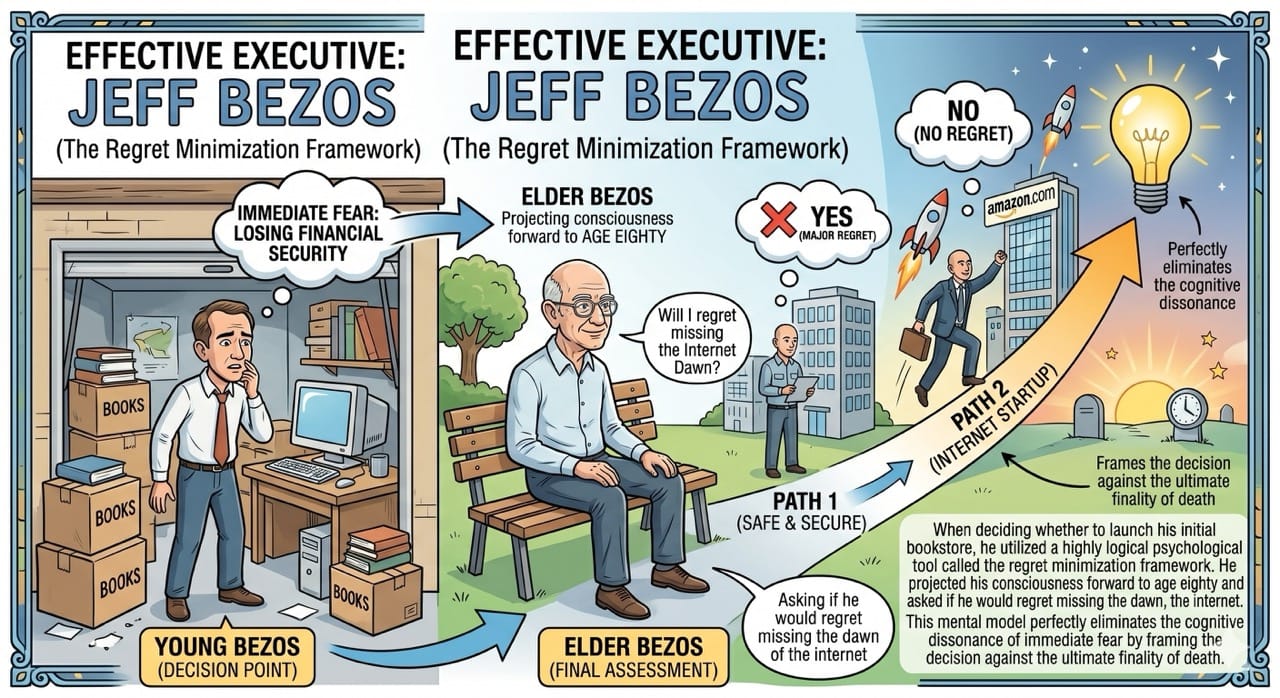
The Regret Minimization Framework
When deciding whether to launch his initial bookstore, he utilized a highly logical psychological tool called the regret minimization framework.
He projected his consciousness forward to age eighty and asked if he would regret missing the dawn of the internet.
This mental model perfectly eliminates the cognitive dissonance of immediate fear by framing the decision against the ultimate finality of death.
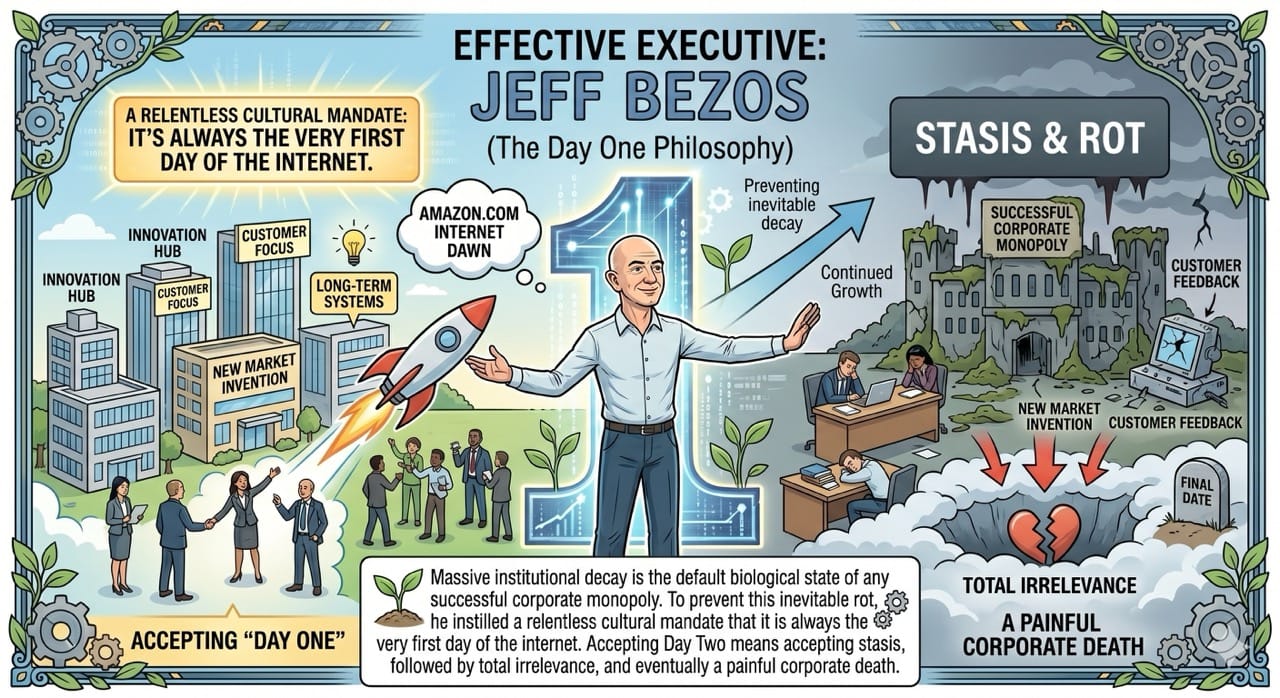
The Day One Philosophy
Massive institutional decay is the default biological state of any successful corporate monopoly.
To prevent this inevitable rot, he instilled a relentless cultural mandate that it is always the very first day of the internet.
Accepting Day Two means accepting stasis, followed by total irrelevance, and eventually a painful corporate death.
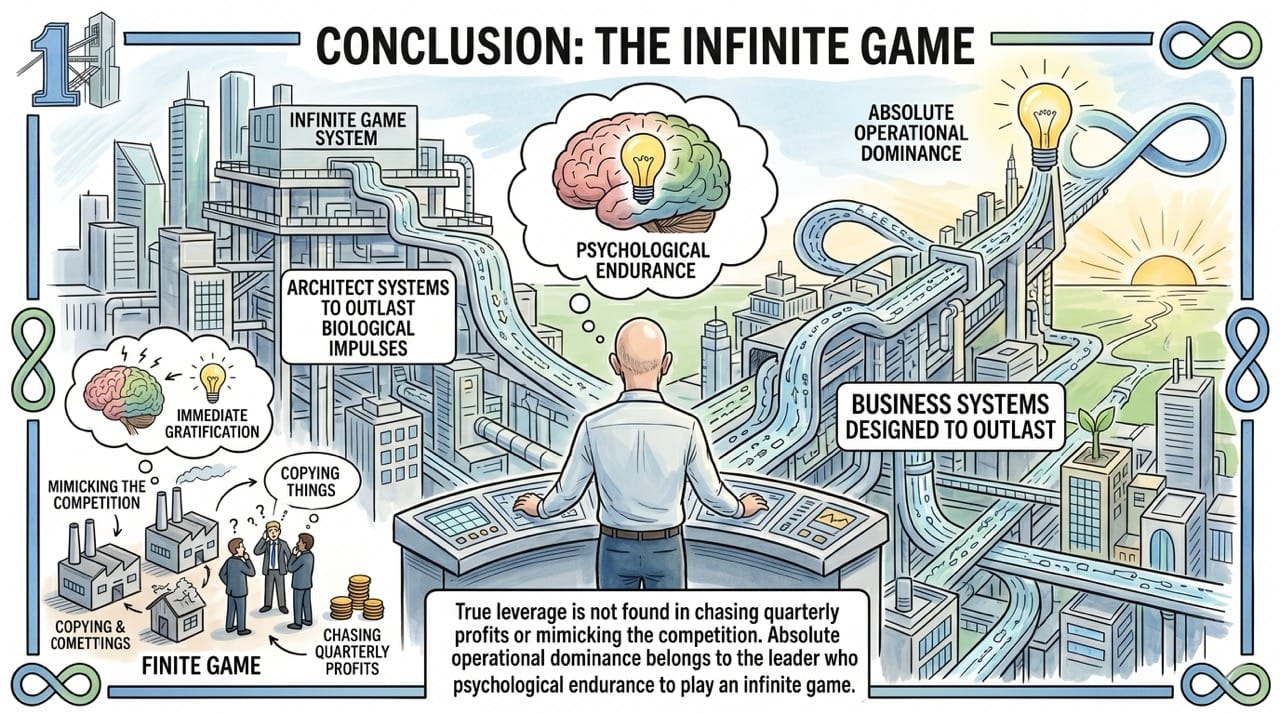
Conclusion: The Infinite Game
As an effective executive, you must architect your business systems to outlast your own immediate biological impulses. True leverage is not found in chasing quarterly profits or mimicking the competition. Absolute operational dominance belongs to the leader who possesses the psychological endurance to play an infinite game.