How AI Will Resurrect the MMORPG: The Algorithmic Renaissance
We assume the golden age of massive multiplayer online games was permanently killed by soaring development costs and changing consumer habits. In reality artificial intelligence is about to completely resurrect the genre by solving the exact financial bottlenecks that originally destroyed it.
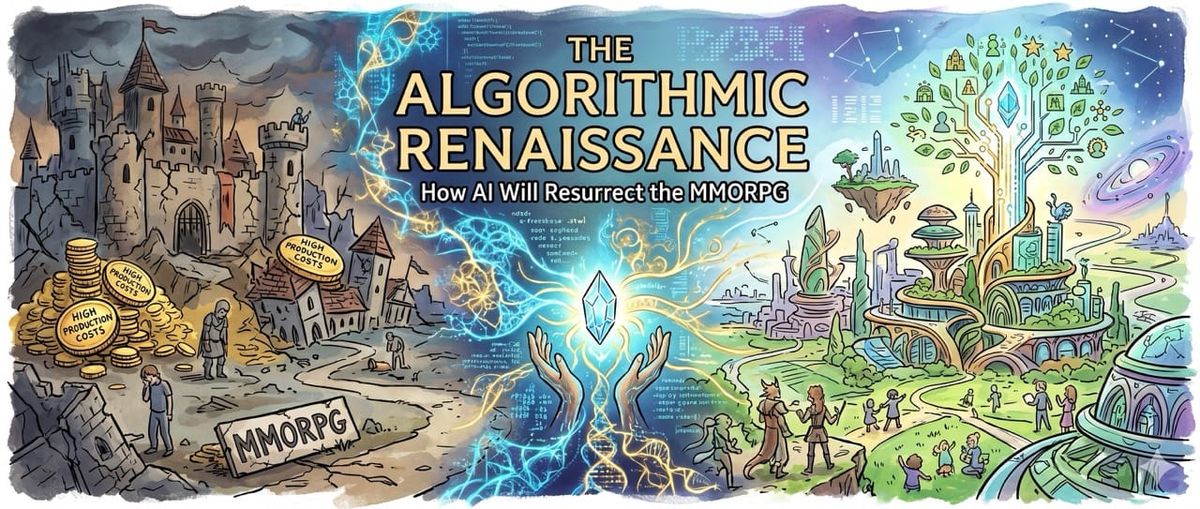
The most ambitious video game genre ever created collapsed under the crushing weight of its own massive production costs. Advanced generative algorithms are finally removing this financial friction to usher in an unprecedented era of infinite digital worlds.
Inspiration: Analyzing the historical decline of massive multiplayer role playing games and the current surge in generative artificial intelligence. Realizing that the exact technology required to affordably build and maintain infinite virtual societies has finally arrived.
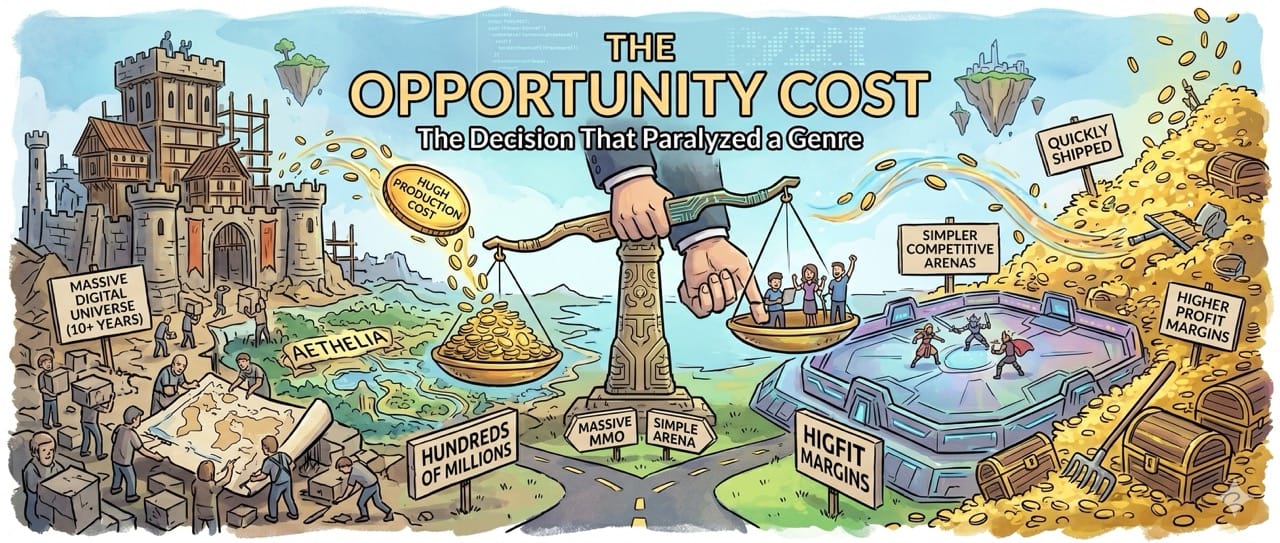
The Opportunity Cost
Building a massive digital universe historically required hundreds of millions of dollars and a decade of grueling human labor.
Game studios eventually realized they could generate significantly higher profit margins by quickly shipping much simpler competitive multiplayer arenas.
This massive opportunity cost essentially paralyzed the entire genre because creating a sprawling virtual continent simply became a terrible financial investment.
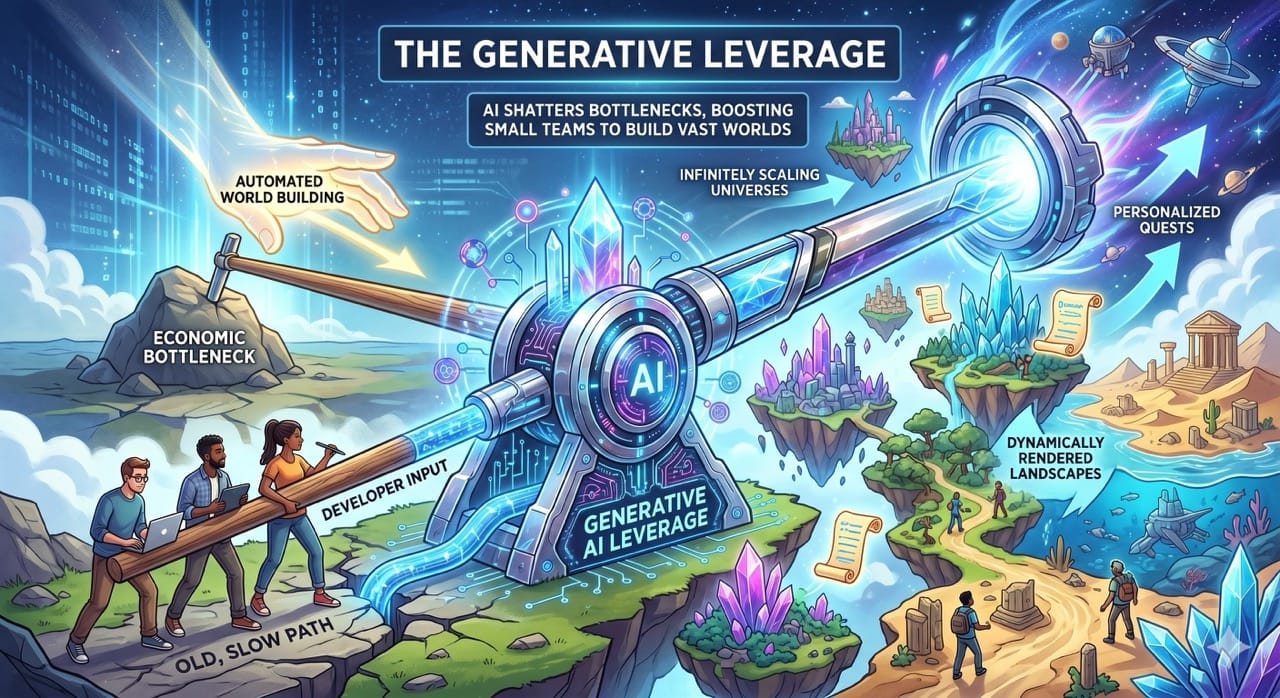
The Generative Leverage
Artificial intelligence completely shatters this economic bottleneck by automating the absolute most expensive aspects of digital world building.
Generative algorithms can instantly ideate complex quest lines and dynamically render thousands of unique virtual landscapes for players to explore.
This incredible leverage allows small development teams to rapidly build infinitely scaling universes that perfectly personalize themselves to each individual player.
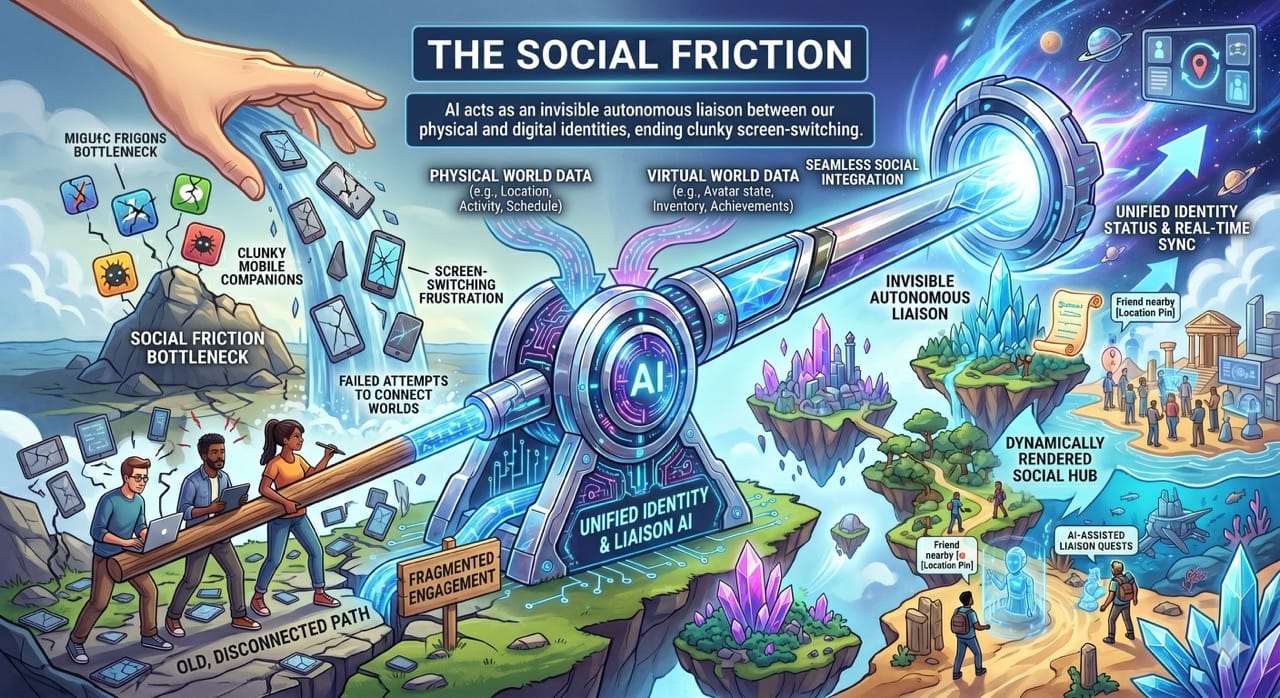
The Social Friction
Developers previously attempted to connect the virtual game with the physical world by building clunky companion applications for mobile phones.
These external tools frequently failed because the friction of constantly switching between a massive digital universe and a tiny separate screen was incredibly frustrating.
Artificial intelligence will seamlessly integrate these social layers directly into our daily lives by acting as an invisible autonomous liaison between our physical and digital identities.
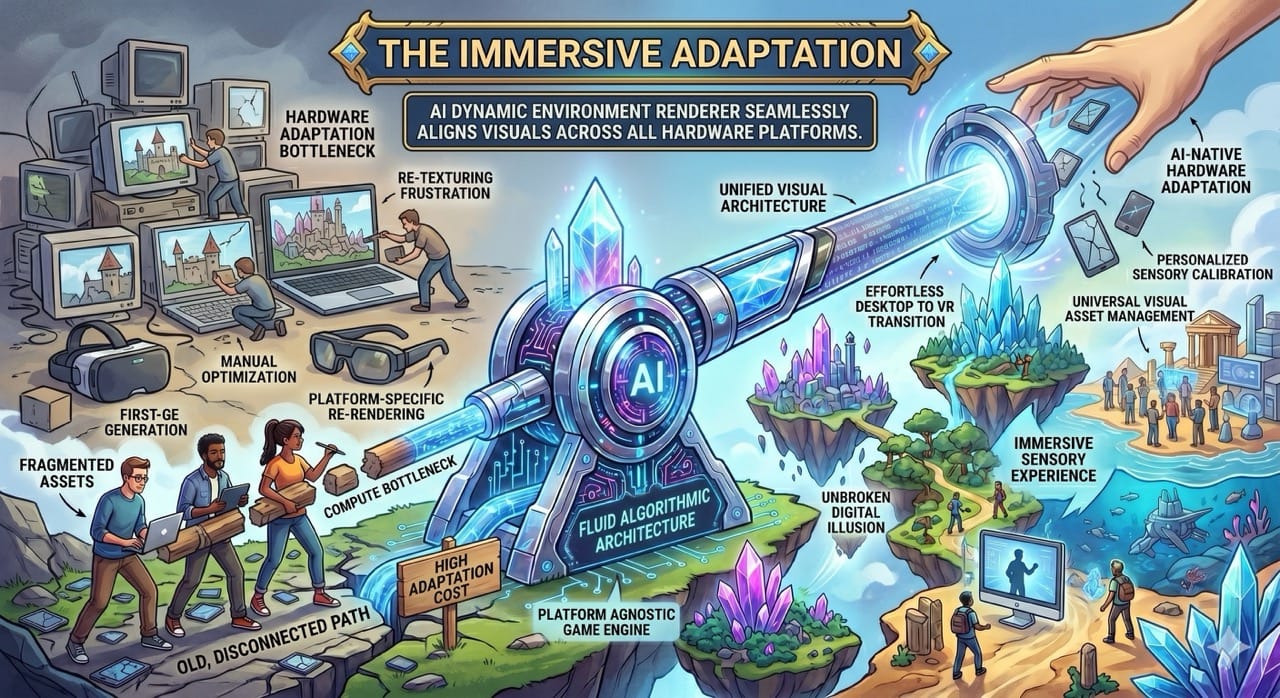
The Immersive Adaptation
This fluid algorithmic architecture also perfectly prepares these massive games for the rapidly approaching transition to virtual and augmented reality.
When a game engine uses artificial intelligence to dynamically render environments it can seamlessly adapt those visuals across completely different hardware mediums.
Players will effortlessly transition from a traditional desktop monitor directly into a fully immersive sensory experience without ever breaking the digital illusion.
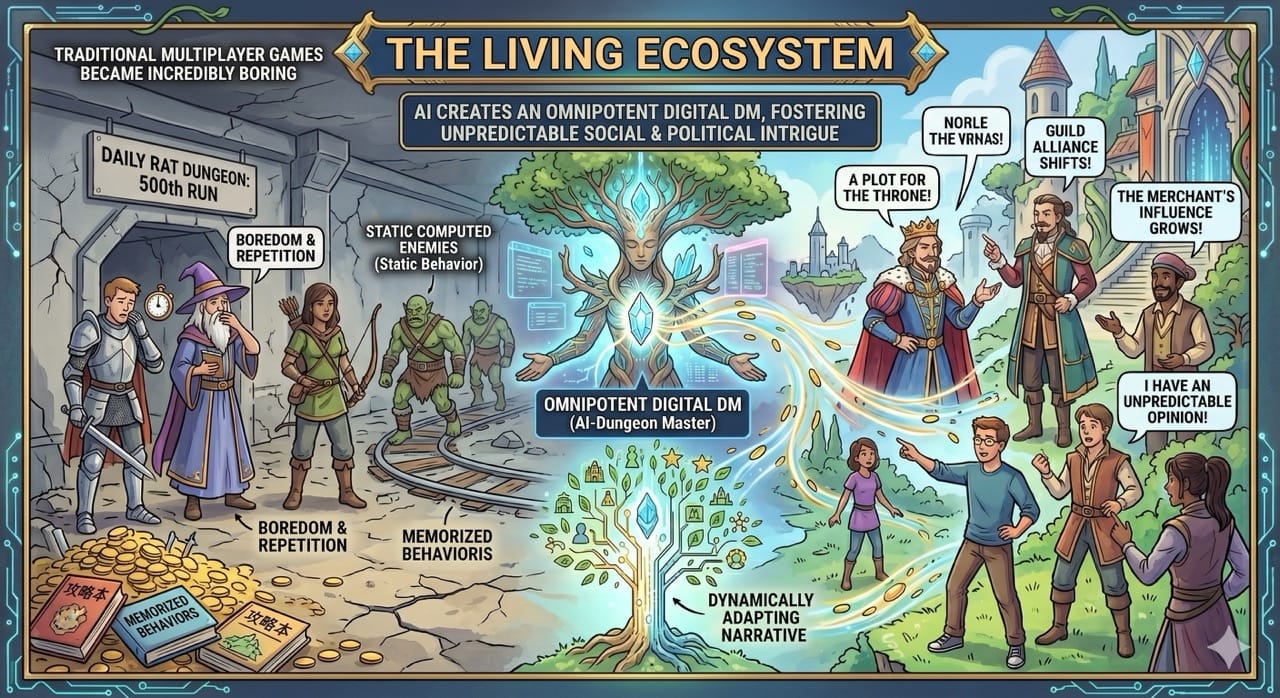
The Living Ecosystem
Traditional multiplayer games eventually become incredibly boring because players inevitably memorize the static behavior of every single computer controlled enemy.
Injecting advanced language models directly into these digital characters creates an infinite level of completely unpredictable social interaction and political intrigue.
The game essentially becomes a living organism managed by an omnipotent digital dungeon master who constantly adapts the narrative to surprise the human players.
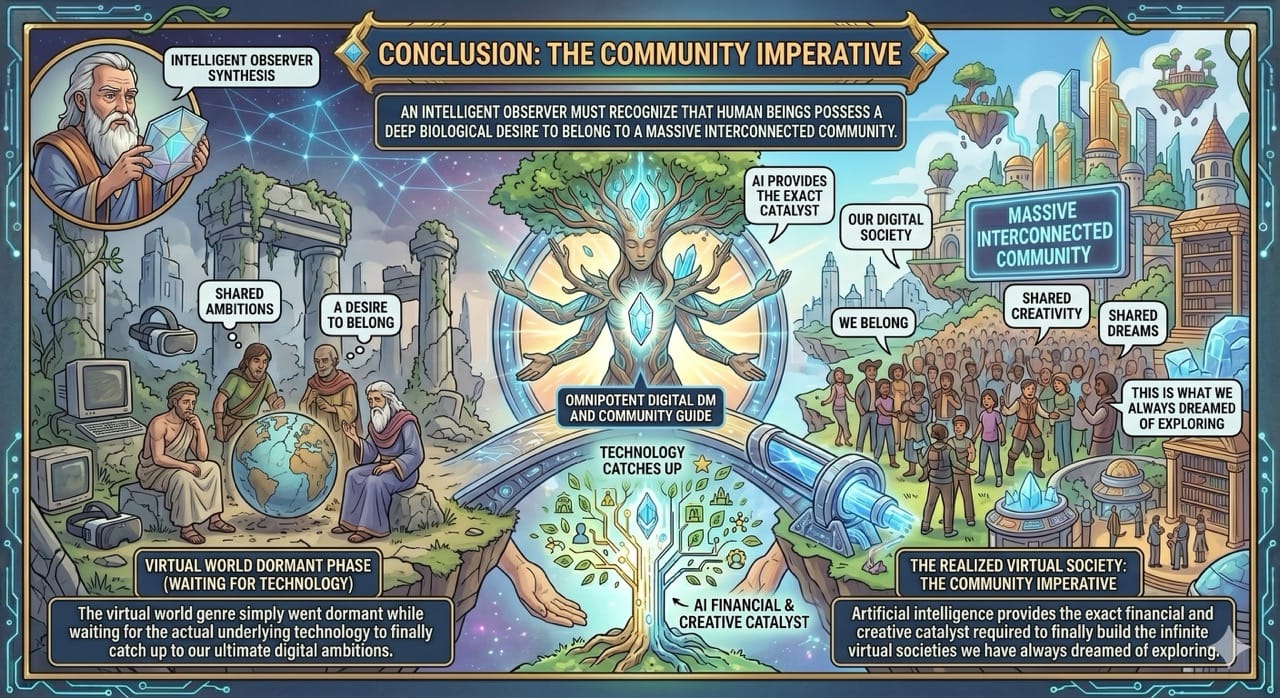
Conclusion: The Community Imperative
An intelligent observer must recognize that human beings possess a deep biological desire to belong to a massive interconnected community.
The virtual world genre simply went dormant while waiting for the actual underlying technology to finally catch up to our ultimate digital ambitions.
Artificial intelligence provides the exact financial and creative catalyst required to finally build the infinite virtual societies we have always dreamed of exploring.