The Survivor Bias: How the Crash Cemented the .Com Domains Monopoly
We assume the dot com crash temporarily delayed the inevitable growth of the modern internet. In reality that massive financial collapse ironically cemented the exact domain extension as the absolute gold standard of digital real estate.
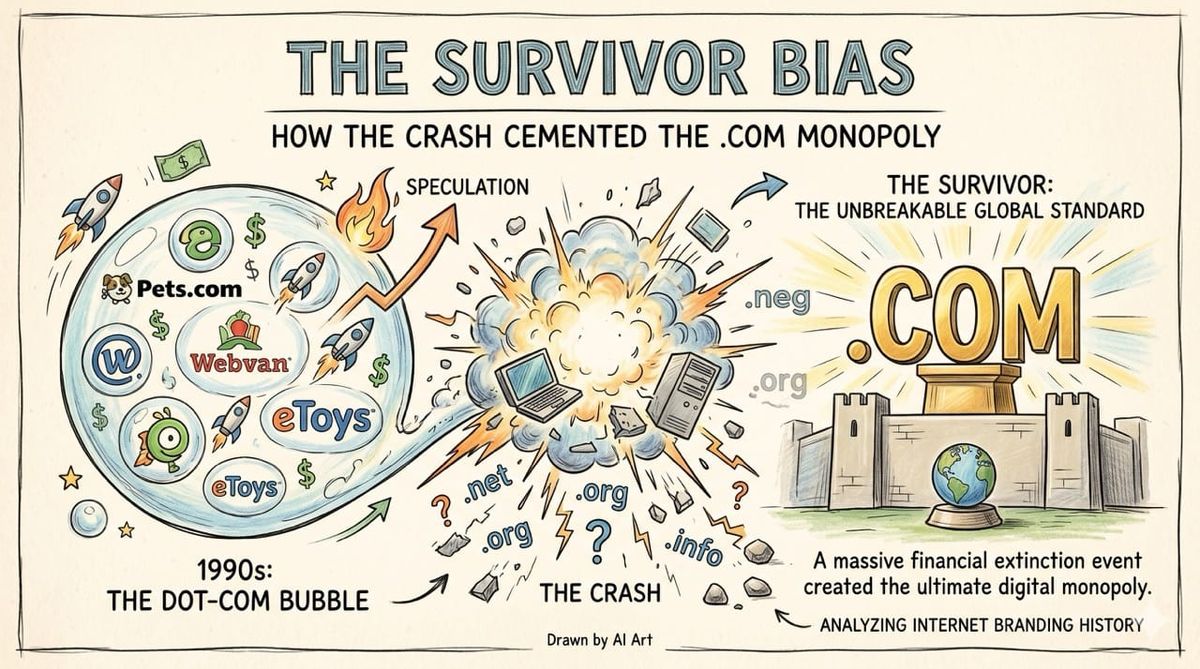
The late nineties featured unprecedented financial speculation regarding early internet companies. The subsequent market collapse permanently altered human psychology and established an unbreakable global branding standard.
Inspiration: Analyzing the counterfactual history of internet domain names and the incredible branding power of the original tech bubble. Realizing that a massive financial extinction event actually created the ultimate digital monopoly we still live with today.

The Historical Gold Rush
During the late nineties venture capitalists eagerly funded literally any business plan attached to a dot com domain name.
This blind speculation created an environment where the domain extension itself became synonymous with cutting edge technological innovation.
The actual underlying business model mattered significantly less than securing that highly specific digital real estate.
The Extinction Event
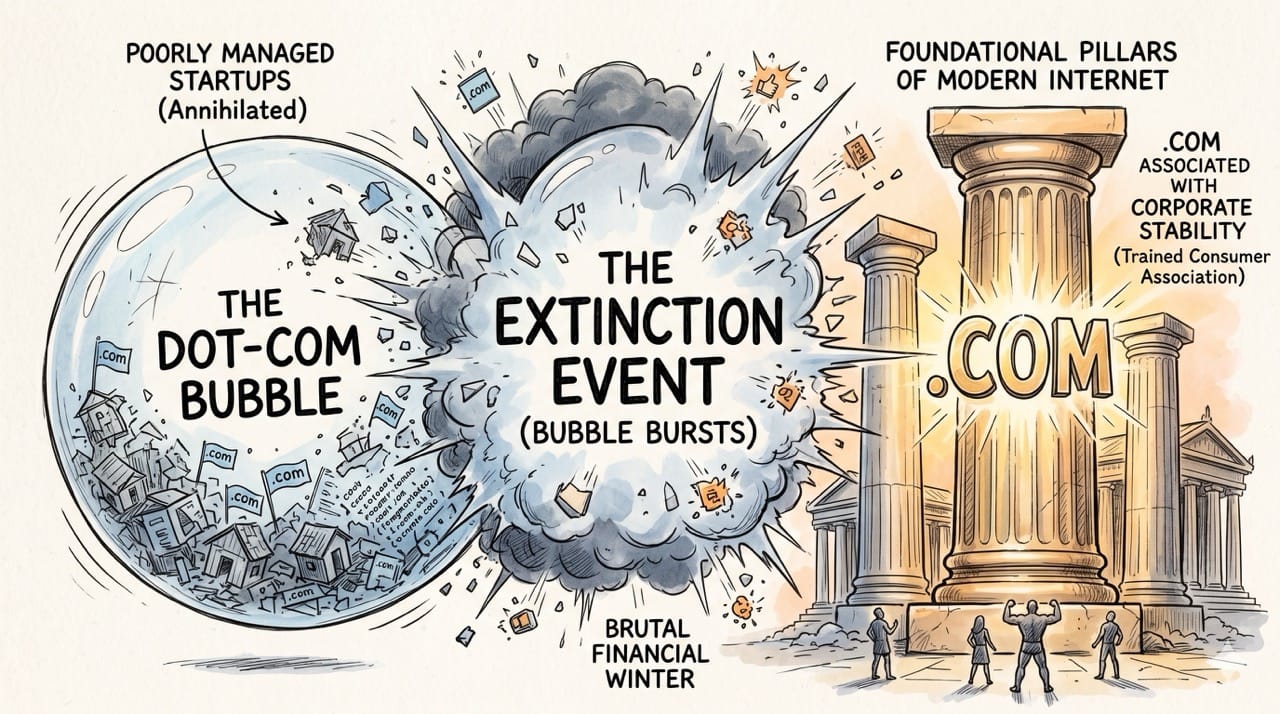
When the massive bubble finally burst it completely annihilated thousands of poorly managed digital startups.
The companies that actually survived this brutal financial winter became the absolute foundational pillars of the modern internet.
Their survival mathematically trained the global consumer population to associate that specific domain extension with unparalleled corporate stability.

The Alternate Timeline
We must seriously consider what would have happened if that massive financial crash never actually occurred.
Unchecked exponential growth would have rapidly exhausted every single recognizable English word within the original domain registry.
This artificial scarcity would have instantly forced massive technology conglomerates to aggressively popularize alternative extensions much earlier in history.
The Accelerated Diversification
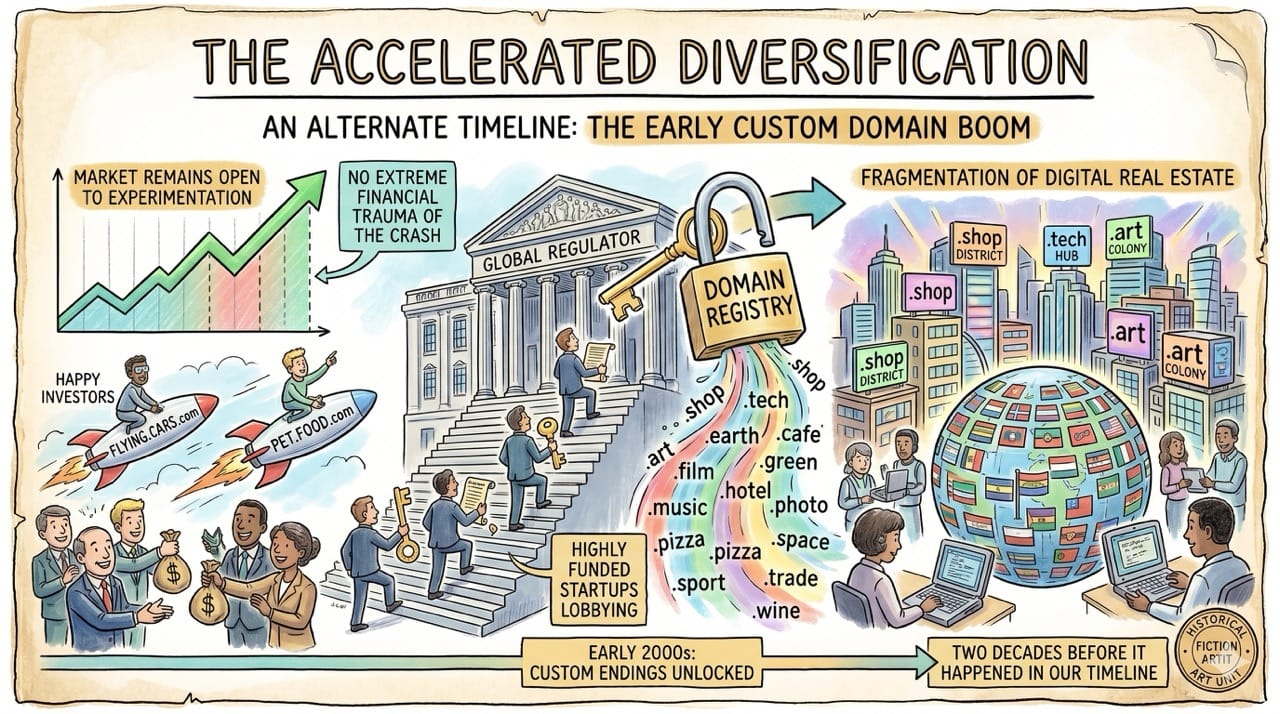
Without the extreme financial trauma of the crash investors would have remained incredibly open to wild digital experimentation.
Highly funded startups would have heavily lobbied global regulators to unlock completely custom domain endings like dot shop or dot tech.
We would have experienced the modern fragmentation of digital real estate at least two decades before it actually happened.
The Psychological Safety Net
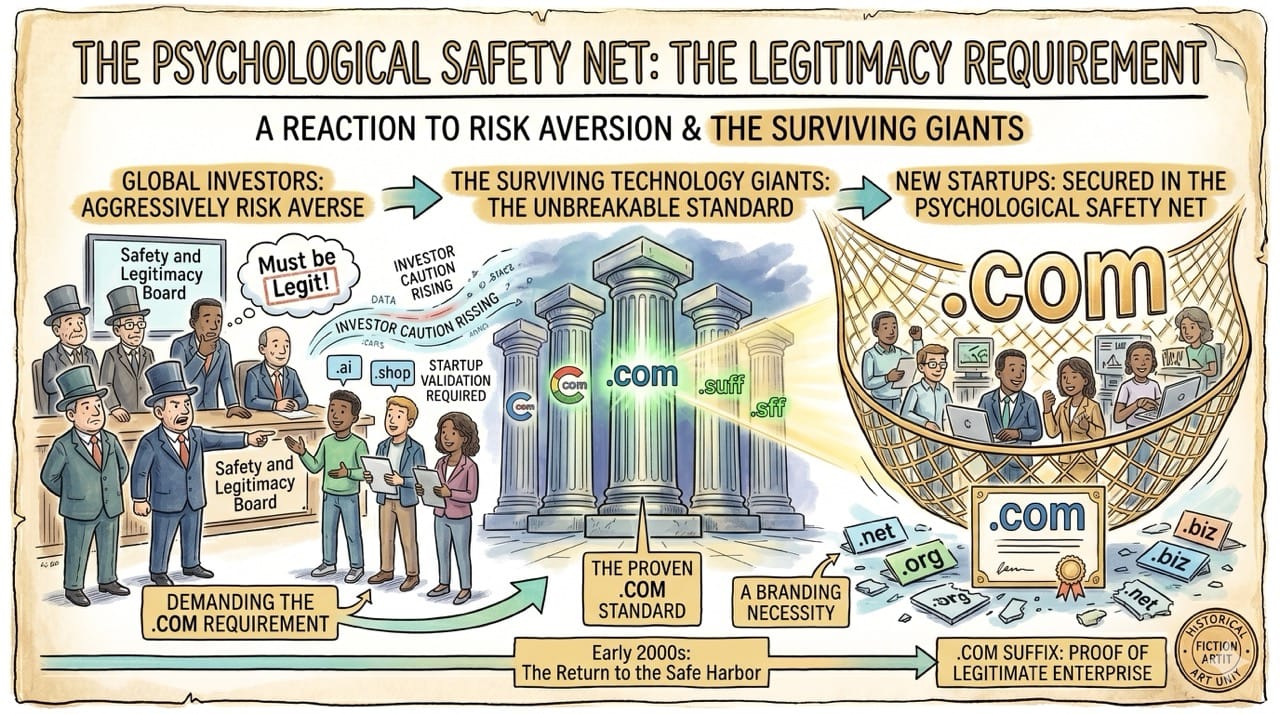
The brutal reality of the crash made global investors incredibly risk averse regarding new digital ventures.
They aggressively demanded that new startups utilize the exact same domain extension as the few surviving technology giants.
The dot com suffix essentially became a psychological safety net proving that a new company was actually a legitimate enterprise.
The Branding Monopoly
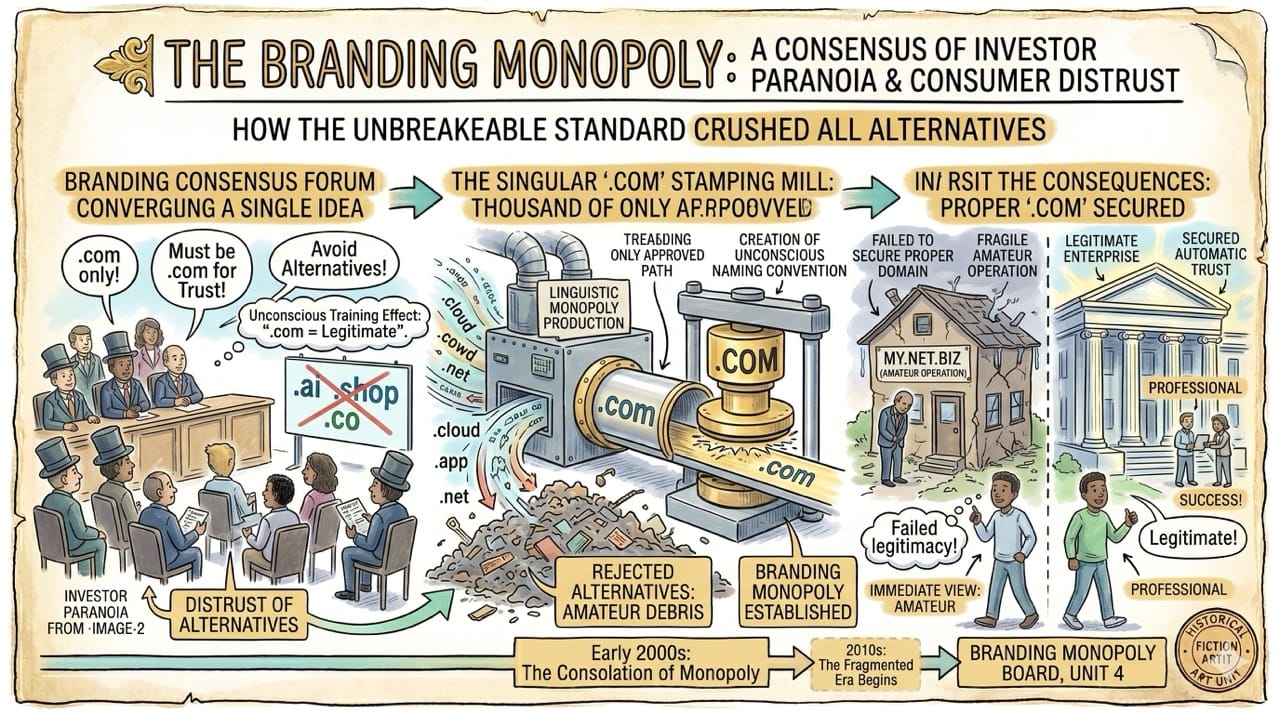
This investor paranoia accidentally created the most powerful linguistic monopoly in modern commercial history.
Consumers were unconsciously trained to completely distrust any web address that deviated from this highly specific naming convention.
If a company could not secure the proper domain they were immediately viewed as a fragile amateur operation.
Conclusion: The Forged Standard
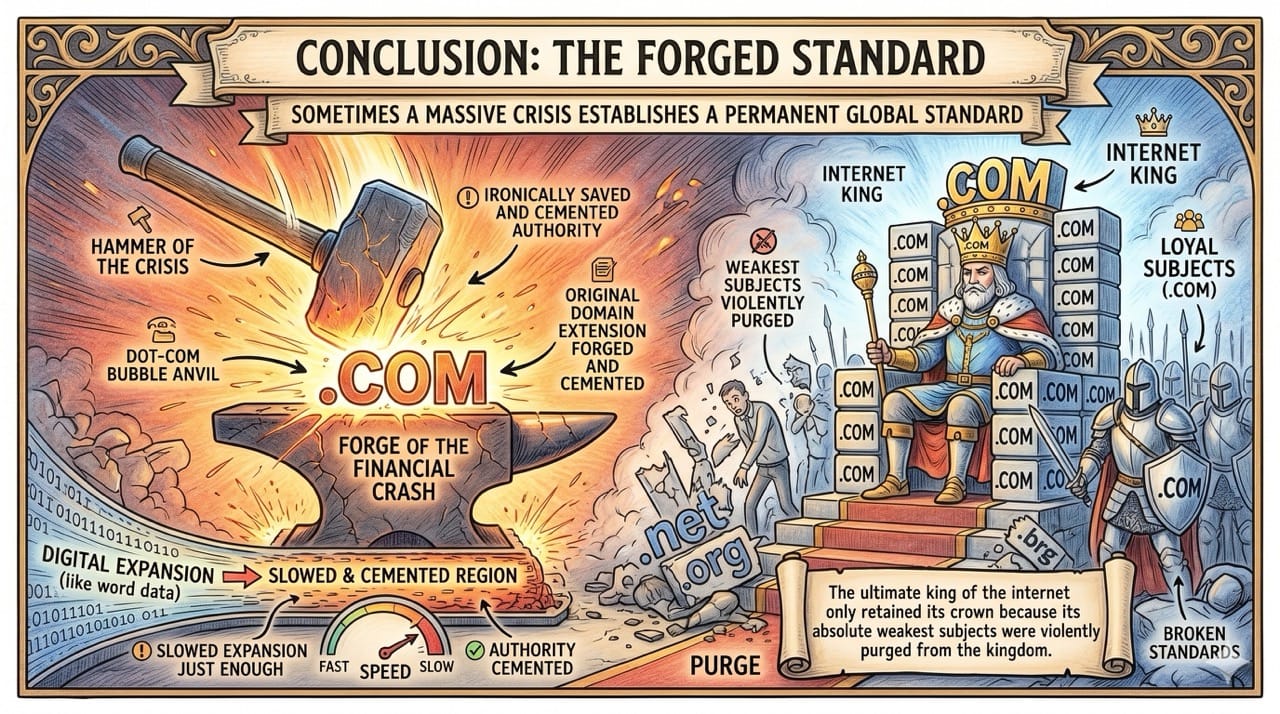
Sometimes a massive crisis is absolutely necessary to establish a permanent global standard of communication.
The financial crash ironically saved the original domain extension by slowing down digital expansion just enough to cement its supreme authority.
The ultimate king of the internet only retained its crown because its absolute weakest subjects were violently purged from the kingdom.