
The Revenue Paradox: The Empirical Math Behind Lower Corporate Taxes
We instinctively believe that taxing corporations heavily is the only way to fund massive government infrastructure. Empirical data reveals a fascinating mathematical paradox where taking a smaller percentage of corporate profits actually generates significantly more total tax revenue.
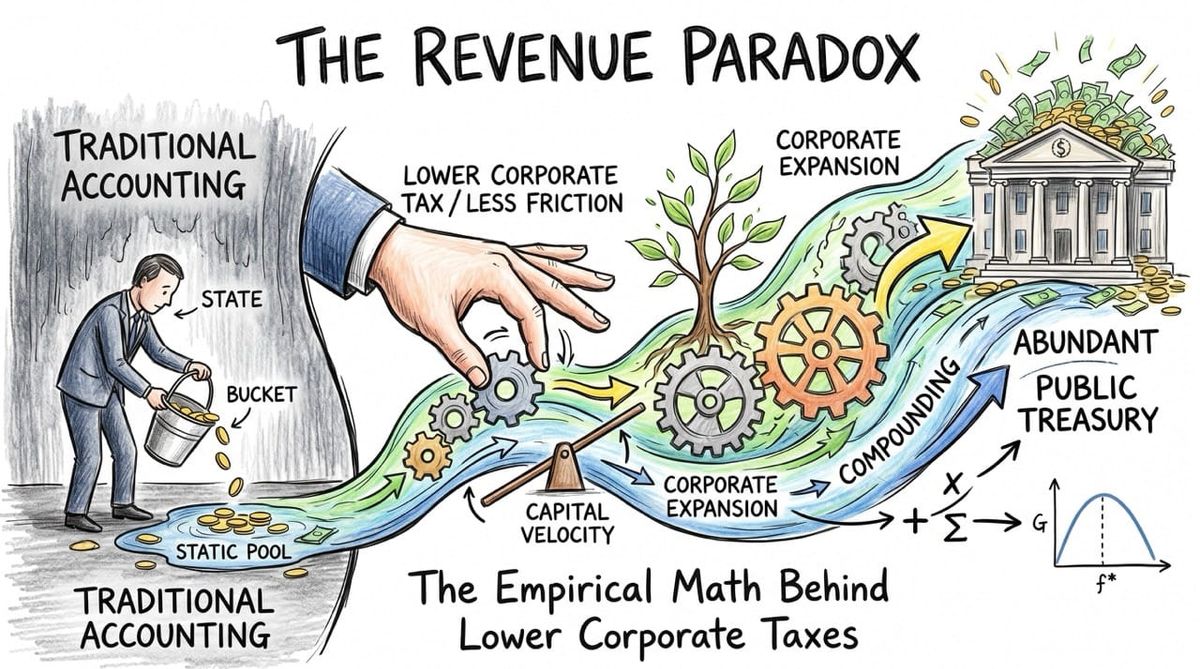
Traditional accounting views the economy as a static pool of money waiting to be harvested by the state. Modern dynamic scoring proves that drastically reducing corporate friction unleashes compounding economic growth that heavily enriches the public treasury.
Inspiration: Examining the historical data behind supply side economics and the mathematical realities of capital velocity. Realizing that the most effective way to maximize government funding is actually to lower the initial barrier to corporate expansion.
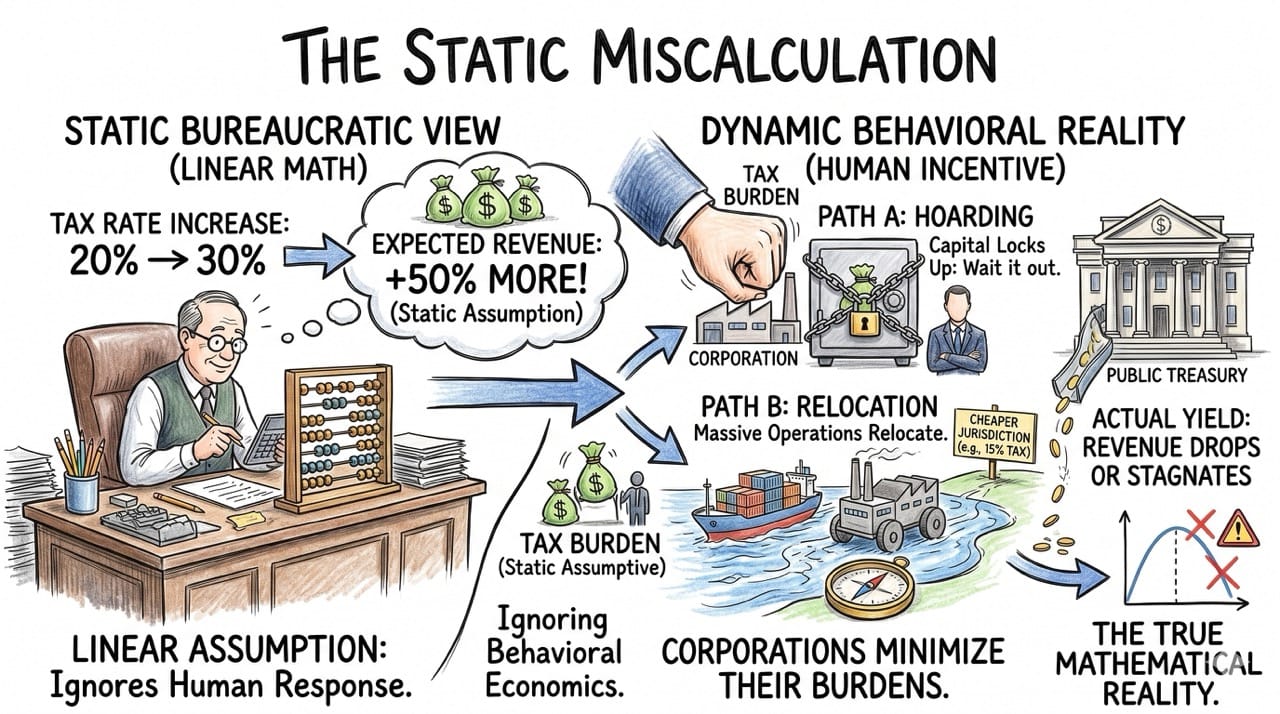
The Static Miscalculation
Traditional bureaucratic math incorrectly assumes that raising a twenty percent tax to thirty percent will automatically yield fifty percent more revenue.
This static calculation completely ignores the fundamental laws of behavioral economics and human incentive.
When the tax burden becomes mathematically oppressive corporations simply hoard their capital or legally relocate their massive operations to cheaper jurisdictions.
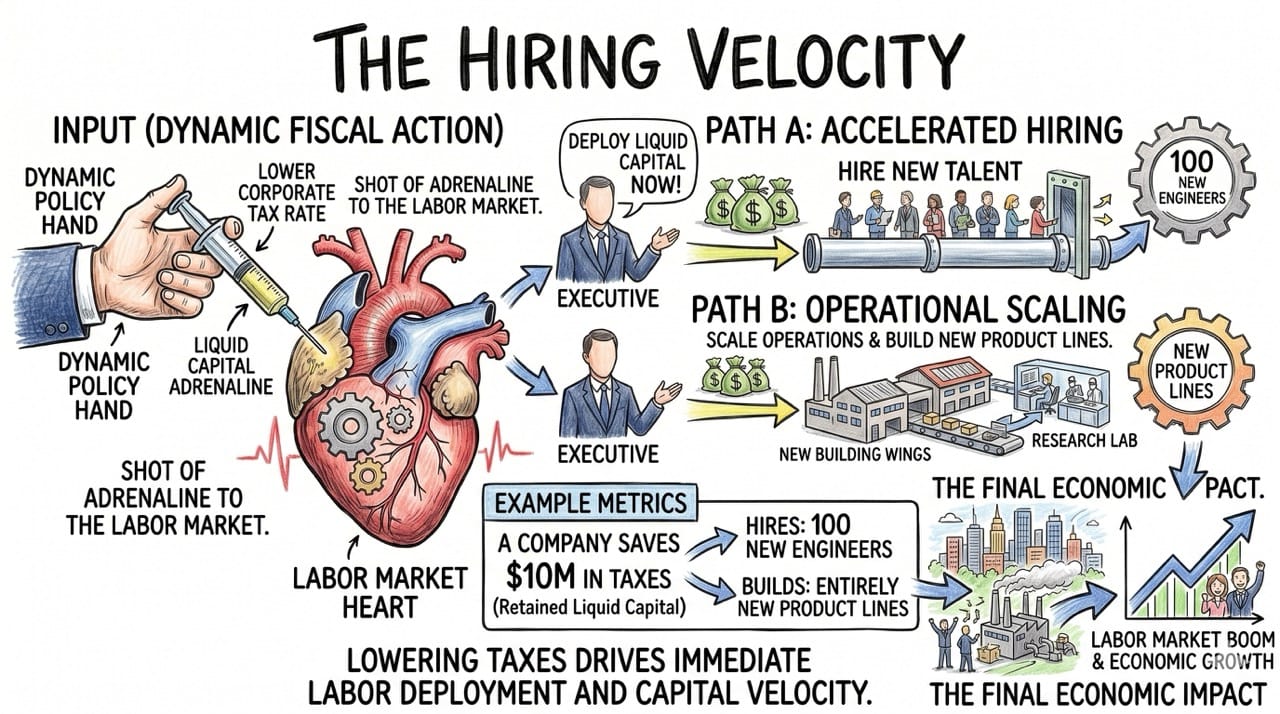
The Hiring Velocity
Lowering the corporate tax rate acts as a massive shot of adrenaline directly into the heart of the labor market.
When executives retain more liquid capital they immediately deploy those funds to aggressively hire new talent and scale their operations.
A company saving ten million dollars in taxes can easily afford to hire one hundred new engineers and build entirely new product lines.
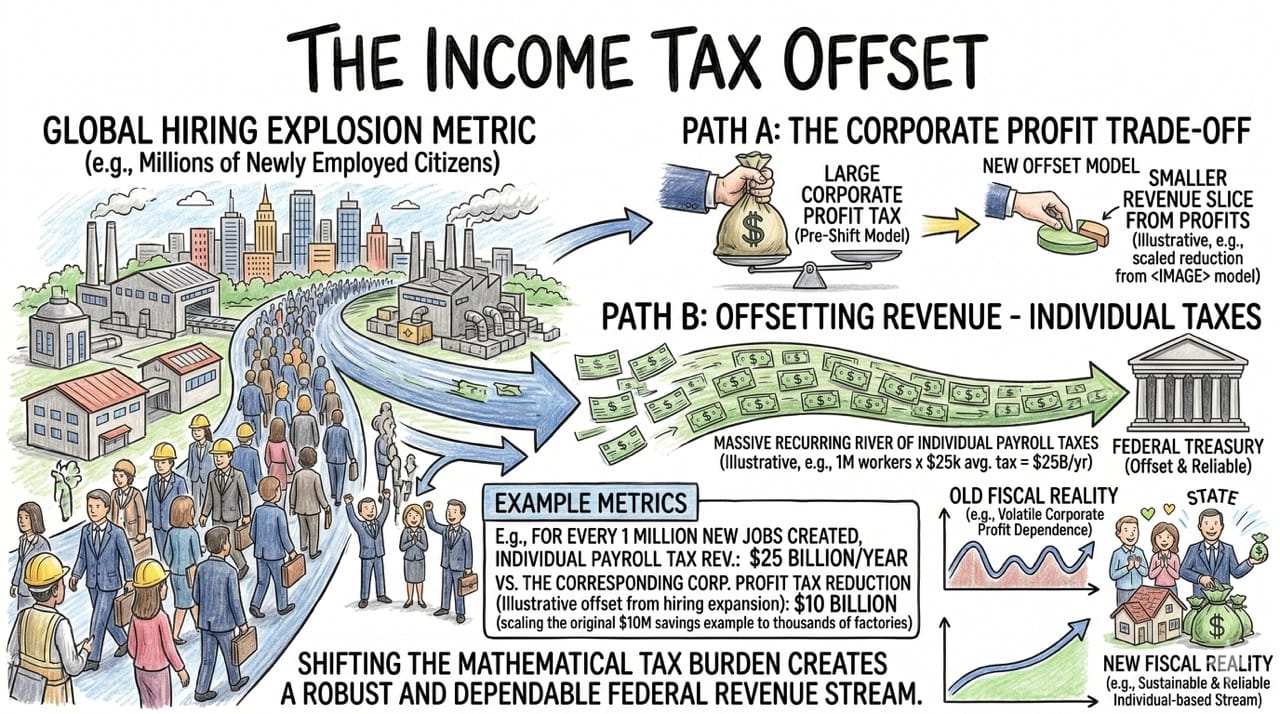
The Income Tax Offset
This rapid hiring explosion fundamentally shifts the mathematical burden of taxation away from the corporation and directly onto the thriving workforce.
The government trades a smaller slice of corporate profit for a massive recurring river of individual payroll taxes.
Adding millions of newly employed citizens to the middle class creates a vastly more sustainable and reliable stream of federal revenue.

The Equity Multiplier
Allowing companies to keep more of their own money mathematically guarantees that their public market valuations will aggressively skyrocket.
As these massive corporations appreciate in value their millions of individual investors experience absolutely incredible financial windfalls.
When these wealthy shareholders eventually sell their highly appreciated stock the government collects astronomical sums of capital gains revenue.

The Pension Lifeline
We frequently forget that the stability of massive public pension funds relies entirely on the continuous growth of corporate equities.
When lower taxes drive corporate valuations higher these critical retirement funds become mathematically solvent and highly profitable.
This incredible long tail benefit prevents the government from spending billions of taxpayer dollars to rescue failing municipal retirement systems.
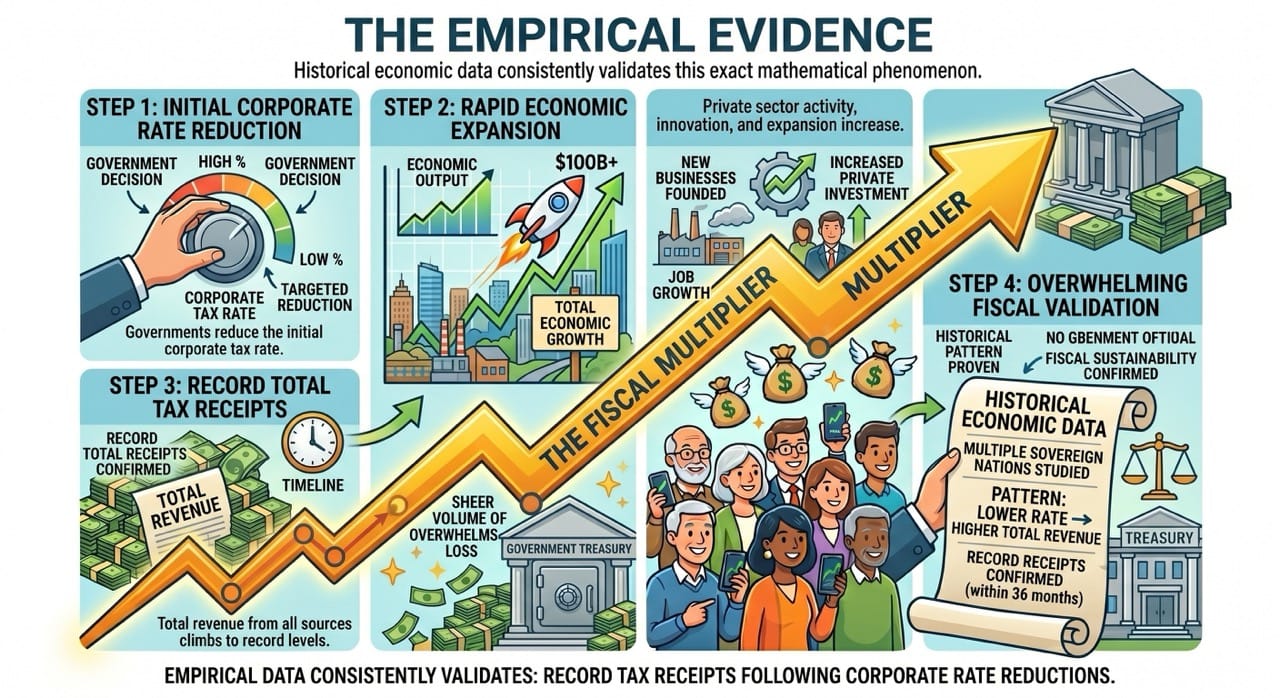
The Empirical Evidence
Historical economic data consistently validates this exact mathematical phenomenon across multiple different sovereign nations.
Following significant corporate rate reductions governments routinely report record high total tax receipts within thirty six months.
The sheer volume of newly generated economic activity completely overwhelms the initial mathematical loss of the lower corporate rate.
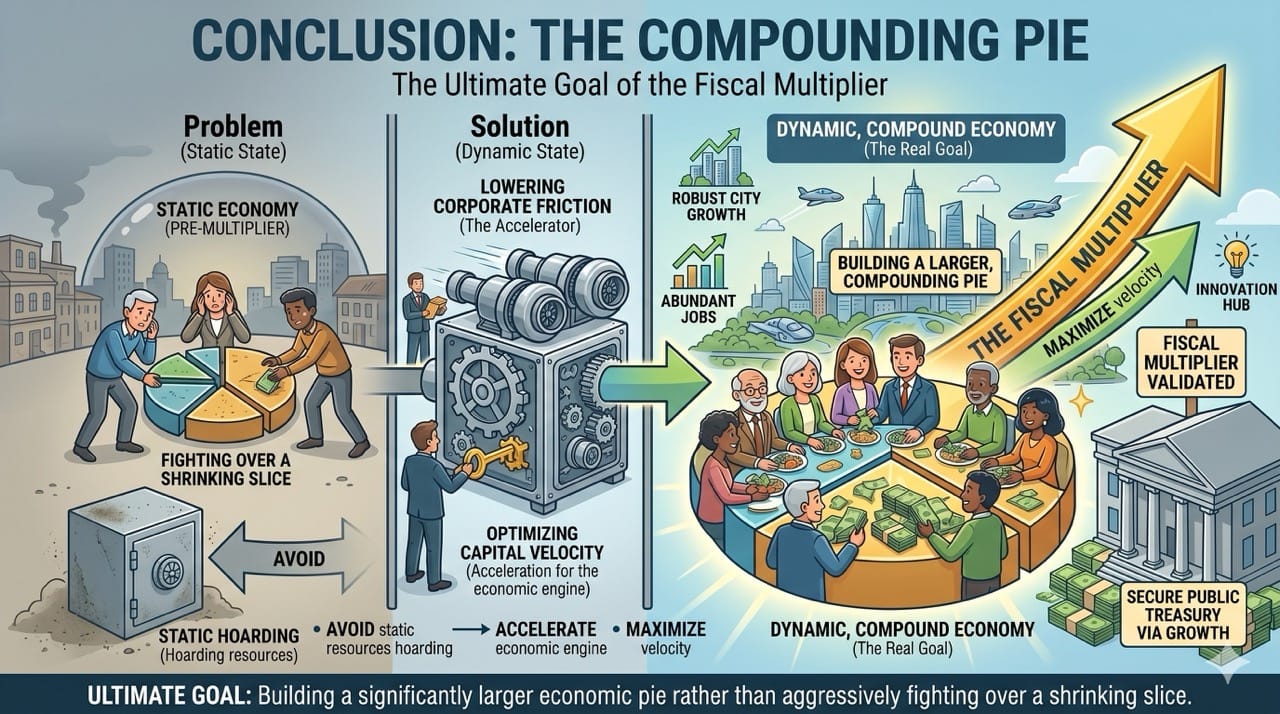
Conclusion: The Compounding Pie
An intelligent sovereign state must always optimize for the maximum velocity of capital rather than simply hoarding static resources.
Lowering corporate friction is the absolute fastest way to mathematically accelerate the entire economic engine of a modern nation.
The ultimate goal is simply building a significantly larger economic pie rather than aggressively fighting over a shrinking slice.