How Apple Journal Will Silently Upsell Cloud Subscriptions
We assume built in wellness applications are a pure value addition to our expensive hardware. In reality, the Apple Journal is a brilliant psychological Trojan horse designed to rapidly exhaust your free cloud storage tier.

Digital journaling provides immense cognitive relief for the user while simultaneously generating massive recurring revenue for the platform. The architecture of the application intentionally duplicates data to force a mandatory subscription upgrade.
Inspiration: Auditing my personal iCloud backup size and realizing the new Journal application consumes massive amounts of data. Discovering that attaching an existing photo to a journal entry completely duplicates the file size instead of simply referencing the original image.
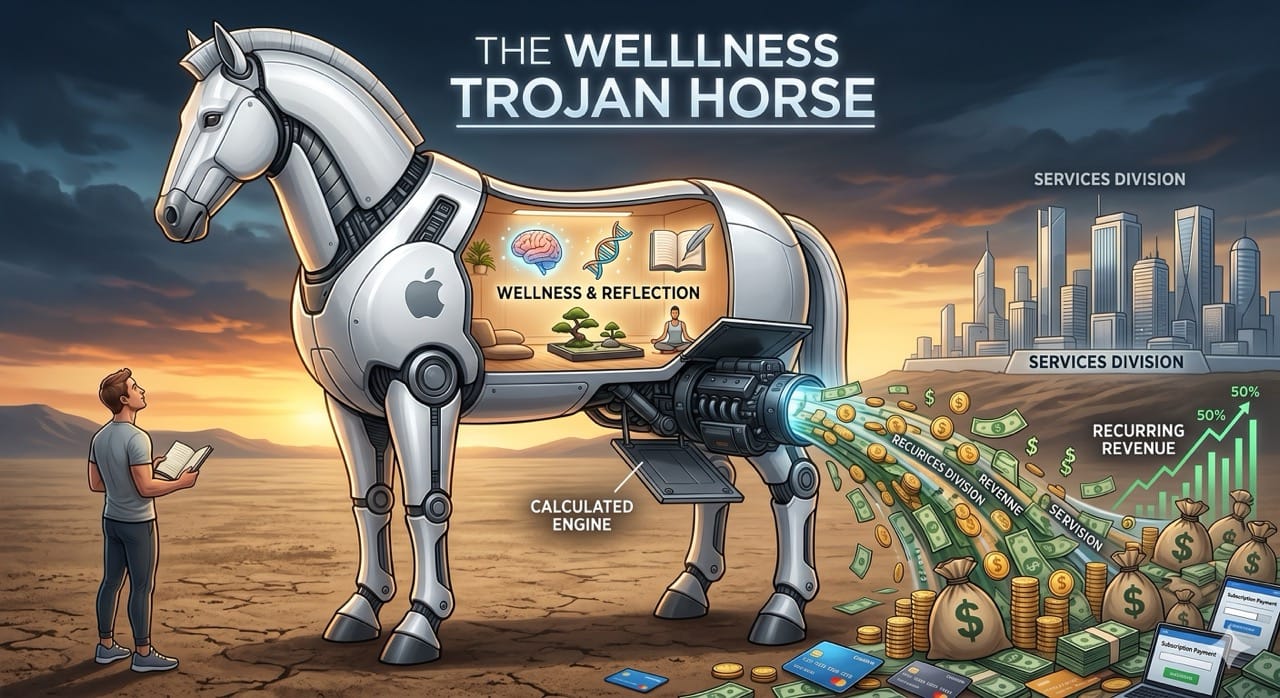
The Wellness Trojan Horse
Apple recently introduced a native journaling application marketed entirely as a tool for mental health and cognitive reflection.
As someone who values biological optimization, I completely recognize the profound psychological benefits of documenting your daily life.
However, this application also serves as a highly calculated engine to drive massive recurring revenue for their lucrative services division.
The Duplication Mechanic
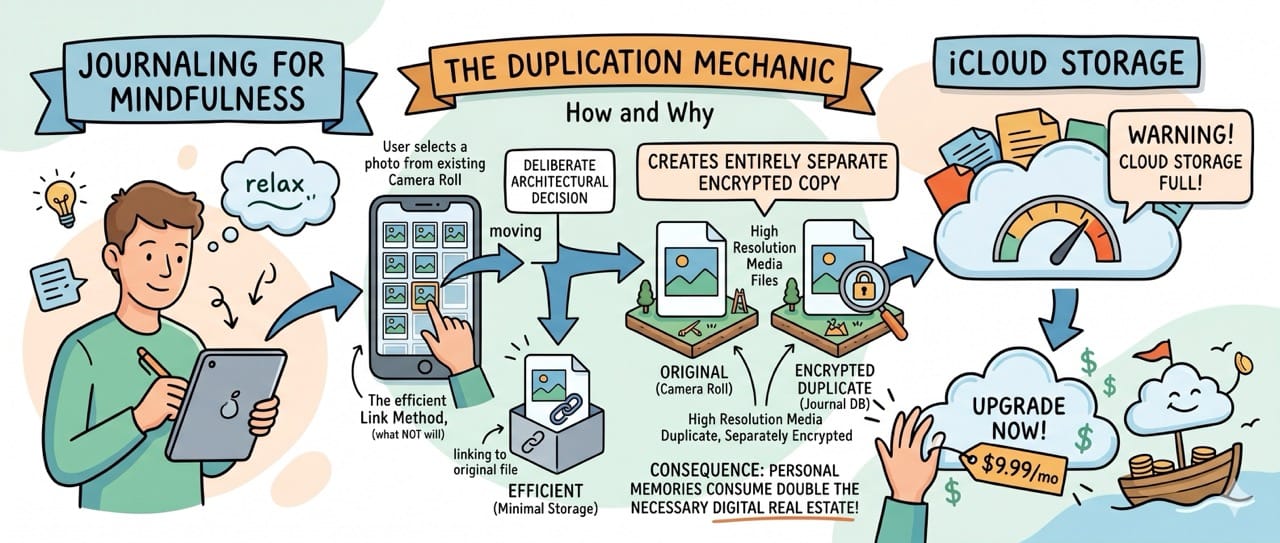
When you attach a photo from your existing camera roll to a new journal entry, the software does not simply link to the original file.
The application creates an entirely separate encrypted copy of that high resolution media strictly for the journal database.
This deliberate architectural decision ensures that your personal memories consume double the necessary digital real estate.
The Cryptographic Excuse
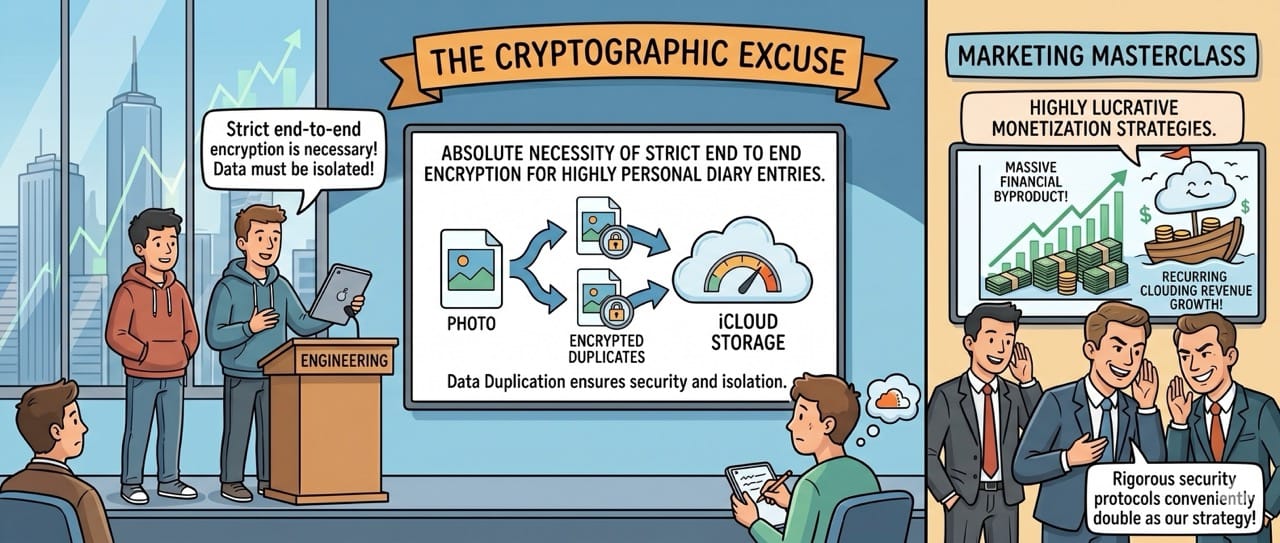
Engineers will quickly defend this data duplication by citing the absolute necessity of strict end to end encryption for highly personal diary entries.
While isolating this sensitive data is technically valid, the massive financial byproduct of this architecture cannot be ignored.
Apple operates as a master class in performance marketing where rigorous security protocols conveniently double as highly lucrative monetization strategies.
The Five Gigabyte Illusion
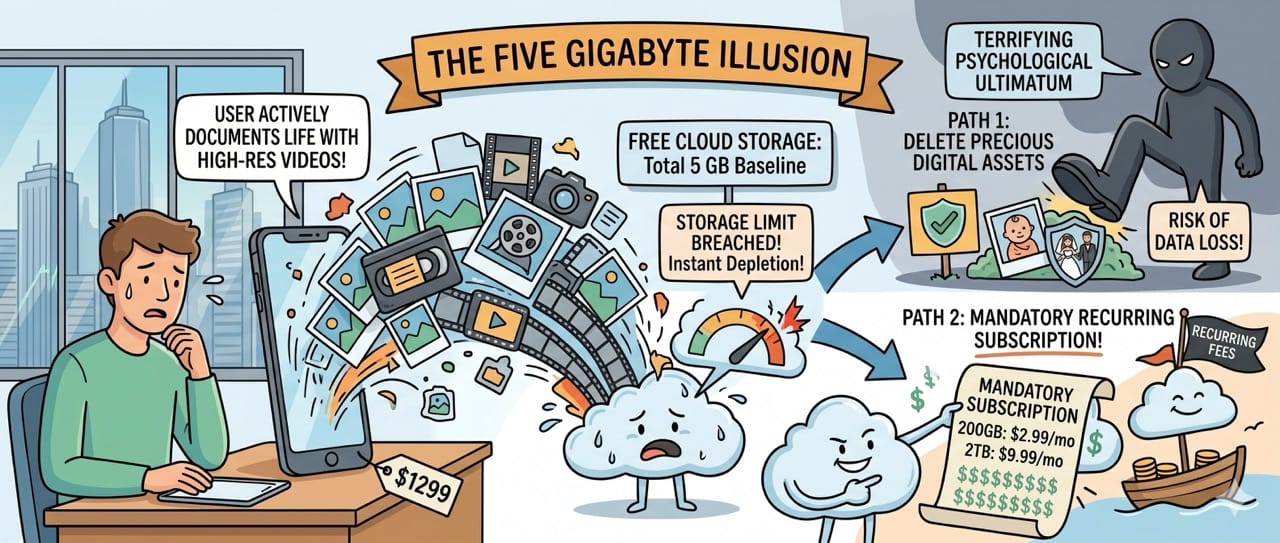
The company notoriously still provides an insulting five gigabytes of free cloud storage to consumers purchasing thousand dollar smartphones.
A user actively documenting their life with high resolution videos and photos will instantly exhaust this tiny baseline capacity.
Once the storage limit is breached, the consumer faces a terrifying psychological ultimatum regarding their most precious digital assets.
The Psychological Ransom
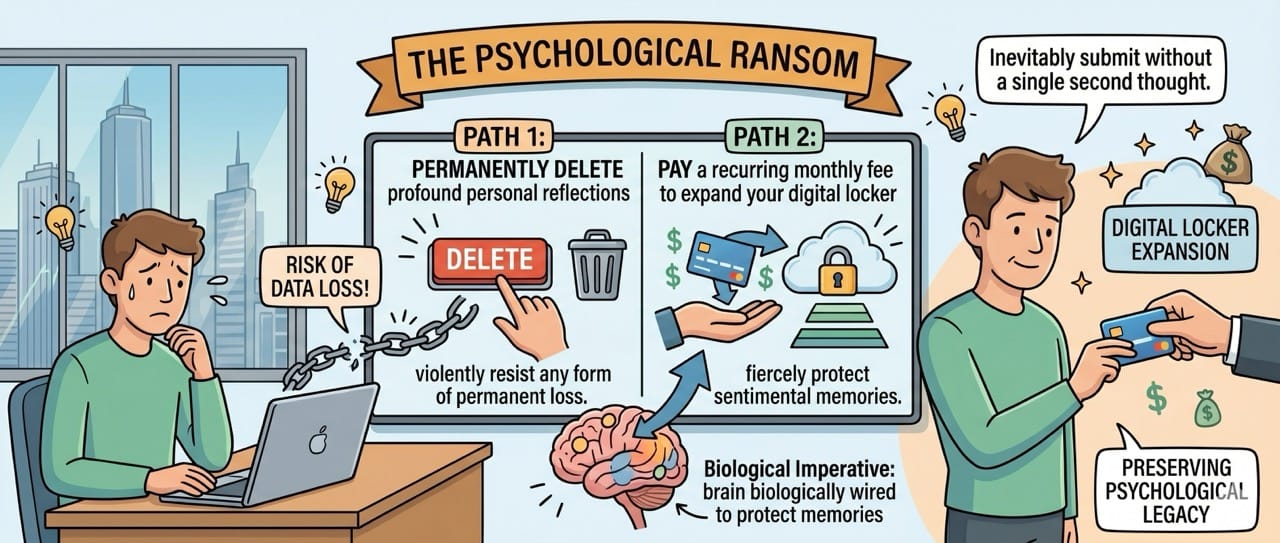
You are forced to either permanently delete your profound personal reflections or pay a recurring monthly fee to expand your digital locker.
The human brain is biologically wired to fiercely protect sentimental memories and violently resist any form of permanent loss.
The consumer will inevitably submit their credit card information to preserve their psychological legacy without a single second thought.
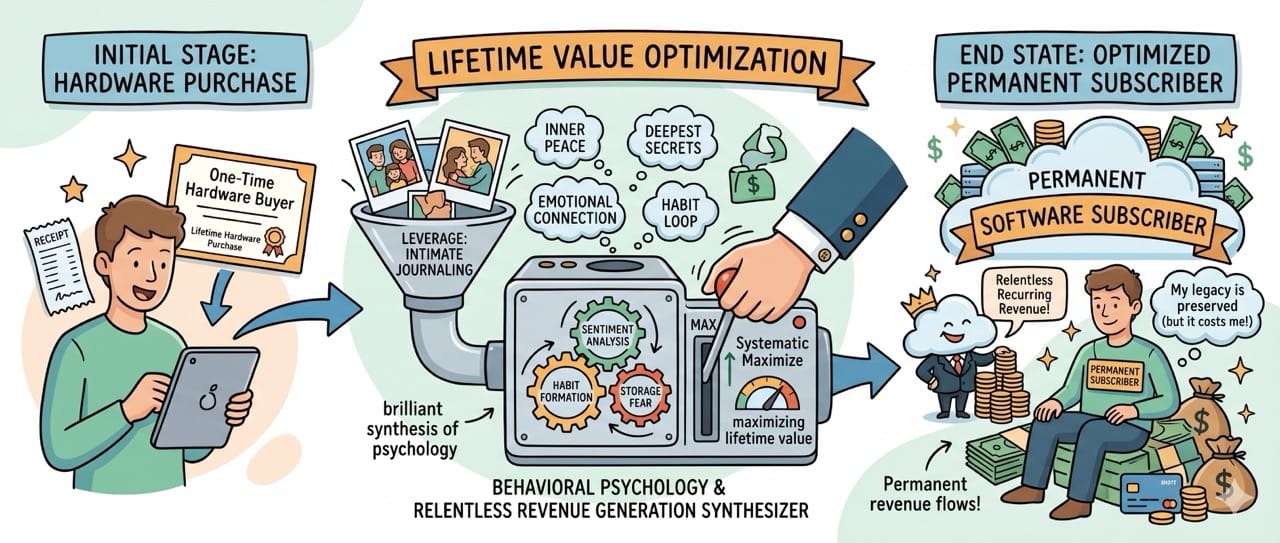
The Lifetime Value Optimization
This strategy perfectly demonstrates how elite corporations systematically maximize the lifetime value of every single hardware purchaser.
They leverage the incredibly intimate act of personal journaling to convert a one time hardware buyer into a permanent software subscriber.
It is an absolutely brilliant synthesis of behavioral psychology and relentless corporate revenue generation.
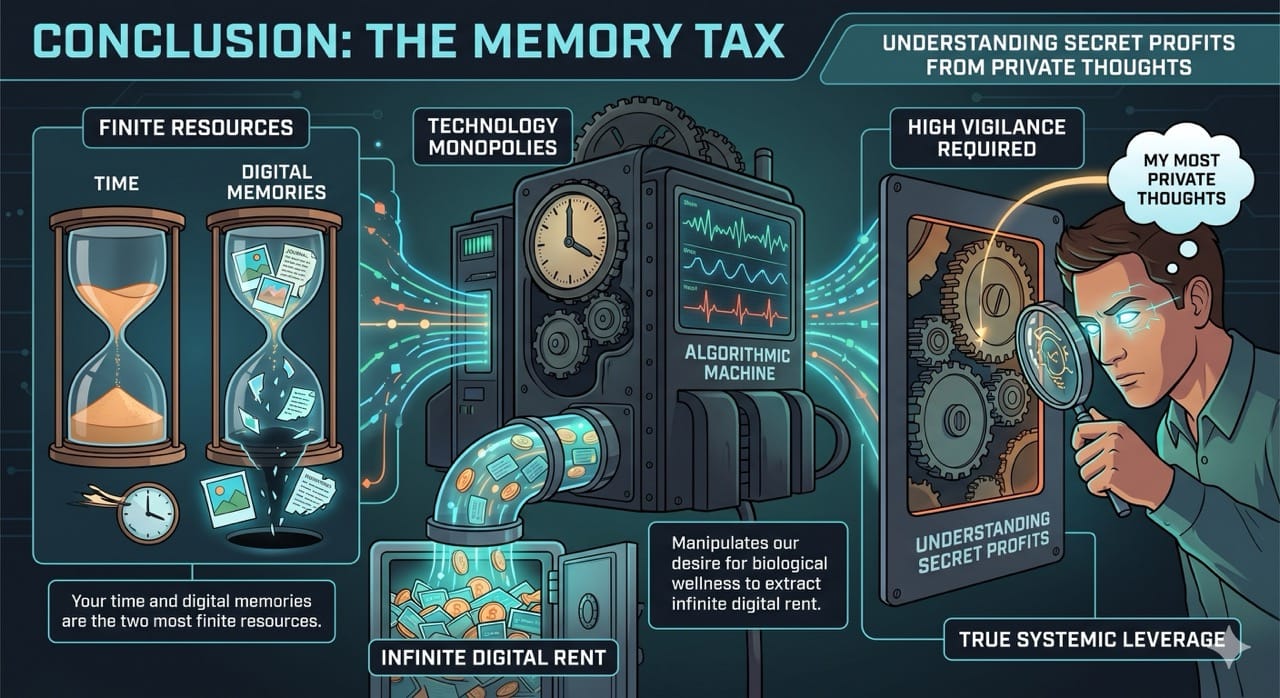
Conclusion: The Memory Tax
Your time and your digital memories are the two most finite resources you possess in the modern economy.
We must remain highly vigilant of how major technology monopolies manipulate our desire for biological wellness to extract infinite digital rent.
True systemic leverage requires understanding exactly how the algorithmic machine secretly profits from your most private thoughts.