How AR Glasses Will Gamify the Great Outdoors: The Augmented Trail
We assume augmented reality is strictly a productivity tool designed for indoor office environments. In reality, AR glasses will completely revolutionize outdoor recreation by gamifying the wilderness and turning hiking into a highly interactive, multiplayer experience.
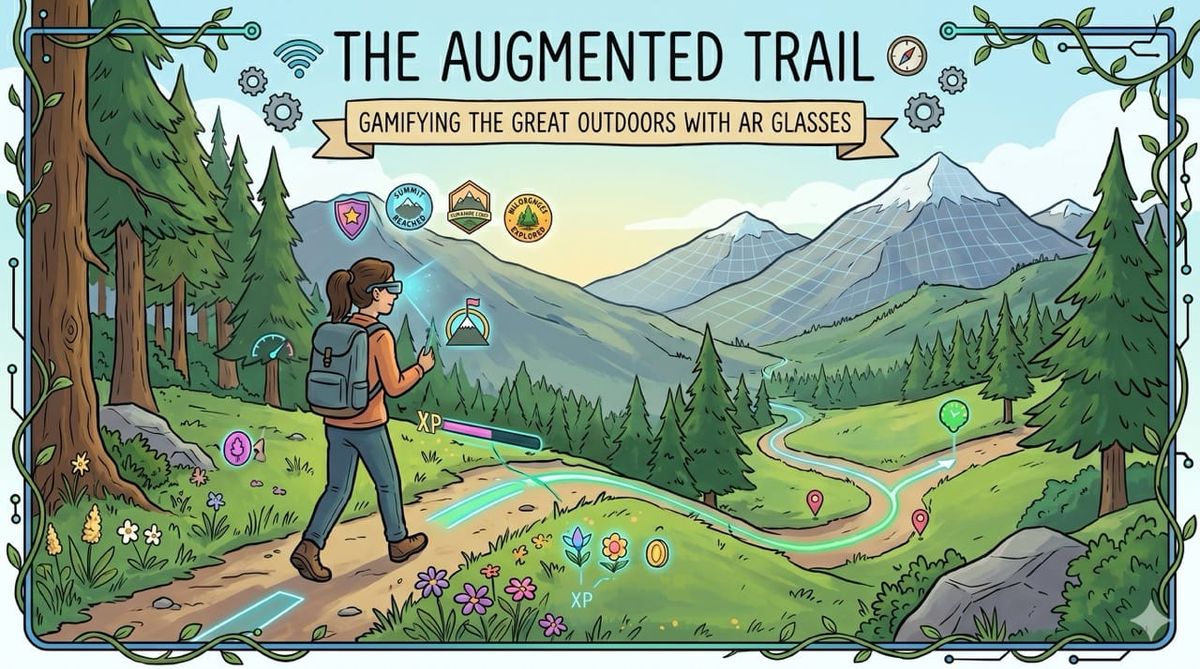
The physical isolation of nature is about to be completely overwritten by a digital HUD. We are engineering a future where the wilderness is just another interactive software layer.
Inspiration: Analyzing the Anduril Eagle Eye demonstration and the compounding network effects of platforms like Strava. Realizing that the rapid gamification of physical exercise will inevitably expand to conquer the most remote outdoor environments.
The Strava Blueprint
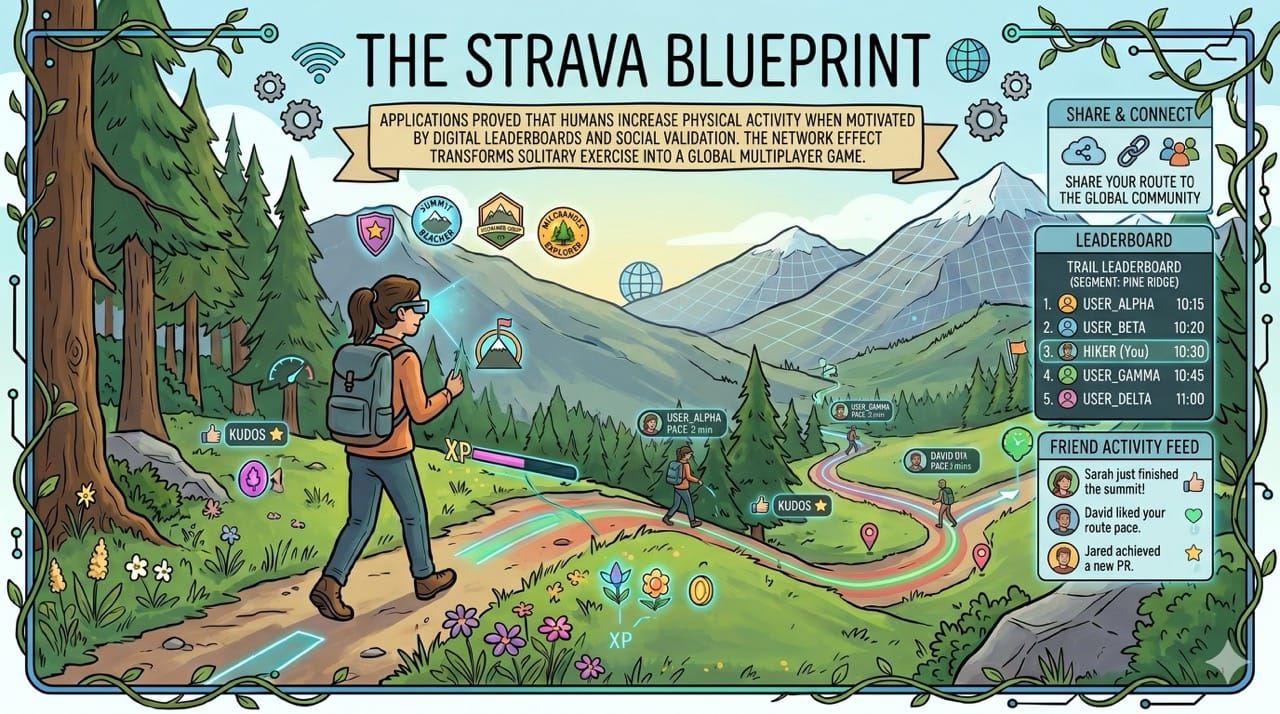
Applications like Strava successfully proved that humans will dramatically increase their physical activity when motivated by digital leaderboards and social validation.
The network effect of sharing a running route completely transformed solitary exercise into a highly addictive, global multiplayer game.
Augmented reality glasses simply represent the ultimate, frictionless hardware evolution of this exact psychological principle.
The Interactive HUD
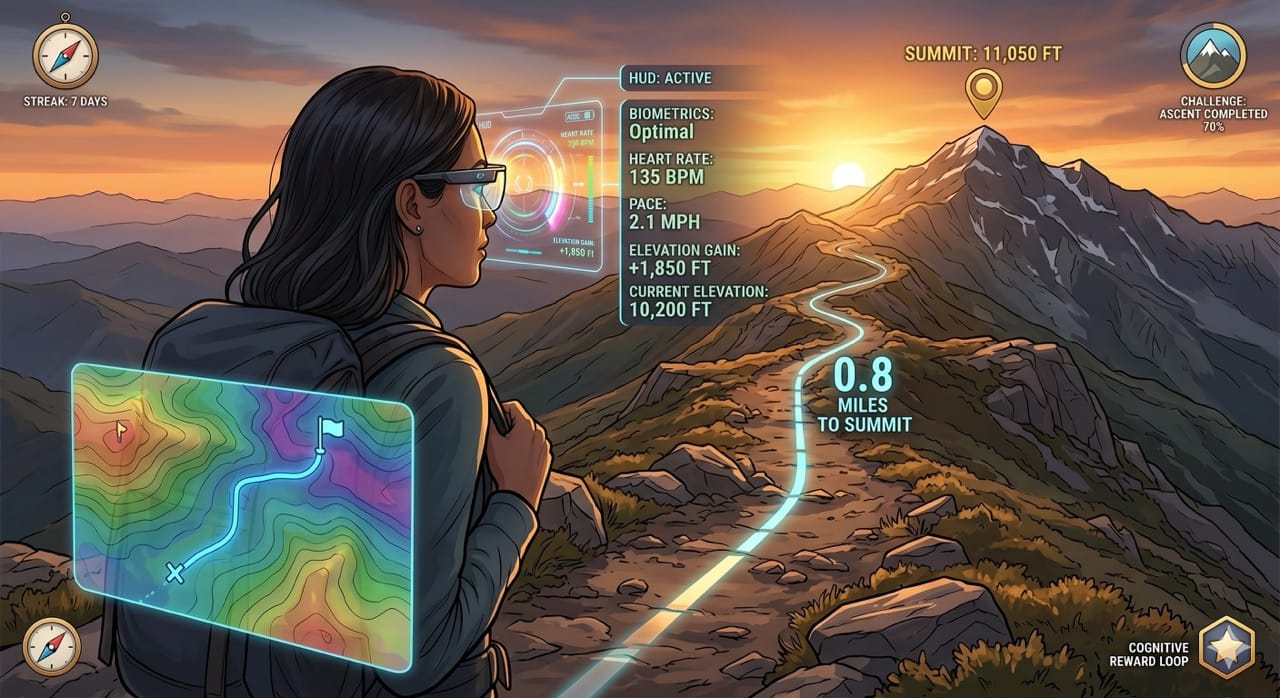
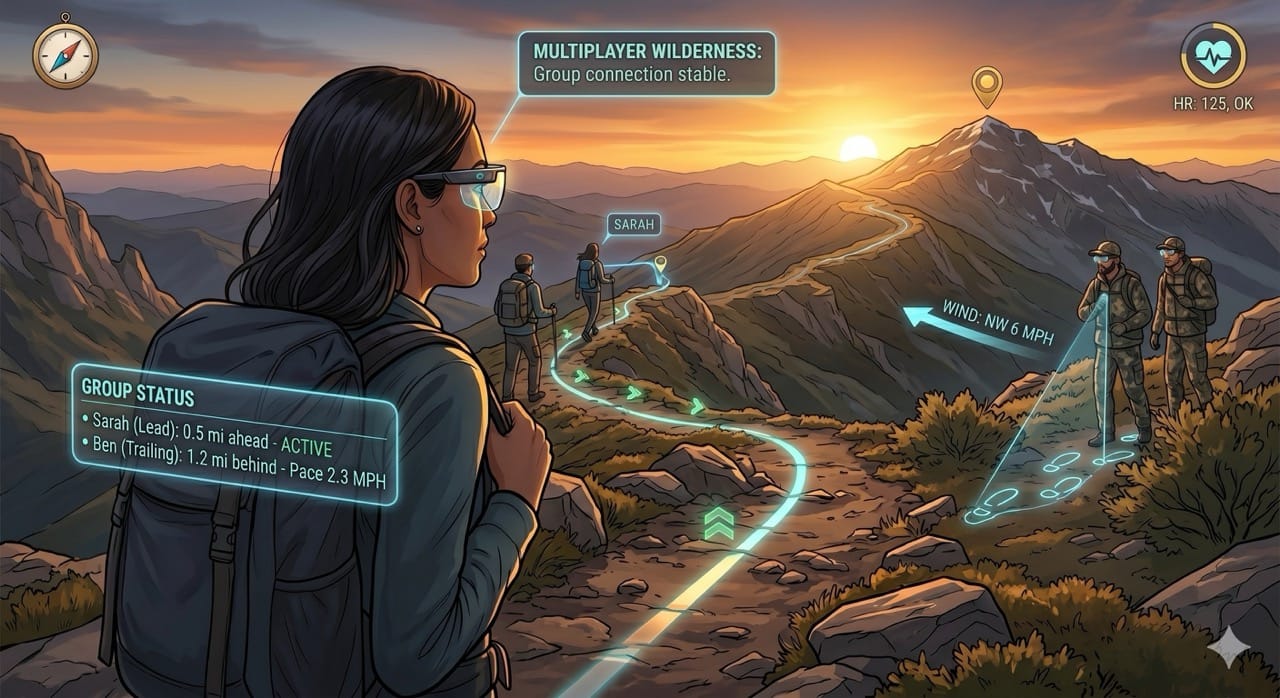
Imagine hiking a remote mountain trail while a vibrant digital minimap floats subtly in your peripheral vision.
Fitness fanatics will constantly monitor their biometric data, elevation gains, and precise distance to the summit projected directly onto the physical environment.
This constant stream of interactive data triggers the exact same cognitive reward loops that make modern video games so incredibly addictive.
The Multiplayer Wilderness
This technology also fundamentally alters the collective social experience of navigating the outdoors.
Linked devices will allow a faster hiker to leave digital breadcrumbs or visual markers for a slower companion trailing miles behind them.
A group of hunters could silently track prey by digitally highlighting footprints or sharing real time wind trajectory data across their collective displays.
The Information Overlay
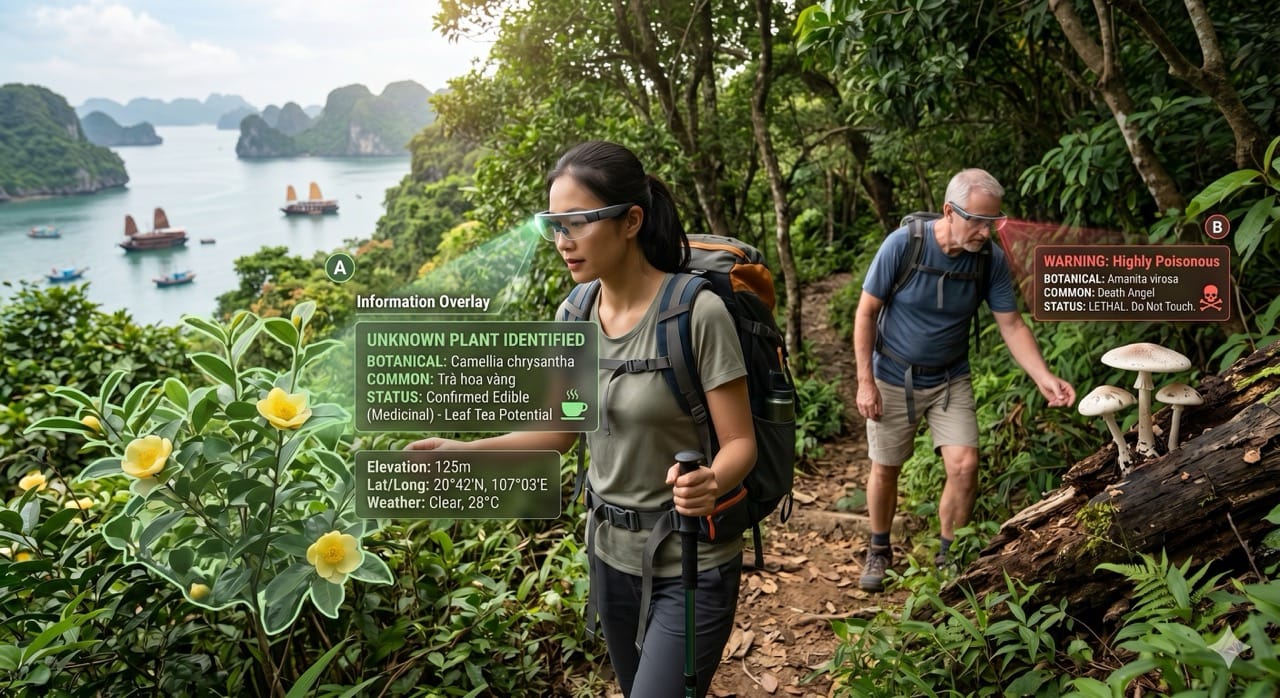
The most profound utility of augmented reality in nature is the instant access to critical survival information.
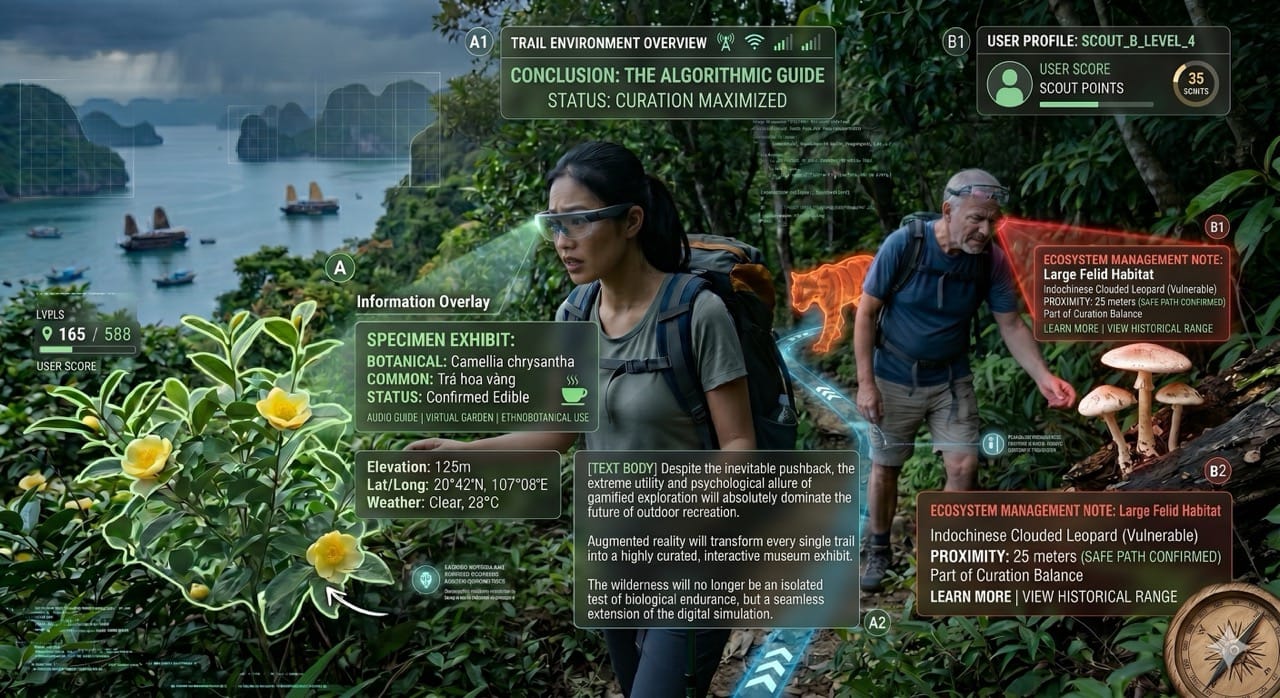
A hiker can look at an unknown plant and instantly receive a digital botanical classification confirming whether it is edible or highly poisonous.
This immediate access to specialized knowledge drastically lowers the psychological barrier to entry for inexperienced individuals exploring the wilderness.
The Threat Matrix
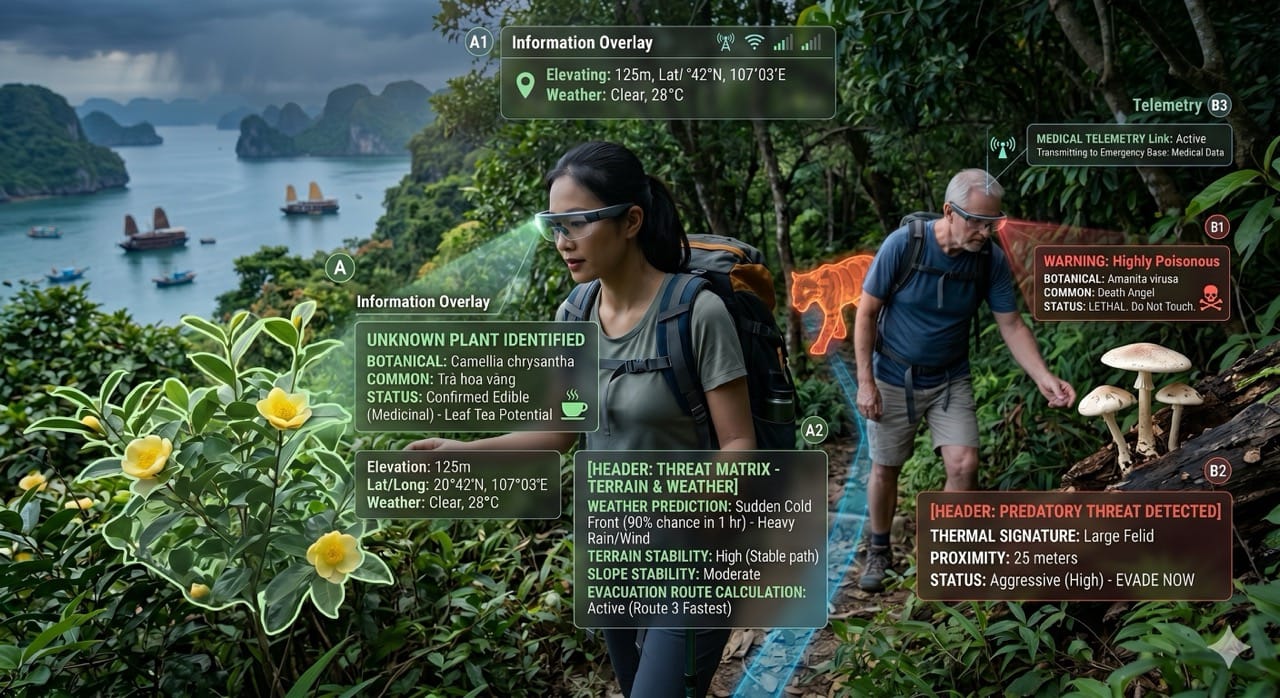
This informational overlay extends directly into dynamic threat identification and emergency response.
Advanced sensors will highlight dangerous terrain, predict sudden shifts in local weather patterns, and even visually flag the thermal signatures of nearby predatory animals.
In the event of a catastrophic accident, the glasses will instantly calculate the fastest evacuation route and automatically transmit precise medical telemetry to rescue crews.
The Analog Resistance
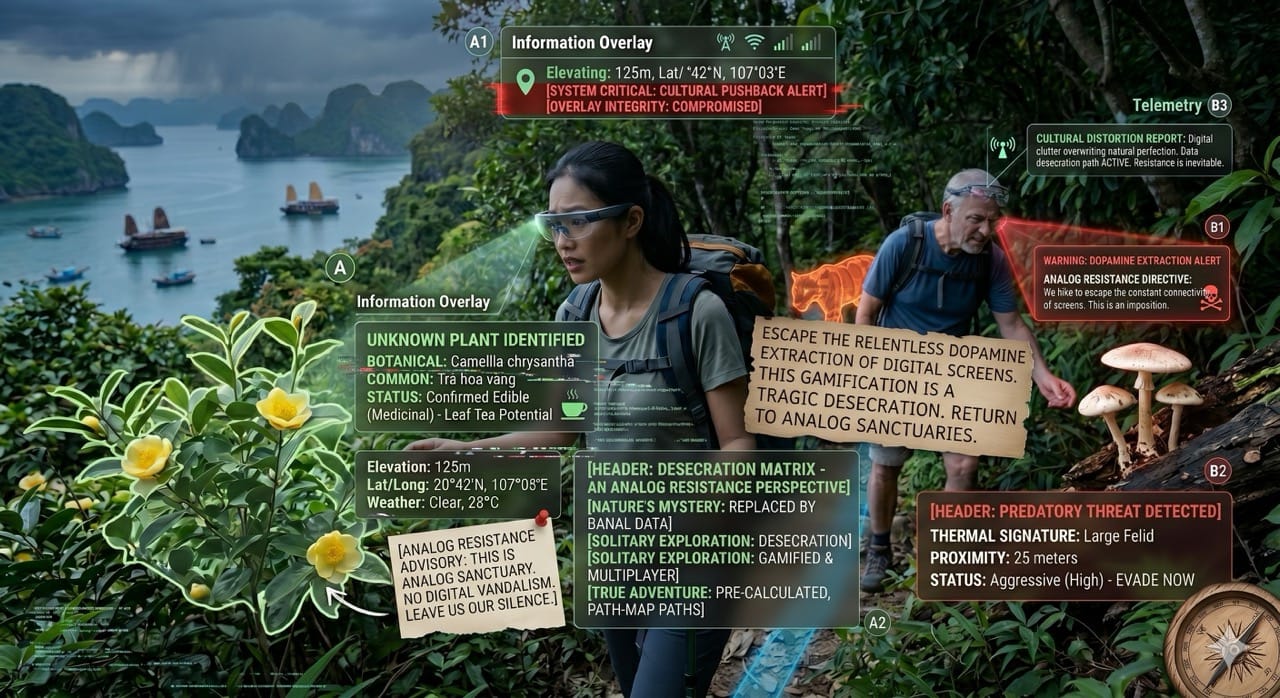
This extreme digital integration will inevitably face massive cultural pushback from traditional outdoor enthusiasts.
Many individuals hike specifically to escape the relentless dopamine extraction of modern digital screens and constant connectivity.
They will view the gamification of a pristine mountain range as a tragic desecration of the last remaining analog sanctuaries.
Conclusion: The Algorithmic Guide
Despite the inevitable pushback, the extreme utility and psychological allure of gamified exploration will absolutely dominate the future of outdoor recreation.
Augmented reality will transform every single trail into a highly curated, interactive museum exhibit.
The wilderness will no longer be an isolated test of biological endurance, but a seamless extension of the digital simulation.