How the Parents Decide Act Will Skyrocket Ad Conversions
We assume government legislation regarding child safety will severely restrict the digital advertising economy. In reality, mandatory age verification completely purges the algorithmic data pool of useless bot traffic and drastically increases baseline conversion rates.
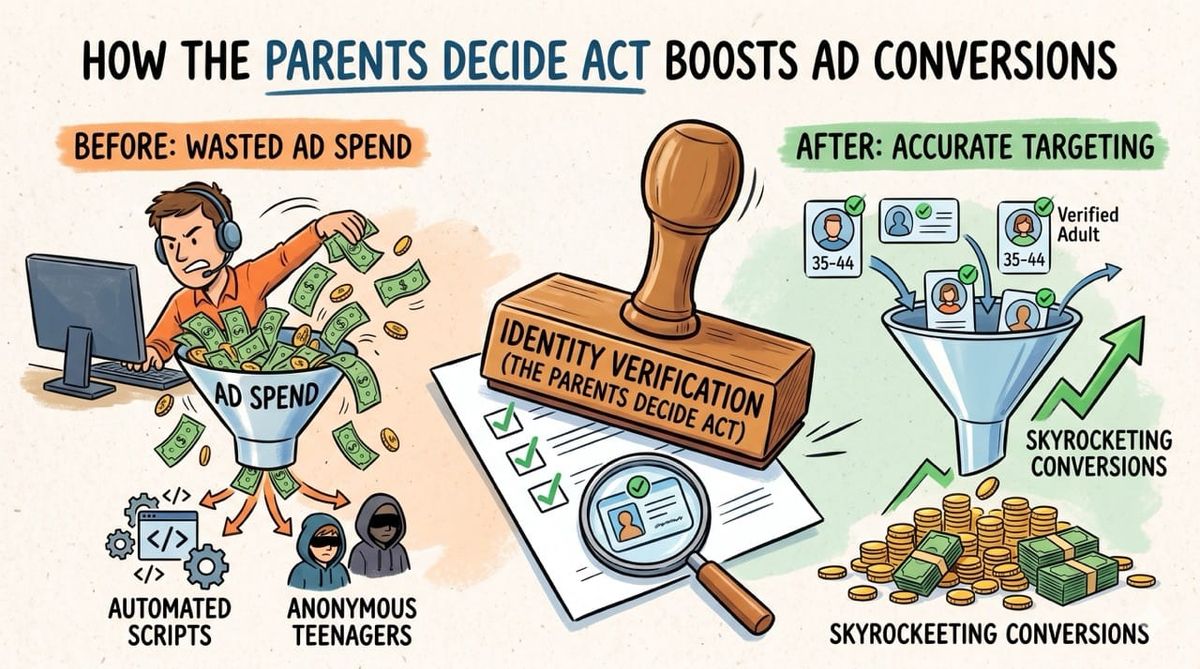
Performance marketers currently burn millions of dollars serving ads to automated scripts and anonymous teenagers. Mandatory identity verification is about to create the most accurate demographic targeting pool in human history.
Inspiration: Analyzing the economic implications of the proposed Parents Decide Act and its focus on digital age gating. Realizing that strict government regulation inadvertently solves the most expensive data pollution problem currently plaguing performance marketers.
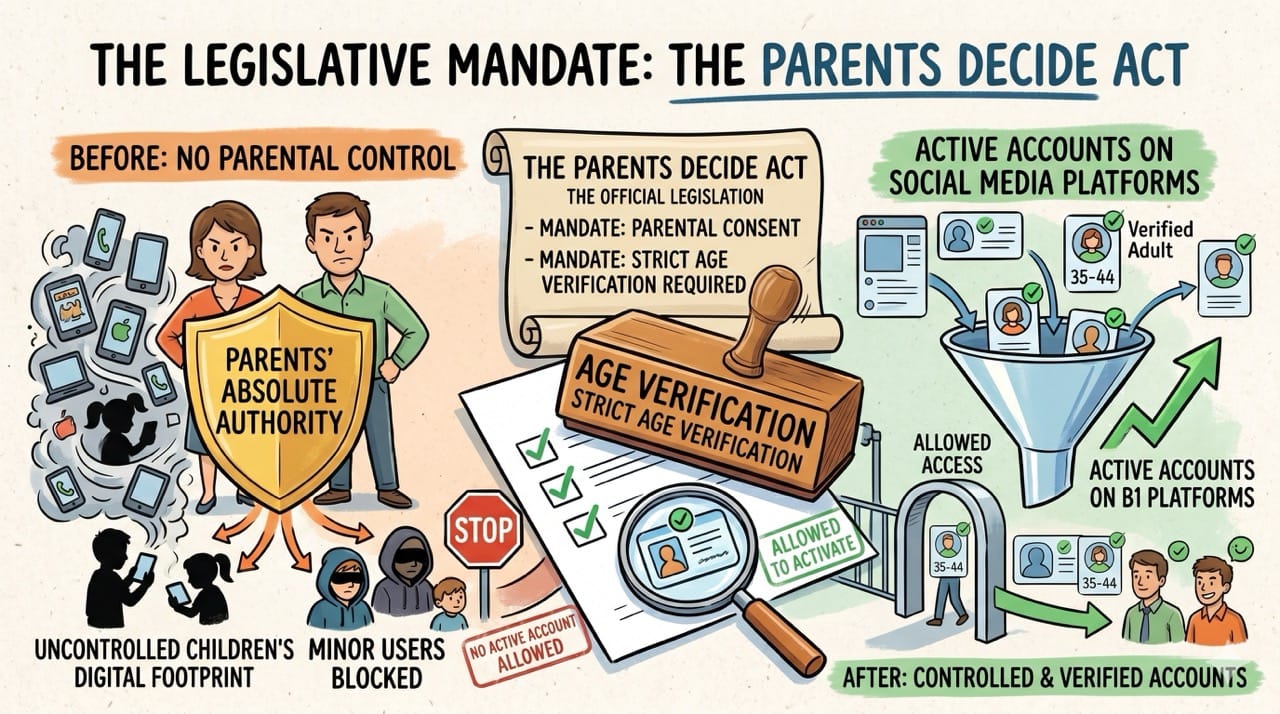
The Legislative Mandate
The Parents Decide Act is a sweeping piece of proposed legislation designed to give parents absolute authority over the digital footprint of their children.
It requires social media platforms to implement strict age verification protocols before allowing minor users to create active accounts.
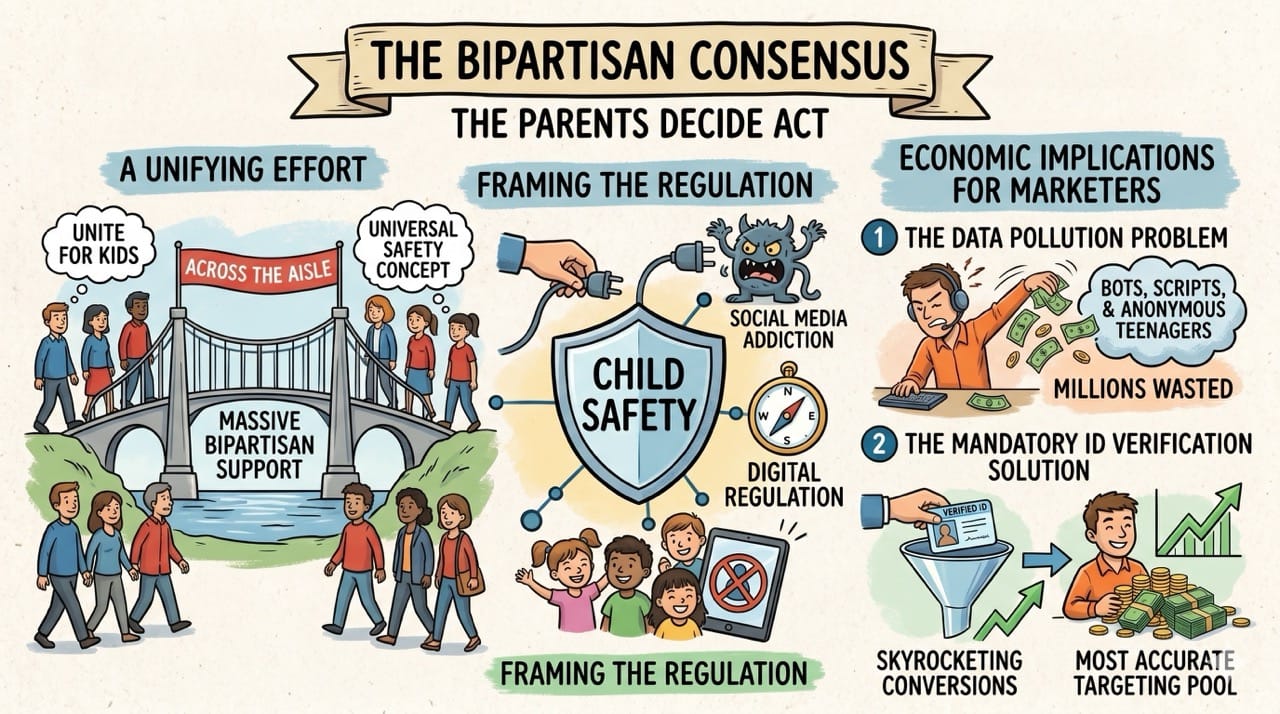
The Bipartisan Consensus
This specific legislative effort currently enjoys massive bipartisan support because it frames digital regulation entirely around the universal concept of child safety.
Given the intense cultural backlash against social media addiction, it is highly likely this bill or a very similar legislative clone will pass into federal law.
The Verification Protocol
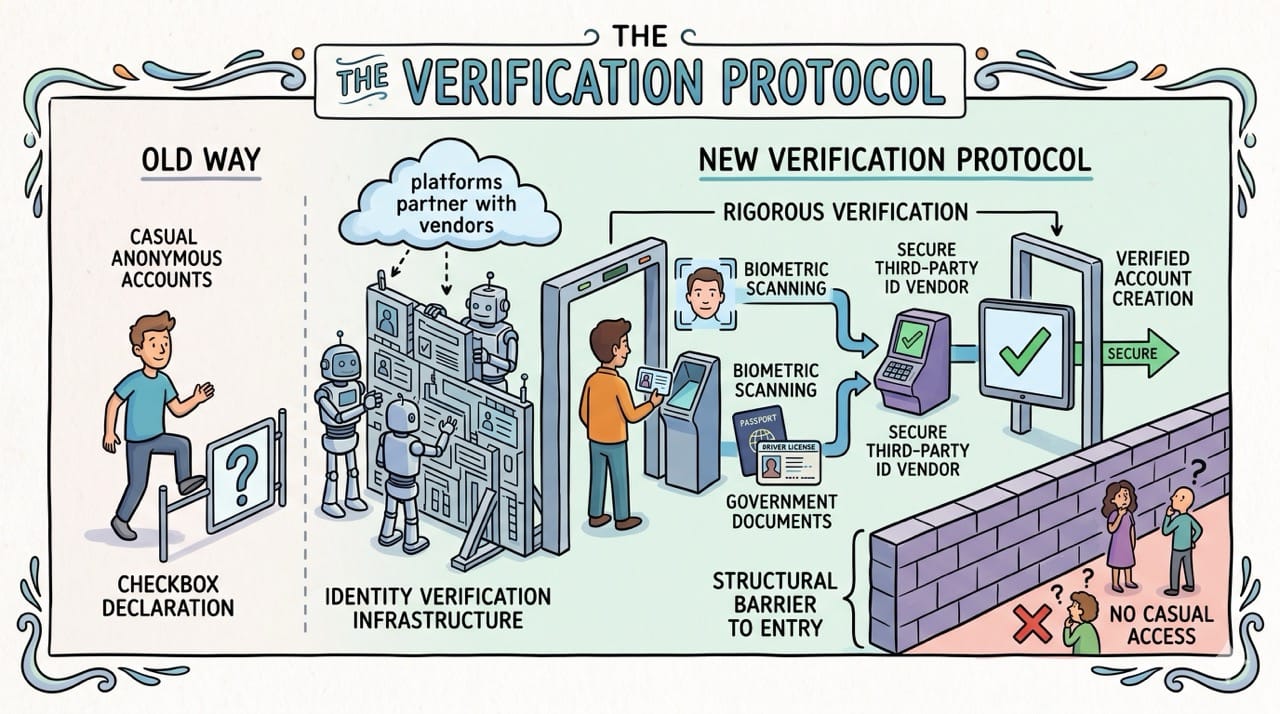
Implementation will force major technology companies to abandon simple checkbox declarations and adopt rigorous identity verification infrastructure.
Platforms will likely partner with secure third party identity vendors to cross reference government documents or utilize advanced biometric scanning.
This creates a massive structural barrier to entry that completely eliminates casual or anonymous account creation.
The Demographic Illusion
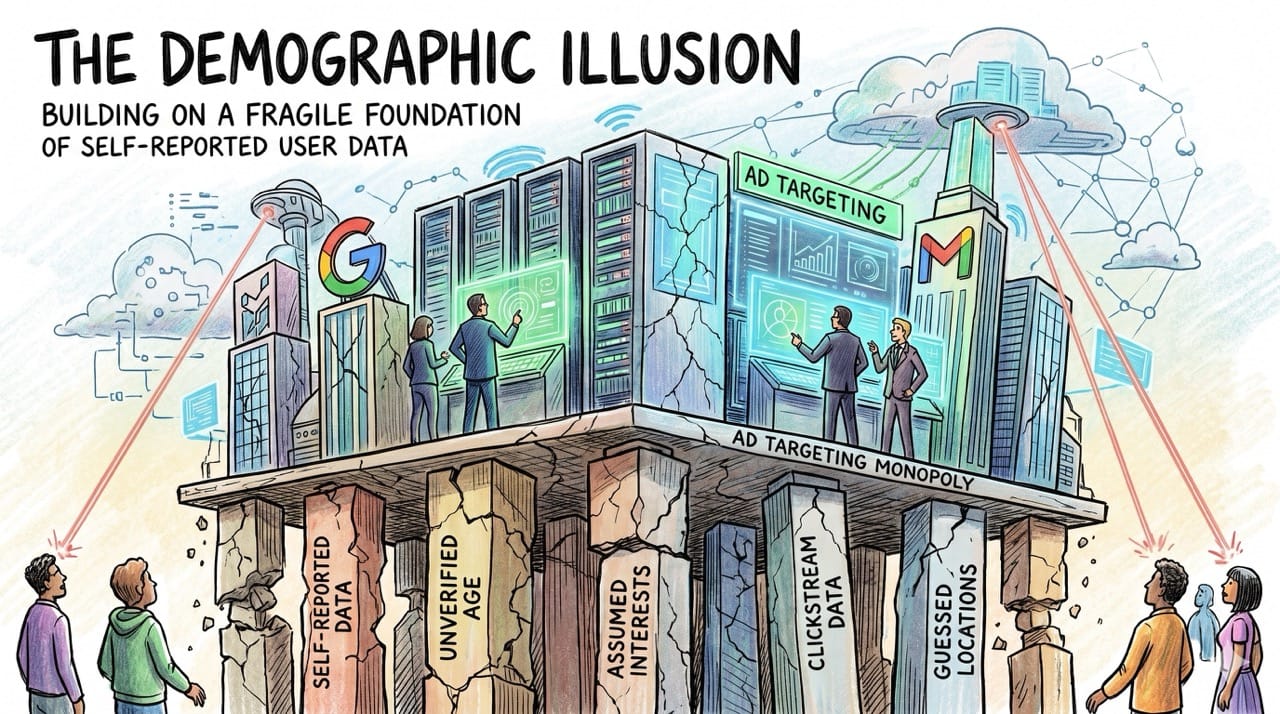
Advertising monopolies like Meta and Google currently rely heavily on demographic targeting to serve relevant campaigns to specific consumer cohorts.
However, this entire system is built on an incredibly fragile foundation of unverified and self reported user data.
The Bot Contagion
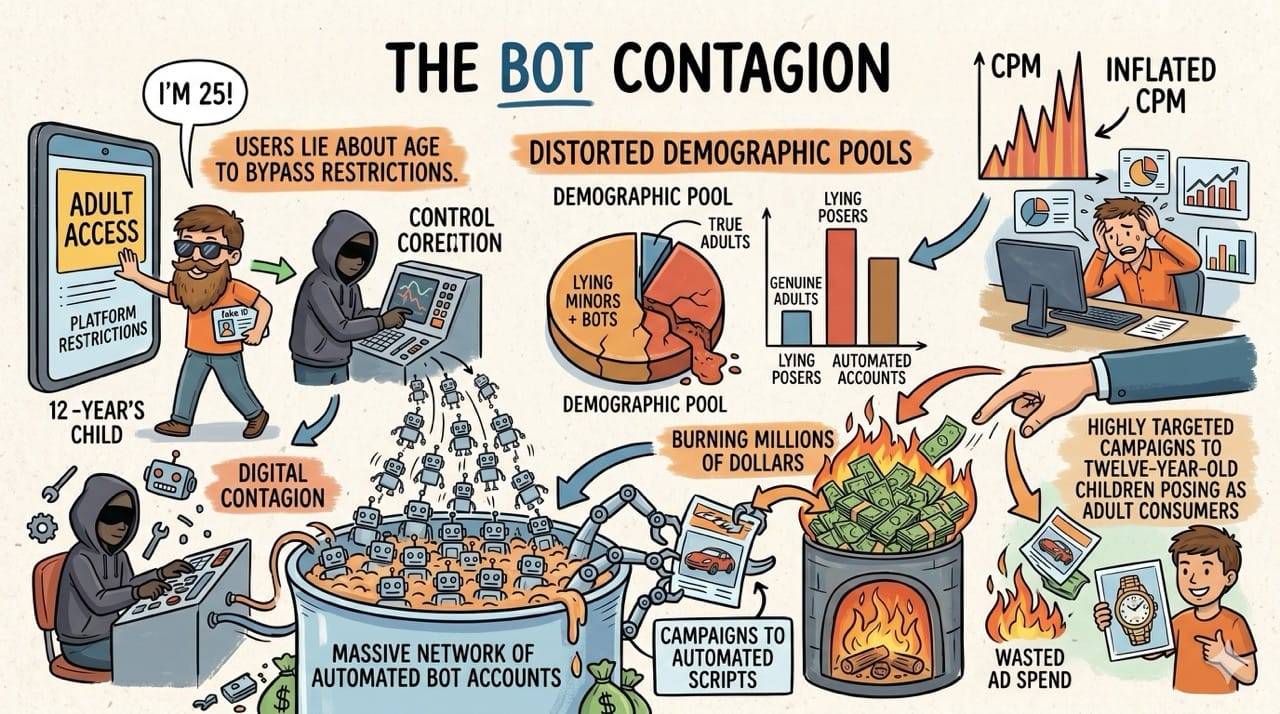
Users constantly lie about their age to bypass platform restrictions or simply create massive networks of automated bot accounts.
This digital contagion severely distorts demographic pools and artificially inflates the cost per thousand impressions for performance marketers.
Advertisers are literally burning millions of dollars serving highly targeted campaigns to automated scripts or twelve year old children posing as adult consumers.
The Conversion Catalyst
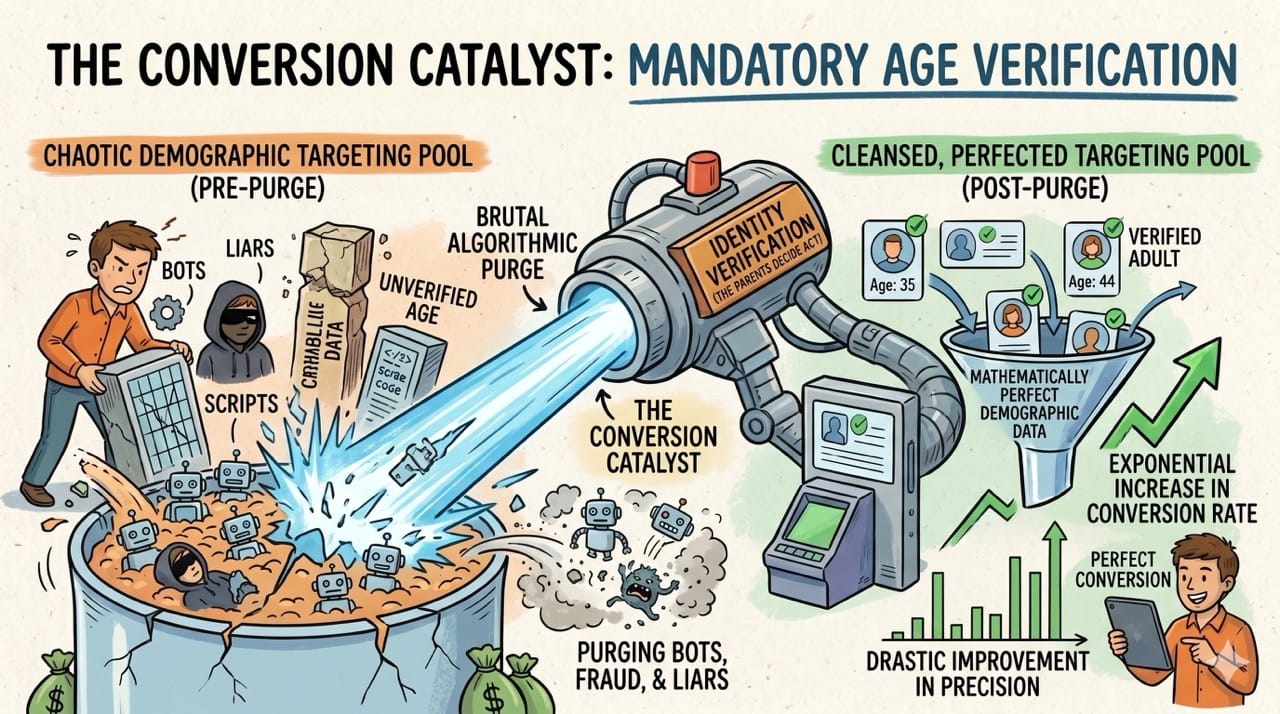
Mandatory age verification acts as a brutal algorithmic purge that instantly cleanses the entire demographic targeting pool.
When you physically verify the exact age of a user, the advertising algorithm suddenly has access to mathematically perfect demographic data.
This absolute certainty drastically improves the precision of the delivery algorithm and exponentially increases the baseline conversion rate for every single campaign.
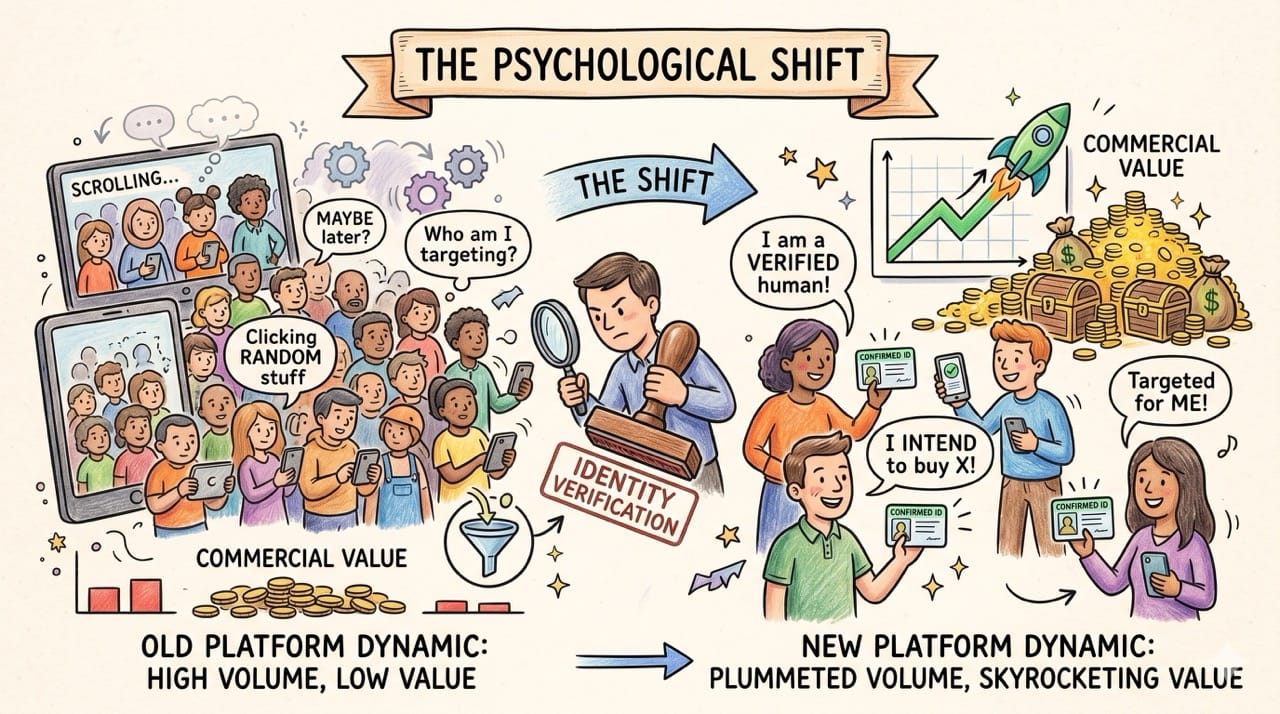
The Psychological Shift
This transition completely alters the psychological dynamic between the platform and the consumer.
Users who undergo strict identity verification are naturally more engaged and represent a significantly higher quality tier of consumer intent.
The raw volume of active platform users will absolutely plummet, but the commercial value of the remaining verified users will skyrocket.
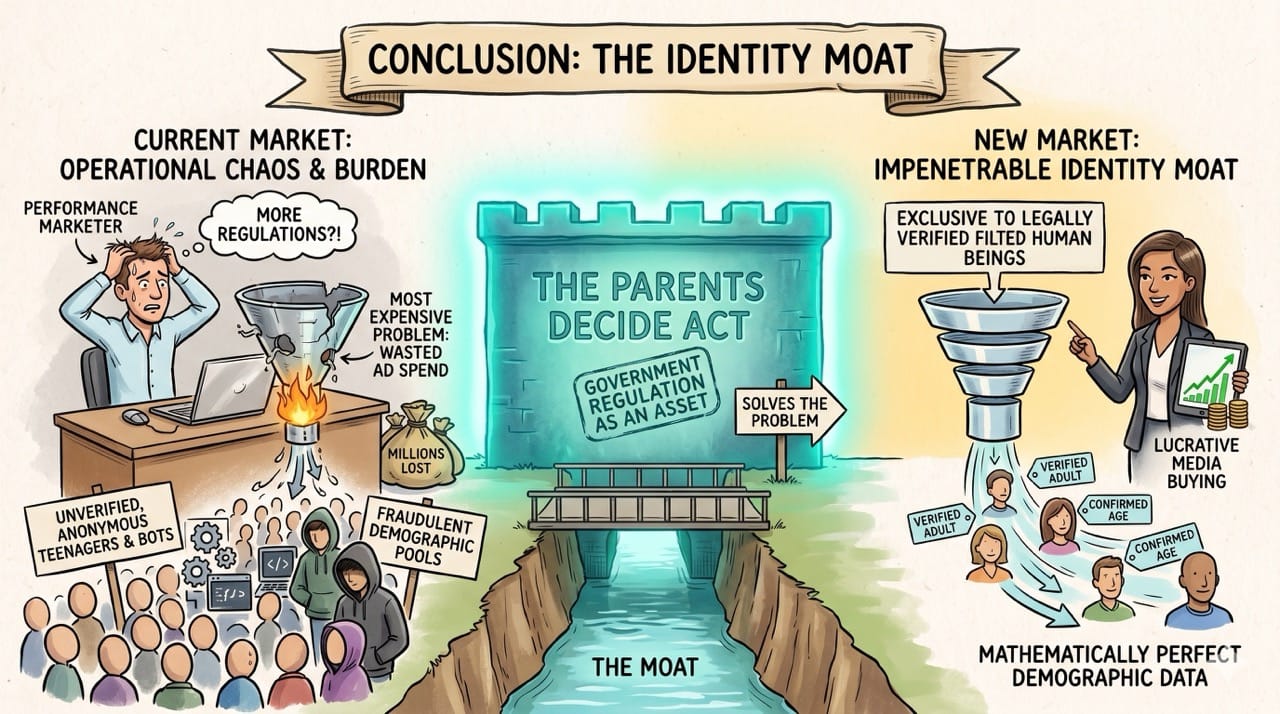
Conclusion: The Identity Moat
Performance marketers must stop viewing government regulation strictly as an operational burden.
The Parents Decide Act inadvertently builds an impenetrable identity moat that completely solves the most expensive problem in digital advertising.
The future of lucrative media buying relies entirely on marketing exclusively to legally verified human beings.