
The Cost of Capital: Why Interest Rates Dictate Your Career
We assume our career trajectory is entirely dictated by our own personal brilliance and hard work. In reality, the invisible hand of central bank interest rates exerts massive control over your professional success and financial stability.
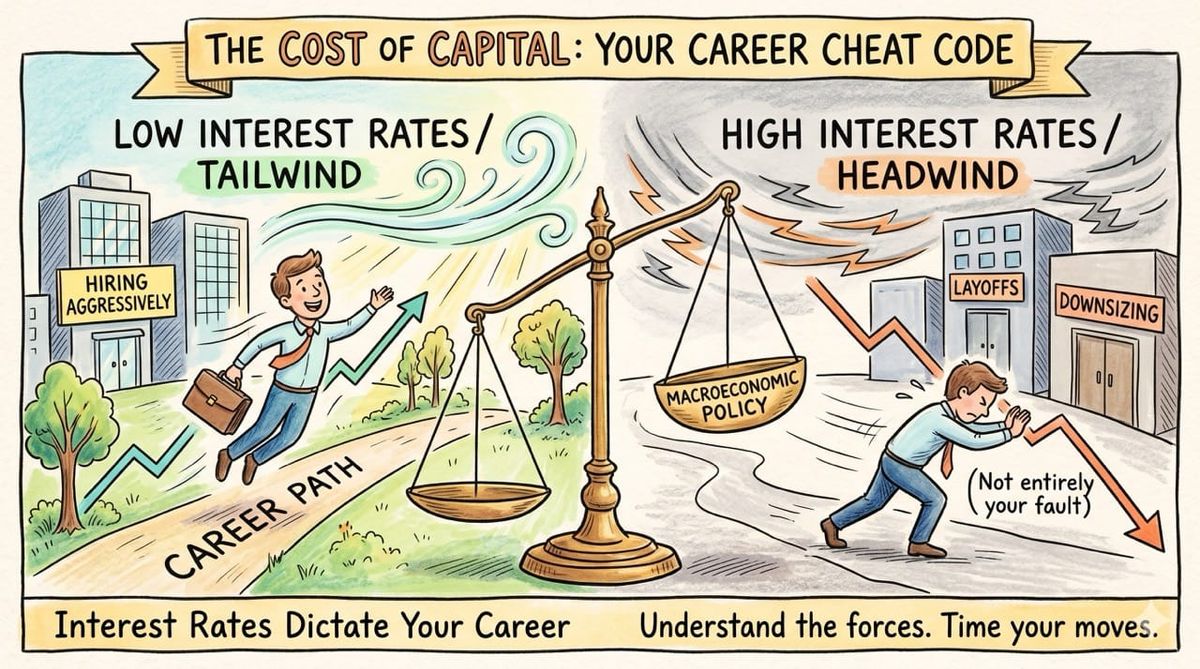
Macroeconomic policy dictates whether companies hire aggressively or execute massive layoffs. Understanding the cost of capital is the ultimate cheat code for timing your biggest career moves.
Inspiration: Reflecting on the brilliant observation by Professor Scott Galloway that our personal successes and failures are often not entirely our fault. Realizing that monetary policy acts as a massive tailwind or headwind that completely warps our perception of our own professional talent.
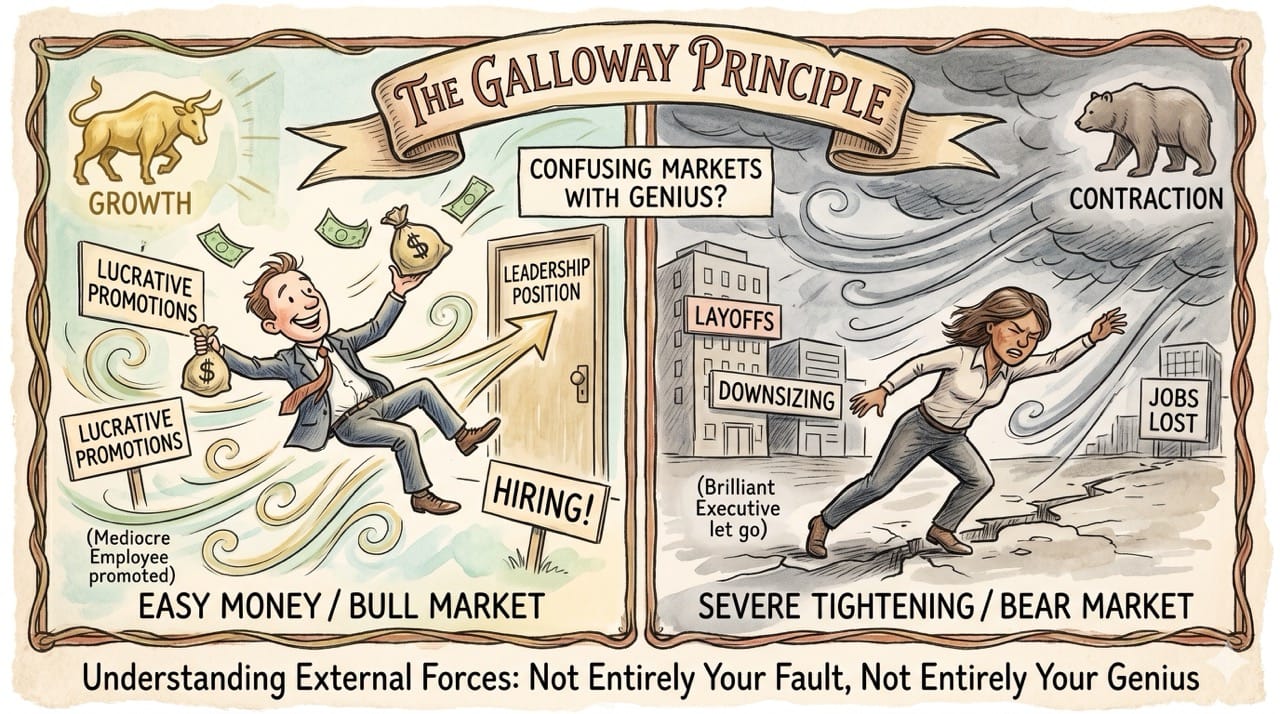
The Galloway Principle
Professor Galloway frequently reminds his university students to never confuse a massive economic bull market with their own sheer genius.
When money is completely free to borrow, mediocre employees are often promoted into incredibly lucrative leadership positions.
Conversely, brilliant executives frequently lose their jobs through absolutely no fault of their own during severe macroeconomic tightening cycles.
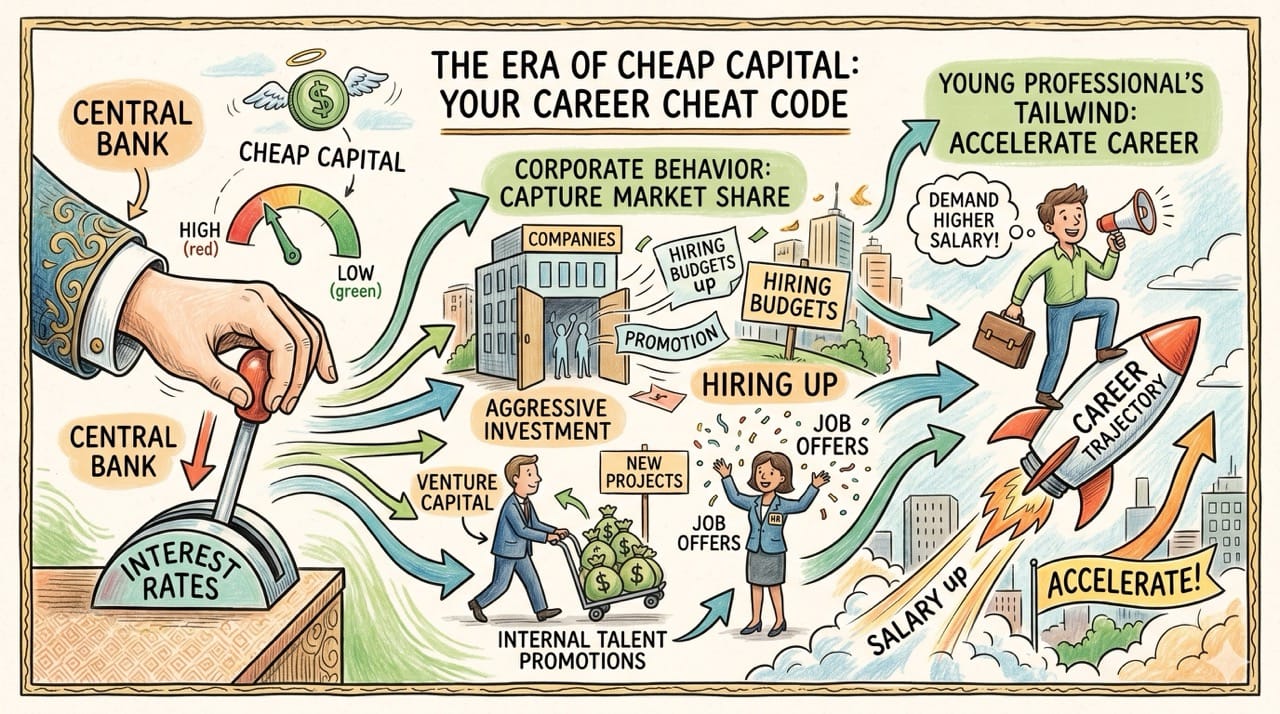
The Era of Cheap Capital
When central banks lower interest rates, corporate borrowing becomes incredibly cheap and venture capital flows aggressively into new projects.
Companies immediately expand their hiring budgets and rapidly promote internal talent simply to capture market share at all costs.
This creates an absolutely incredible environment for young professionals to demand higher salaries and aggressively accelerate their career trajectory.
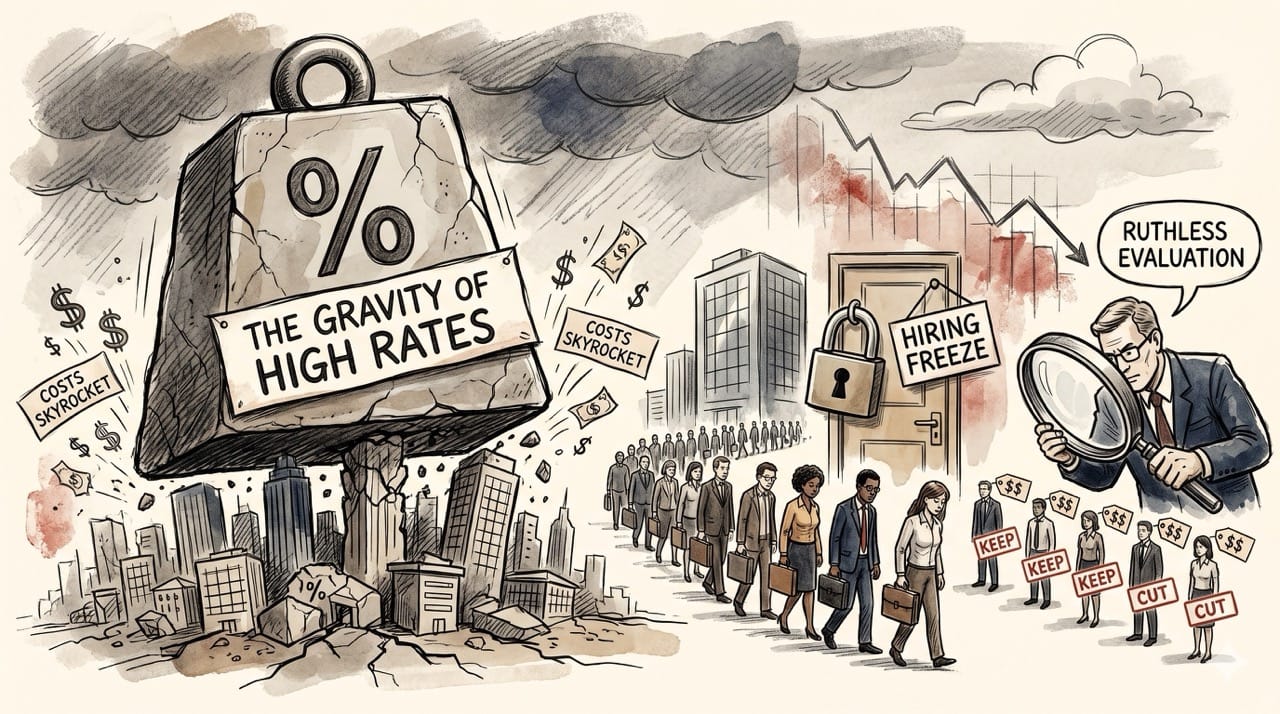
The Gravity of High Rates
Alternatively, when interest rates rise significantly, the fundamental cost of operating a business skyrockets overnight.
During the recent global rate hikes, massive technology conglomerates collectively eliminated hundreds of thousands of jobs strictly to appease their nervous shareholders.
This mathematical reality forces companies to instantly freeze hiring budgets and ruthlessly evaluate the exact financial return of every single employee.
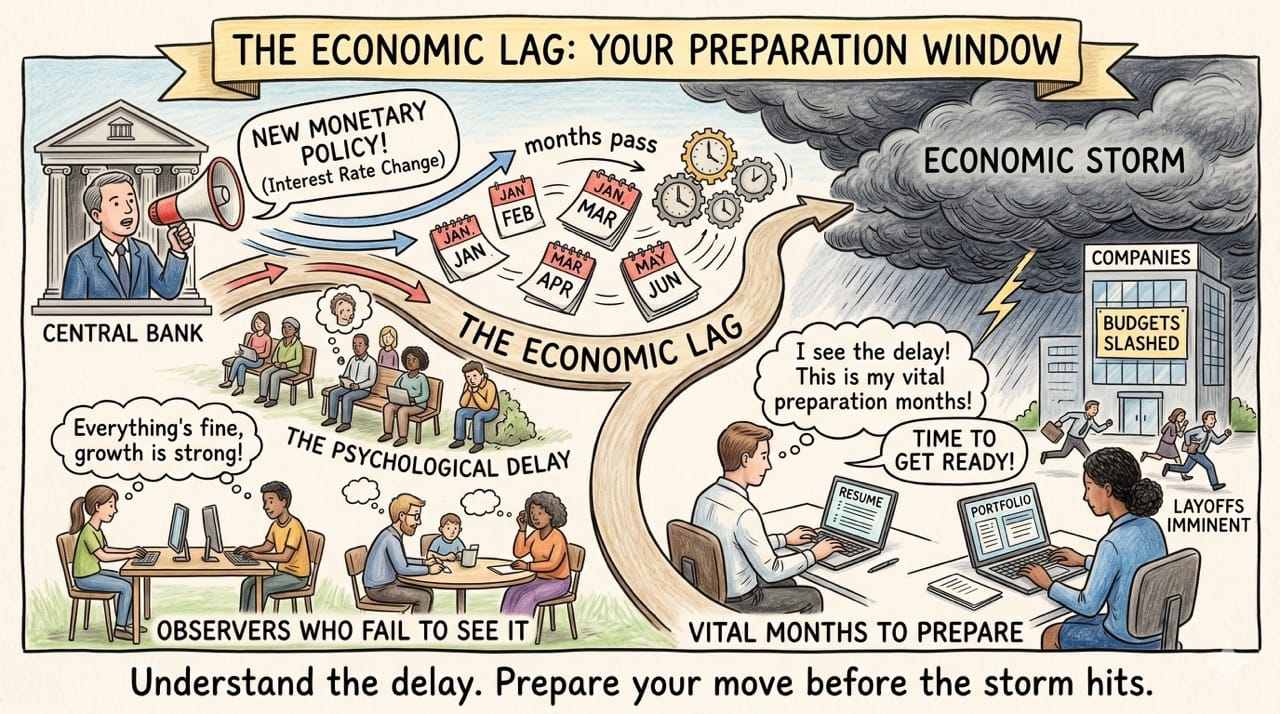
The Economic Lag
You must profoundly understand that changes in monetary policy do not instantly impact the daily labor market.
There is almost always a massive delay between a central bank announcement and the actual moment a corporate accounting department slashes a budget.
This psychological delay provides a highly observant professional with vital months to prepare their resume before the economic storm actually hits.
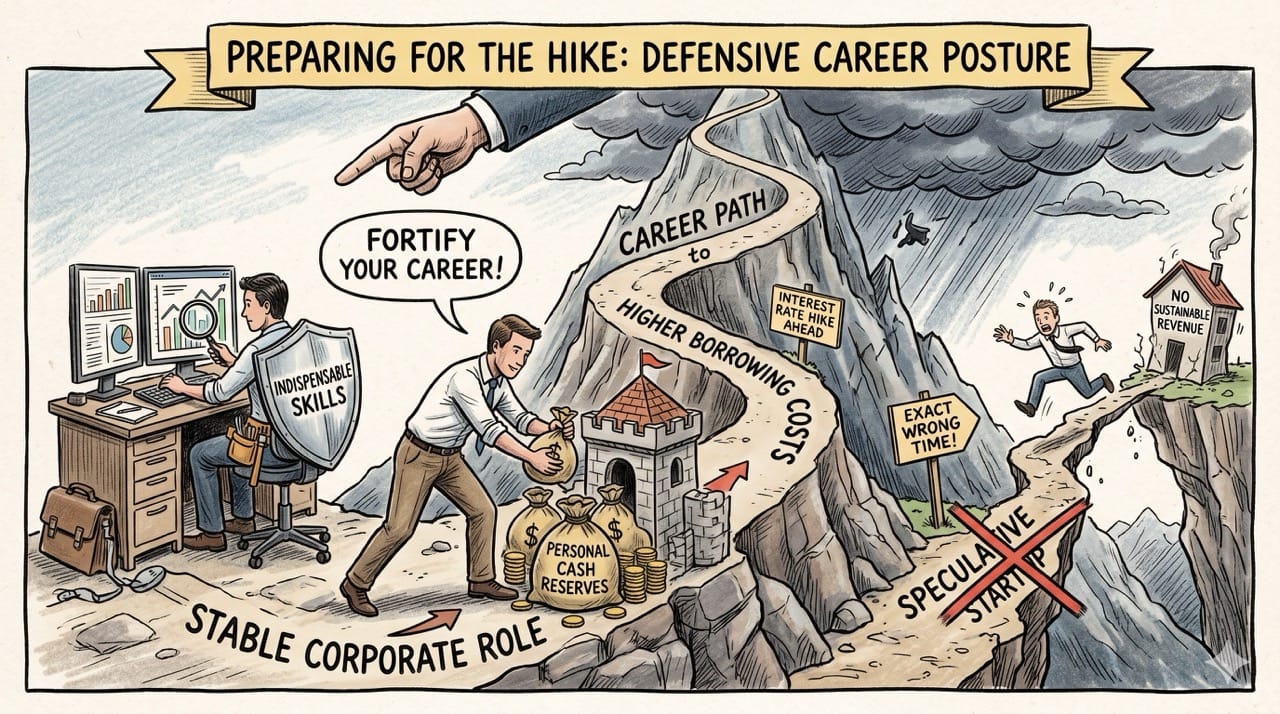
Preparing for the Hike
When you anticipate borrowing costs increasing, you must immediately transition into a highly defensive career posture.
You should aggressively stockpile personal cash reserves and focus entirely on making yourself absolutely indispensable to your current employer.
This is the exact wrong time to abandon a stable corporate role to join a highly speculative startup lacking sustainable revenue.
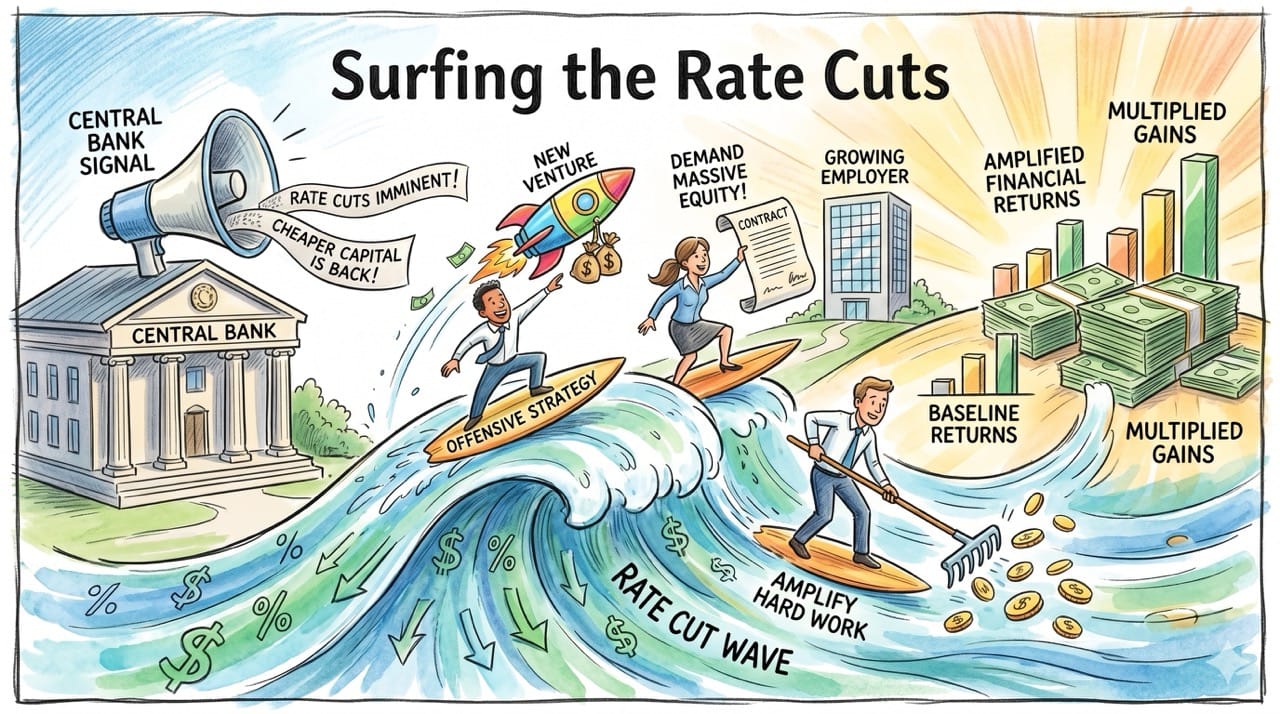
Surfing the Rate Cuts
The moment central banks signal a return to cheaper capital, you must instantly switch to a highly aggressive offensive strategy.
This is the precise moment to launch a new entrepreneurial venture or demand massive equity compensation from a rapidly growing employer.
The macroeconomic tailwinds will naturally amplify your hard work and severely multiply your baseline financial returns.

The Biological Risk Profile
Your ability to aggressively time these economic cycles depends entirely on your current biological and familial responsibilities.
A single professional without dependents can comfortably embrace the extreme volatility of a high risk startup during an economic boom.
However, an executive providing for a young family must prioritize absolute stability and maintain massive cash reserves regardless of the current interest rate.

The Geographic Arbitrage
Many professionals become incredibly greedy during high interest environments and stubbornly refuse to adapt their lifestyle to the new reality.
They remain far too conservative in their geographic mobility when they should actually relocate to regions with vastly better labor markets.
For instance, being a dual citizen of Canada and Turkey provides a massive strategic advantage to seamlessly cross borders and chase the best global capital flows.
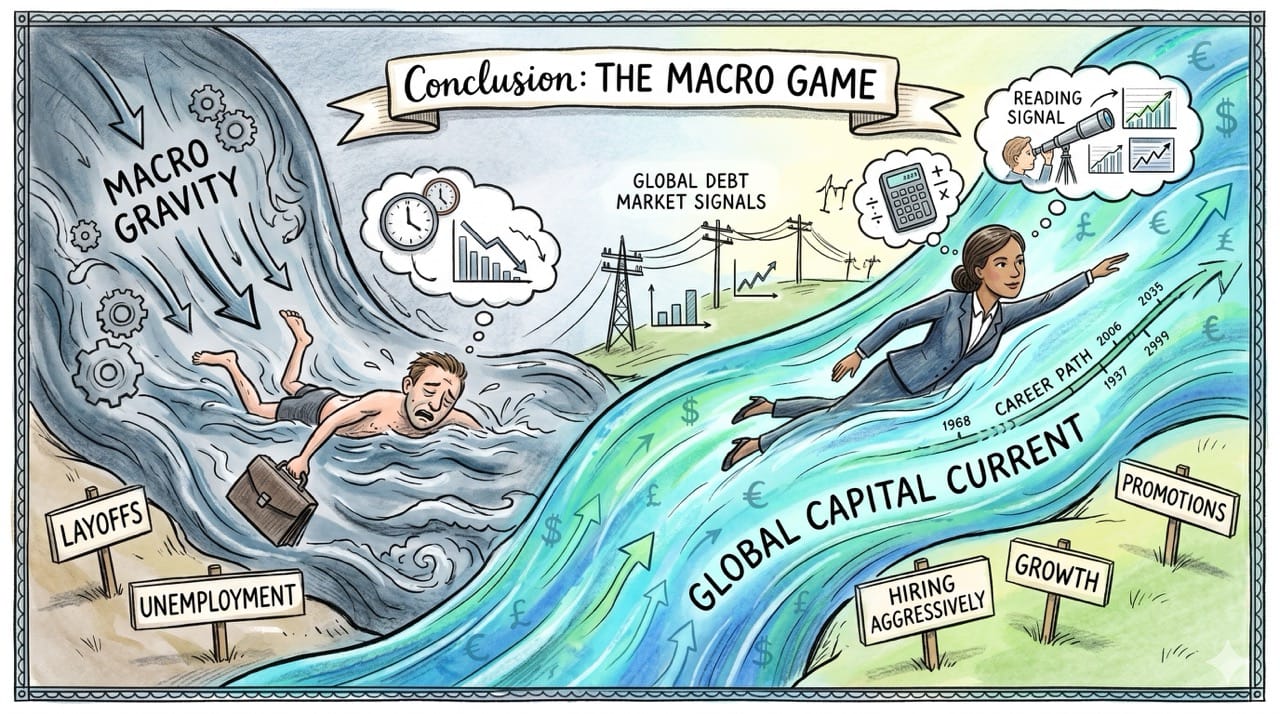
Conclusion: The Macro Game
Your time on this planet is your absolute most finite resource and it should not be wasted fighting invisible macroeconomic gravity.
You must learn to read the fundamental signals of the global debt market to perfectly optimize your professional timeline.
The truly elite executive does not simply work hard, but mathematically ensures they are swimming with the current of global capital.