The Gaokao Trap: How Single Exam Systems Destroy National Innovation
We assume intense standardized testing creates a highly competent and globally competitive workforce. In reality, single exam education systems completely destroy national innovation while actively driving catastrophic spikes in youth unemployment and societal depression.
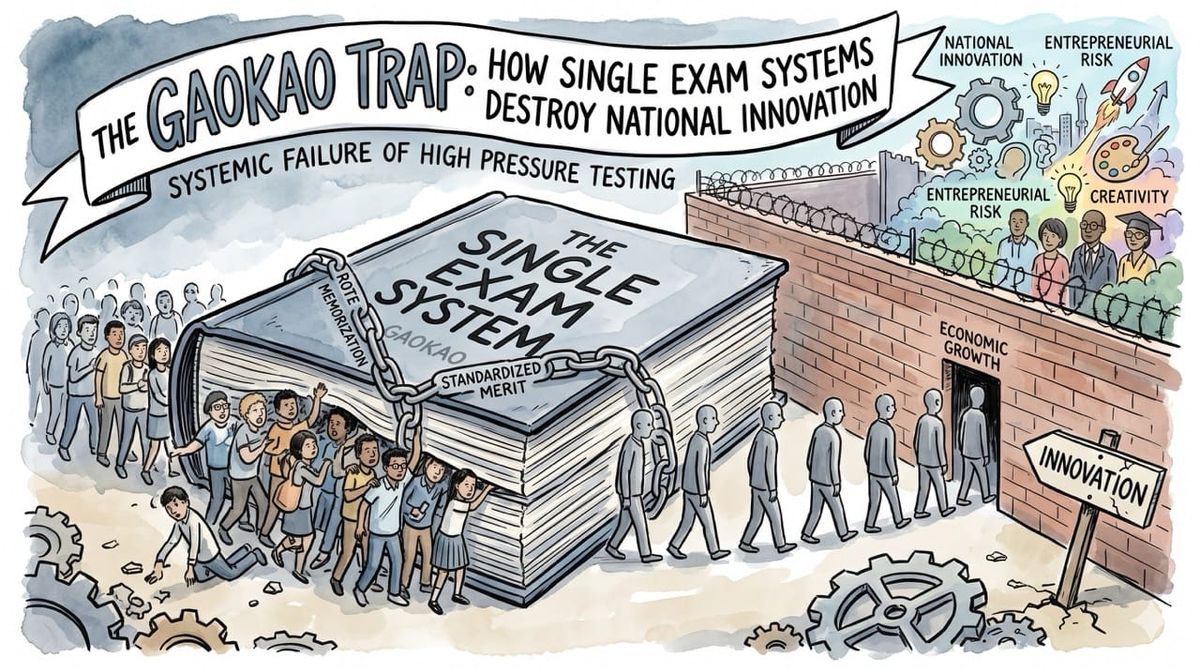
The psychological burden of a singular testing day creates a fragile population incapable of taking entrepreneurial risks. Nations are sacrificing their economic future for the illusion of standardized academic merit.
Inspiration: Analyzing the systemic failures of high pressure testing in countries like South Korea, China, and Turkey. Realizing that measuring human potential through a singular rote memorization event creates devastating economic consequences.
The Singular Bottleneck
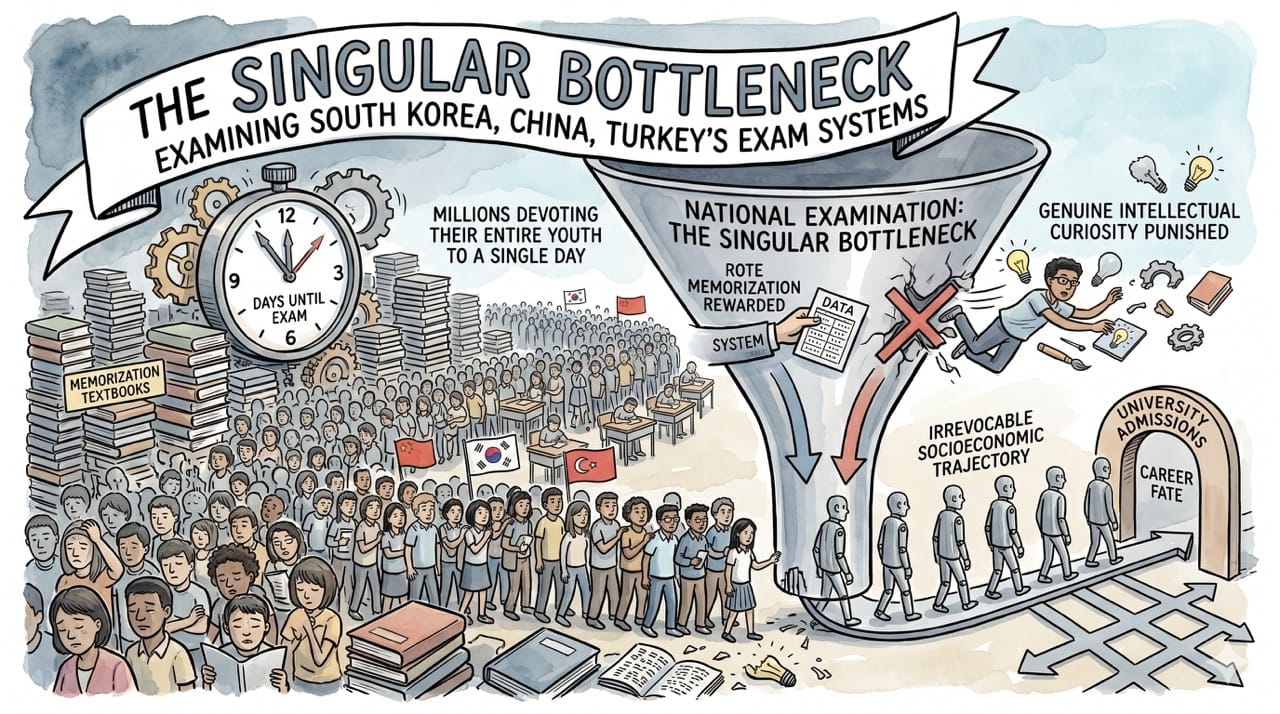
Countries like South Korea, China, and Turkey rely heavily on a singular national examination to determine university admissions.
Millions of students spend their entire youth preparing for a single day that irrevocably dictates their entire socioeconomic trajectory.
This creates an incredibly intense psychological bottleneck where memorization is rewarded and genuine intellectual curiosity is actively punished.
The Unemployment Paradox
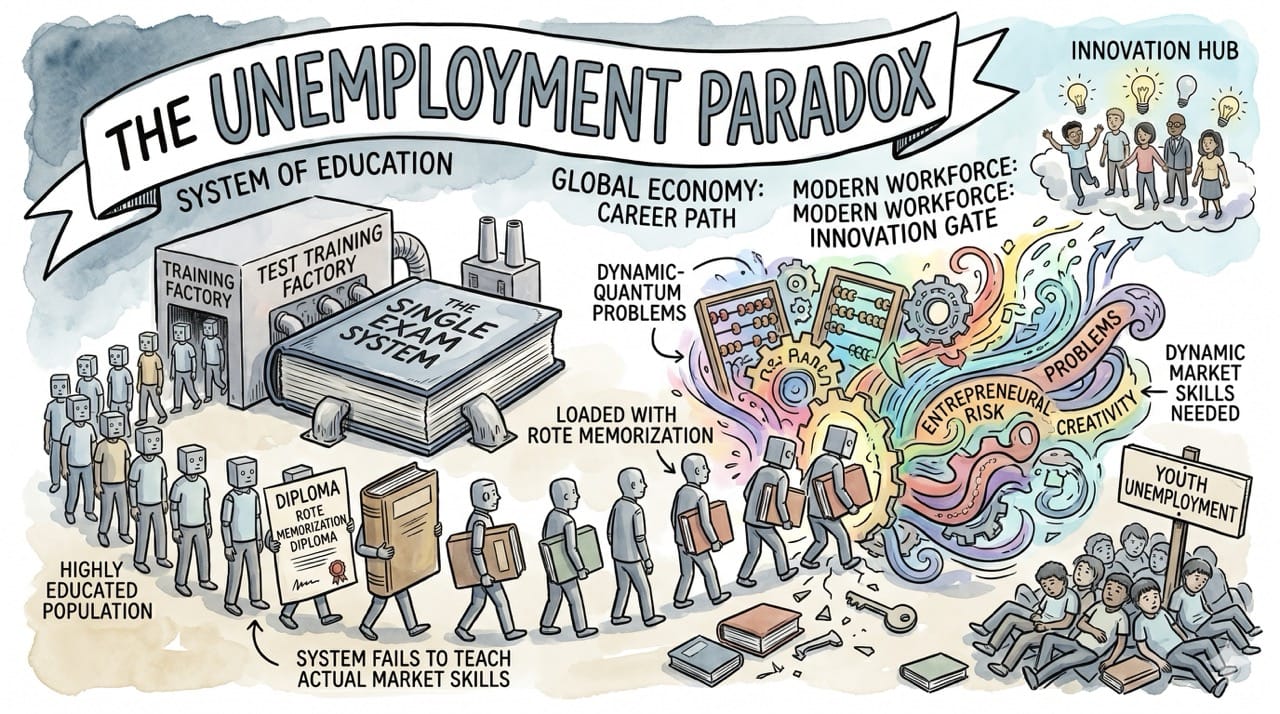
These nations ironically suffer from massive youth unemployment despite possessing highly educated populations.
The system perfectly trains students to pass complex standardized tests but completely fails to teach actual market skills.
Graduates enter the modern workforce entirely unequipped to solve the dynamic problems required by the global economy.
The Psychological Toll
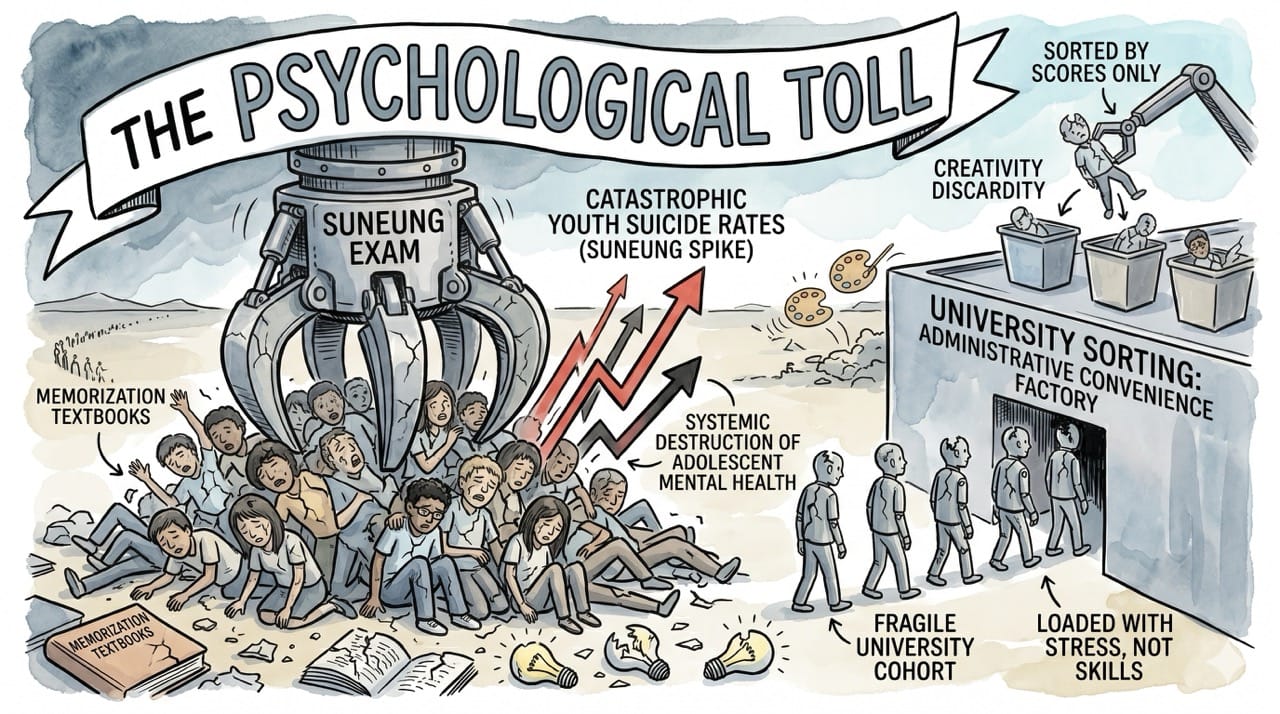
The biological and psychological pressure placed on these young adults yields absolutely devastating public health consequences.
South Korea consistently records catastrophic spikes in youth suicide rates directly correlated to the annual administration of the Suneung exam.
We are scientifically observing the systemic destruction of adolescent mental health strictly to maintain administrative convenience in university sorting.
The Innovation Deficit
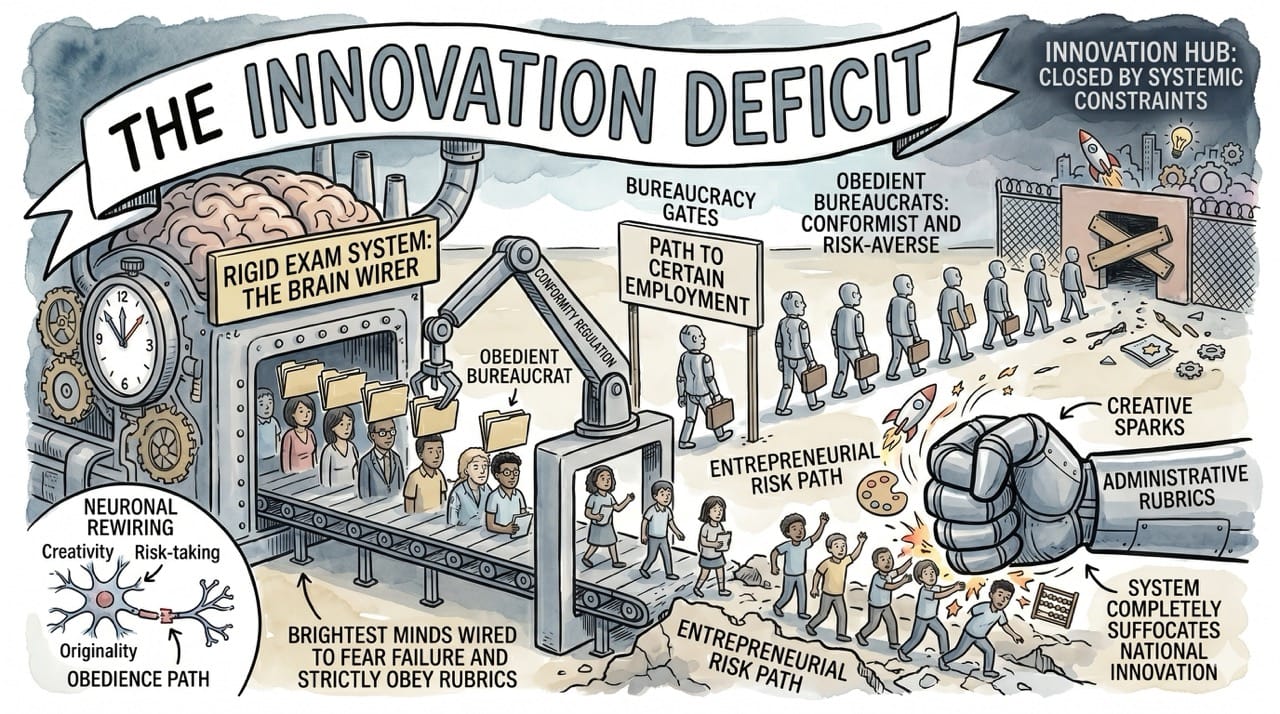
Entrepreneurship requires a high tolerance for failure and a relentless desire to break established rules.
Rigid exam systems fundamentally wire the developing human brain to fear failure and strictly obey academic rubrics.
This structural conditioning completely suffocates national innovation because the brightest minds are trained to become obedient bureaucrats rather than visionary founders.
The Shadow Economy
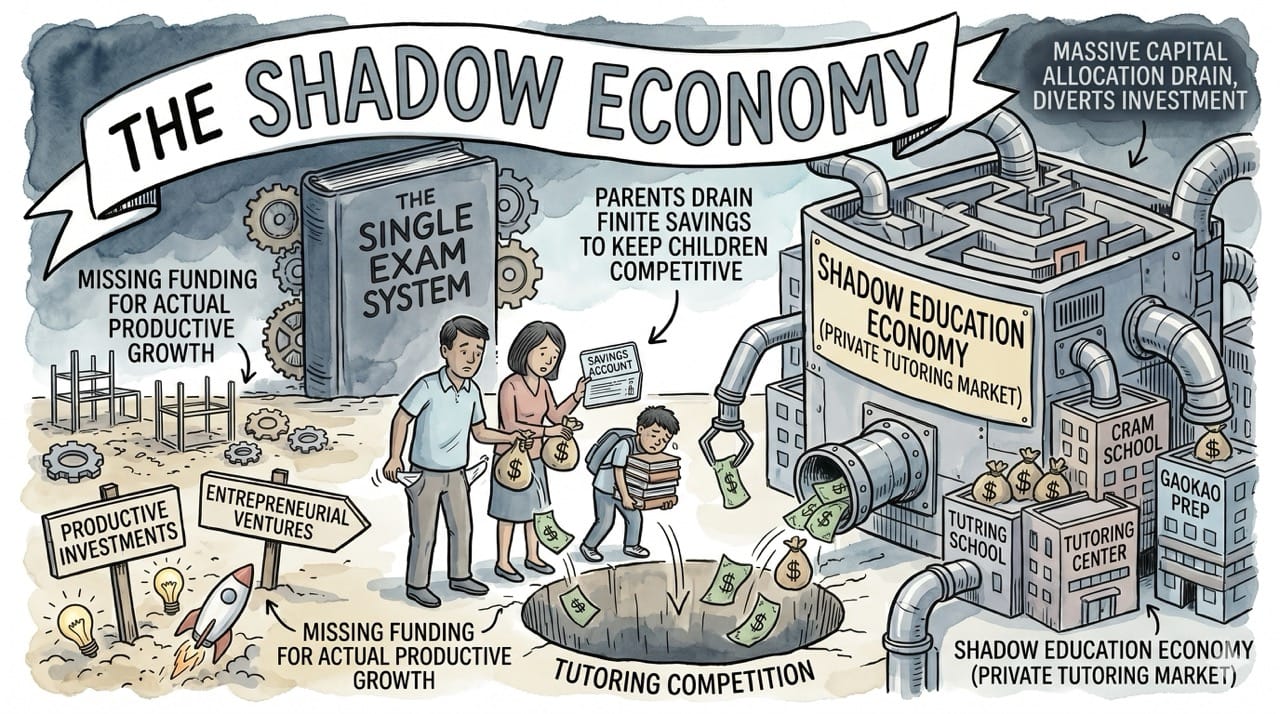
This extreme academic pressure creates a massive unseen drain on national economic resources through the private tutoring market.
Parents completely drain their finite financial savings to pay for supplemental education centers simply to keep their children competitive.
This massive capital allocation flows directly into a shadow education economy instead of funding actual productive investments or entrepreneurial ventures.
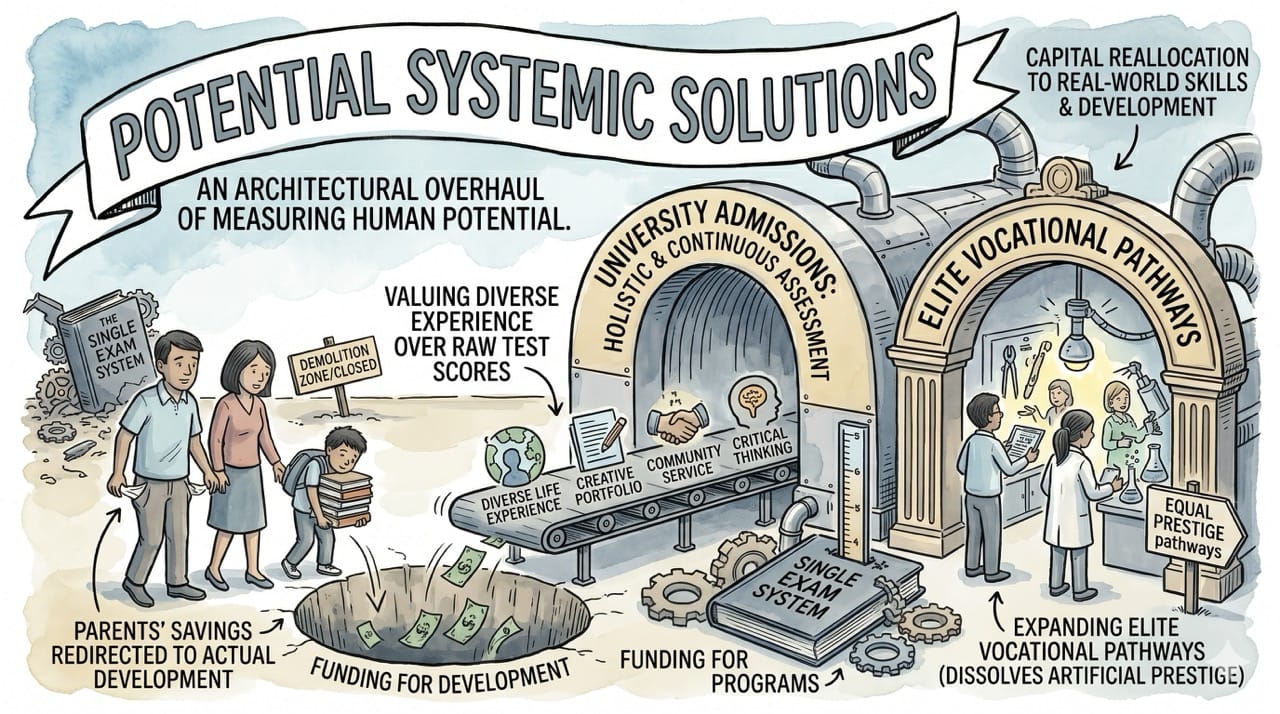
Potential Systemic Solutions
Fixing this sociological disaster requires a complete architectural overhaul of how we measure human potential.
Universities must adopt continuous assessment models and holistic evaluation metrics that value diverse life experiences over raw test scores.
Expanding elite vocational pathways also removes the artificial prestige associated exclusively with traditional academic degrees.
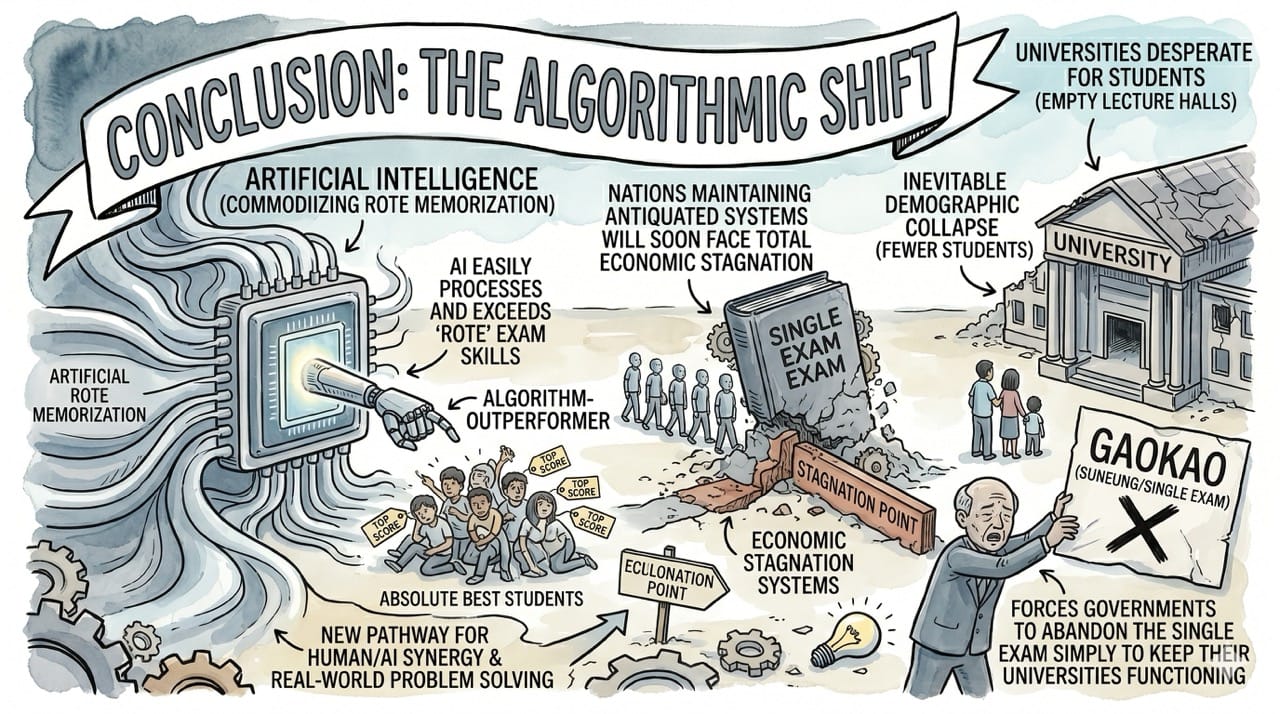
Conclusion: The Algorithmic Shift
Artificial intelligence is rapidly commoditizing the exact rote memorization skills that these massive exams currently test.
Nations maintaining these antiquated systems will soon face total economic stagnation as algorithms easily outperform their absolute best students.
The inevitable demographic collapse in these specific countries will finally force governments to abandon the single exam simply to keep their universities functioning.